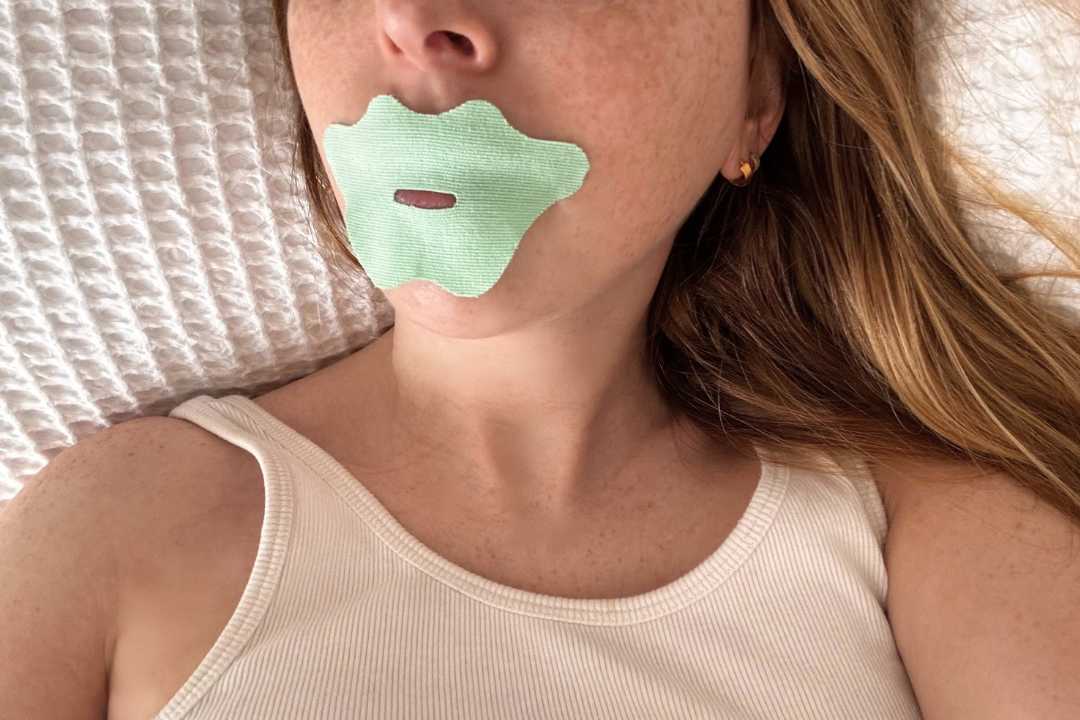
Mouth taping went viral on TikTok, but Cleveland Clinic, OSF HealthCare, and Banner Health all flag safety concerns — especially for anyone with undiagnosed sleep apnea or nasal obstruction. Photo: Unsplash | smartsleepcalc.com
📚 What This Guide Covers
- What Cleveland Clinic, OSF HealthCare, and Banner Health actually say about mouth taping — with real, sourced quotes
- The 2025 systematic review of 10 studies — and why 4 flagged asphyxiation risk
- Who sleep specialists say should avoid mouth taping
- Evidence-based alternatives for snoring that carry stronger research support
- What to ask a doctor before considering it at all
⚡ Quick Answer
Mouth taping for sleep is not something sleep specialists currently recommend without prior evaluation. Cleveland Clinic’s Dr. Brian Chen warns it can cause “severe respiratory distress, significant drops in oxygen levels and exacerbation of underlying health issues” for people with nasal obstruction or chronic allergies. A 2025 systematic review of 10 studies (213 patients total) found only two showed a statistically significant benefit — both in people with mild sleep apnea — while four discussed asphyxiation risk. If you snore or suspect sleep apnea, your mouth breathing may be a backup airway you don’t want to remove without medical guidance.
What Is Mouth Taping for Sleep?
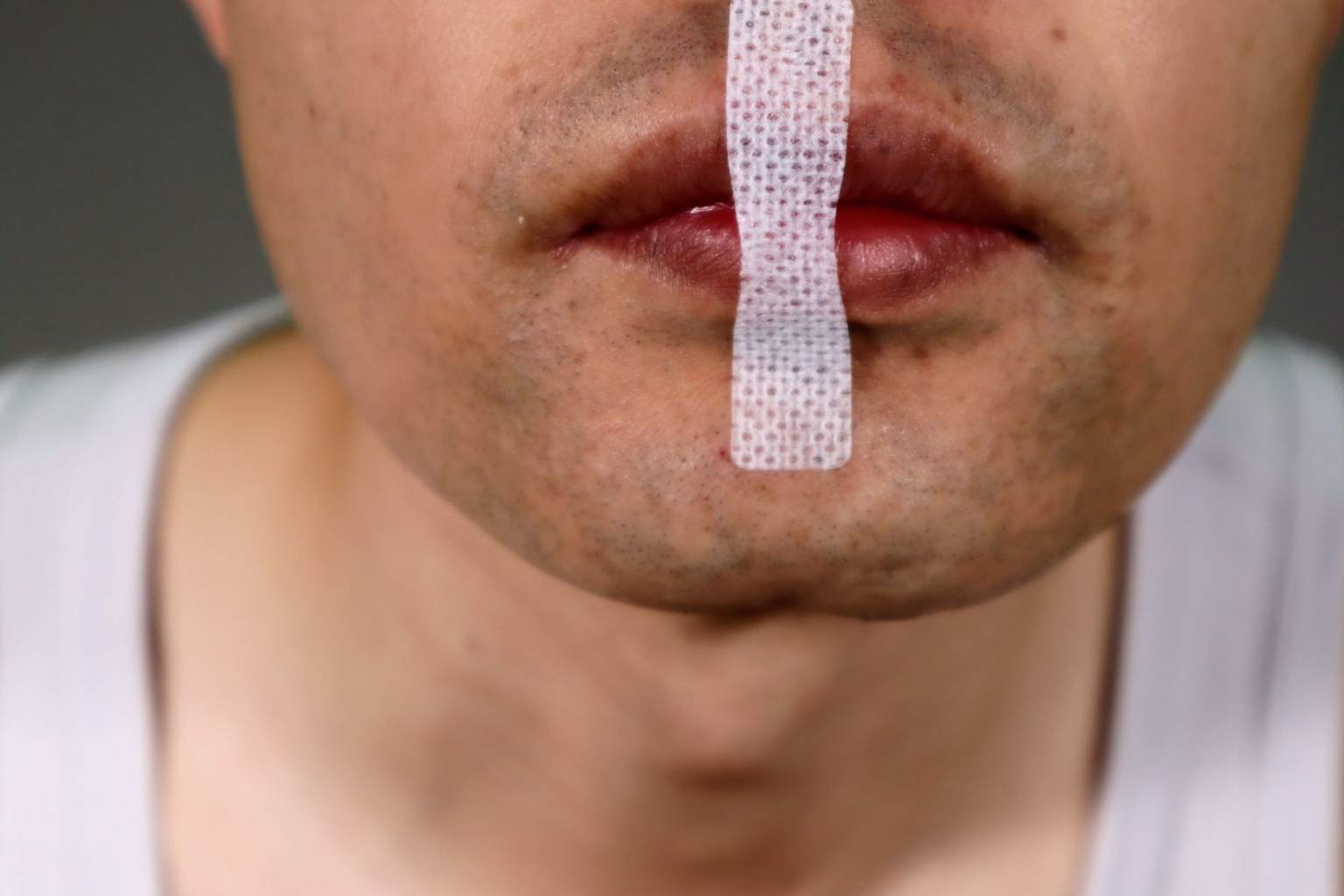
White medical-grade tape applied over the mouth — the most common mouth taping method. OSF HealthCare’s Dr. Kaninika Verma says: “This is nothing a physician would ever recommend to a patient.” Image: OSF HealthCare | smartsleepcalc.com
Mouth taping means placing a strip of medical-grade or porous adhesive tape across your lips before bed to keep your mouth from opening during sleep. The idea is to force nasal breathing all night — nasal air is filtered, humidified, and carries nitric oxide that proponents say improves oxygen delivery and reduces snoring. The practice went viral on TikTok, racking up hundreds of millions of views, celebrity mentions, and a whole product category of branded “sleep tape.”
The underlying idea about nasal breathing isn’t baseless. Nasal breathing does carry real advantages over habitual mouth breathing — better filtration, humidification, and nitric oxide production. If you’re a chronic daytime mouth breather, an ENT or sleep specialist might look at treating the nasal obstruction that’s causing it. The problem isn’t the goal of nasal breathing. It’s that sealing your mouth shut while unconscious, without knowing why you’re mouth breathing in the first place, is what several sleep doctors are now specifically warning against.
The trend got a boost from the 2020 book Breath by James Nestor, then took off on TikTok as creators condensed the science into short-form videos. Houston Methodist’s Dr. Faisal Zahiruddin has noted that mouth tape brands have grown into a roughly $1 billion global market — largely without the clinical trial data you’d expect behind a health product at that scale.
What Mouth Taping Proponents Claim
To give this topic a fair hearing, here’s what advocates say mouth taping does — and what the evidence actually shows for each claim.
| Claim | Grade | What Evidence Actually Shows |
|---|---|---|
| Reduces snoring | C | Mixed across the 10 reviewed studies. Some showed modest benefit; most were inconclusive or excluded people with any nasal obstruction, which limits how the findings generalize. |
| Improves sleep apnea | D | 2 of 10 studies showed statistically significant improvement in AHI or oxygen desaturation — both limited to mild sleep apnea. No study in the review supports its use for moderate-to-severe OSA. |
| Reduces dry mouth | C | Plausible by mechanism — less mouth opening likely means less oral drying — but no controlled trial in the review specifically confirmed durable, clinically meaningful improvement. |
| Improves nitric oxide / oxygen | D | Nasal breathing does produce more nitric oxide than mouth breathing. But forcing nasal-only breathing by sealing the mouth hasn’t been shown in controlled trials to improve oxygen delivery in healthy adults. |
| Improves facial structure / “mewing” | D | Not addressed by any study in the 2025 review. No dental or orthodontic association endorses this claim. |
A May 2025 systematic review led by researchers at London Health Sciences Centre — Jess Rhee, Alla Iansavitchene, Sonya Mannala, M. Elise Graham, and Dr. Brian Rotenberg — analyzed the 10 published studies on mouth taping that met their inclusion criteria, covering 213 patients total. Two studies showed a statistically significant improvement in sleep apnea markers, limited to people with mild disease. Four discussed a real risk of asphyxiation in the presence of nasal obstruction or regurgitation. Their published conclusion: the practice “seems to be guided by poor evidence and can even lead to risk of detrimental effects in individuals with serious nasal obstruction.” This is currently the most comprehensive published review of mouth taping evidence.
What Cleveland Clinic, OSF HealthCare, and Other Sleep Specialists Say
Several US health systems have published on mouth taping through their named sleep and pulmonary specialists. Here’s what they actually say, quoted directly from their own published articles.
→ Read Full Cleveland Clinic Article“Having your mouth taped closed forces you to rely on only your nose for air, potentially leading to severe respiratory distress, significant drops in oxygen levels and exacerbation of underlying health issues during sleep.”
“For individuals already struggling with conditions like nasal obstruction or chronic allergies, mouth taping introduces an unacceptable level of risk.”
“You’re supposed to breathe in and out through your nose, but mouth taping is not safe at all. This is nothing a physician would ever recommend to a patient.” Dr. Verma also cautions against getting health guidance from social media rather than a licensed provider.
→ Read Full OSF HealthCare Article“Mouth taping isn’t a safe way to improve nasal breathing. There is not enough scientific evidence to support benefits from mouth taping, and it can be dangerous.” Palmer explains that mouth breathing is often a backup: if you can’t breathe through your nose during sleep, your mouth opens naturally to get the air you need.
→ Read Full Banner Health ArticleDr. Zahiruddin notes that if someone chooses to try mouth taping anyway, using hypoallergenic tape placed as a small strip — not a full seal — is the lower-risk option, since it still allows some airflow. His advice: “Sleep well — but sleep smart. Talk to your doctor before you tape.”
→ Read Full Houston Methodist ArticleWhat does Cleveland Clinic say about mouth taping?
Cleveland Clinic’s Dr. Brian Chen, a pediatric sleep medicine specialist, says mouth taping can cause severe respiratory distress and significant drops in oxygen levels — particularly for people with nasal obstruction or chronic allergies. He notes there’s not enough scientific evidence behind mouth taping’s supposed benefits, and that most of what exists is anecdotal. Cleveland Clinic’s published guidance recommends talking to a doctor before trying it.

A sleep study is what Cleveland Clinic, OSF HealthCare, and Banner Health all point to as the right first step before considering any mouth-taping trial. Photo: Unsplash | smartsleepcalc.com
Across the 213 patients in the Rhee/Rotenberg 2025 systematic review, only 2 of 10 studies showed a statistically significant benefit — and both were limited to people with mild sleep apnea. Four studies raised the asphyxiation concern directly. Many of the studies that did show benefit had excluded anyone with nasal obstruction, which narrows how far the findings can reasonably be applied. The review’s authors put it plainly: this is a small, low-quality evidence base for a trend that spread far faster than the science behind it.
Documented Risks of Mouth Taping During Sleep
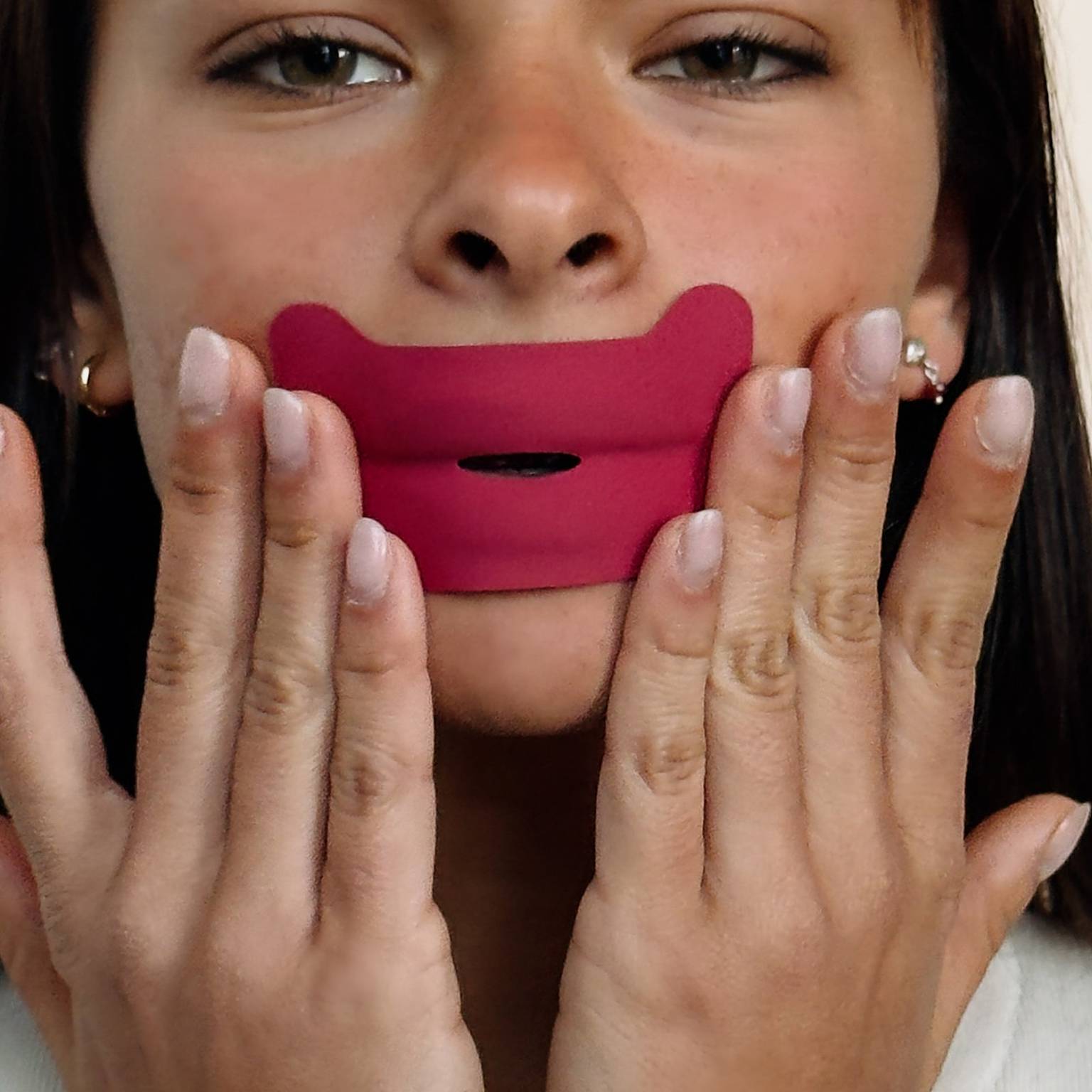
Some commercial mouth taping products include a small breathing hole — but sleep specialists say no design removes the underlying risk for people who haven’t been screened for sleep apnea or nasal obstruction. Image: Loftie | smartsleepcalc.com
These aren’t hypothetical concerns — they’re risks raised directly by the sources cited throughout this article, each traceable to a name and publication.
If your nasal passages are congested or partially obstructed, your mouth may be acting as a backup airway. Taping it shut removes that backup. Cleveland Clinic; Banner Health
Dr. Chen specifically cites “significant drops in oxygen levels” as a risk for people with nasal obstruction or chronic allergies who tape their mouths shut. Cleveland Clinic, 2025
The 2025 systematic review found four of ten studies specifically flagged asphyxiation risk “in the presence of nasal obstruction or regurgitation.” Rhee et al., PLOS One, 2025
Seasonal congestion or allergies can leave you nasally blocked on any given night. OSF HealthCare’s Dr. Verma is blunt about it: mouth taping “is nothing a physician would ever recommend to a patient.” OSF HealthCare
Cleveland Clinic lists skin irritation and allergic reactions to the adhesive among the documented complications of nightly tape use. Cleveland Clinic, 2025
Cleveland Clinic notes increased anxiety is a documented risk for people who don’t like the feeling of a sealed mouth or who have trouble breathing through the nose. Cleveland Clinic, 2025
If you snore regularly, have been told you stop breathing during sleep, wake with headaches, feel unrested despite adequate hours, or have risk factors for sleep apnea — Cleveland Clinic, Banner Health, and OSF HealthCare all point in the same direction: talk to a doctor and consider a sleep evaluation before trying mouth taping, not after.
Consider a common scenario: someone who snores, sees a mouth-taping video with millions of views, and tries it that night without ever having been evaluated for sleep apnea. Obstructive sleep apnea affects an estimated 30 million American adults, and a large share remain undiagnosed. If nasal passages partially restrict during an apnea event and the mouth — the backup airway — is taped shut, the result can be the exact oxygen drop that Dr. Chen and the 2025 systematic review both describe. This is precisely why every source in this article recommends screening first.
Who Should Be Most Cautious About Mouth Taping
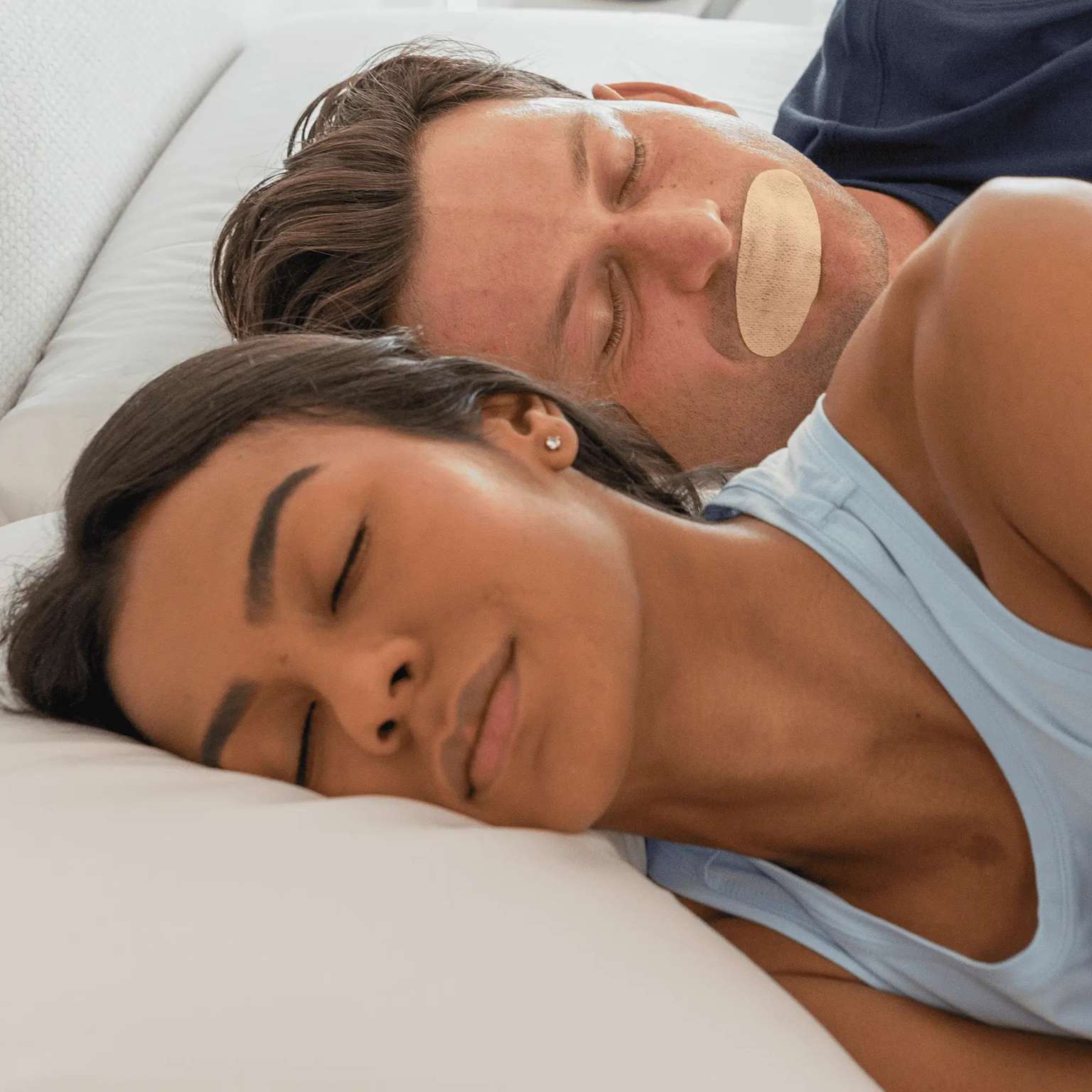
Mouth tape marketed as a snoring remedy — but the 2025 systematic review found only 2 of 10 studies showed a significant benefit, both limited to mild sleep apnea. Side sleeping helps most positional snorers at zero cost and zero risk. Image: Snugell Sleep | smartsleepcalc.com
Based on the concerns raised by Cleveland Clinic, OSF HealthCare, Banner Health, and Houston Methodist, the following groups should talk to a doctor before considering mouth taping at all — not simply “use caution.”
| Group | Why It’s a Concern | What Sources Recommend Instead |
|---|---|---|
| Known or suspected sleep apnea | Oral airway may be a compensatory backup during apnea events | Talk to a sleep specialist about CPAP or other confirmed treatments |
| Frequent, unexplained snorers | Snoring can be the only noticeable sign of undiagnosed sleep apnea | Ask about a home sleep test before trying any remedy |
| Nasal congestion / obstruction | Taping the mouth while nasally blocked severely restricts airflow | Nasal strips, saline rinse, or an ENT evaluation |
| Acid reflux / GERD | The 2025 review flagged asphyxiation risk with regurgitation | Discuss reflux management with a doctor first |
| Asthma or respiratory conditions | Any airway narrowing during an episode is more dangerous with a taped mouth | Consult a pulmonologist before considering it |
| Children | No pediatric safety data exists in the current published research | Speak with a pediatric ENT about mouth breathing instead |
| Anxiety or claustrophobia | Cleveland Clinic lists anxiety as a documented risk of the sealed-mouth sensation | Discuss alternatives with a doctor or therapist |
Evidence-Based Alternatives for Snoring
If your goal is less snoring or better sleep quality without the open questions around mouth taping, these approaches are backed by more research.
Every source in this article agrees: talk to a doctor about a home sleep test or in-lab sleep study before trying a snoring remedy. It turns snoring from a nuisance into a diagnosis you can actually treat.
🏥 Ask your primary care provider — many US insurance plans cover home sleep testingSide sleeping helps prevent the tongue and soft palate from collapsing toward the back of the throat, a common mechanical cause of snoring. It’s free, has no downside, and doesn’t require medical clearance to try.
🛏️ A tennis ball sewn into the back of a t-shirt is a common low-cost way to discourage back sleepingIf nasal obstruction is driving your mouth breathing, nasal strips mechanically open the nasal passages, and a saline rinse clears the congestion causing the compensatory mouth breathing in the first place. Houston Methodist’s Dr. Zahiruddin specifically recommends addressing allergies or sinus issues directly.
🤧 Try a rinse 30 minutes before bed; apply a nasal strip at bedtimeDry indoor air — common in heated homes and AC-heavy climates — dries nasal membranes and can trigger mouth breathing as compensation. A humidifier addresses that root cause directly.
💧 A basic humidity monitor can help you track and hold the rangeIf a sleep study confirms obstructive sleep apnea, CPAP therapy has the strongest and largest body of research behind it of any option discussed here, with documented benefits for snoring, daytime alertness, and cardiovascular health.
🌬️ Many US insurance plans cover CPAP; ask your sleep specialist about current optionsMouth Tape vs. Nasal Strip — Different Tools, Different Evidence
Seals the mouth shut. Doesn’t address the underlying cause of mouth breathing. Sleep specialists advise screening for sleep apnea and nasal obstruction first. The 2025 review found asphyxiation risk discussed in 4 of 10 studies.
Opens the nasal passage from outside. Doesn’t restrict the mouth as a backup airway. Considered compatible with CPAP use by sleep specialists. Widely available and inexpensive.
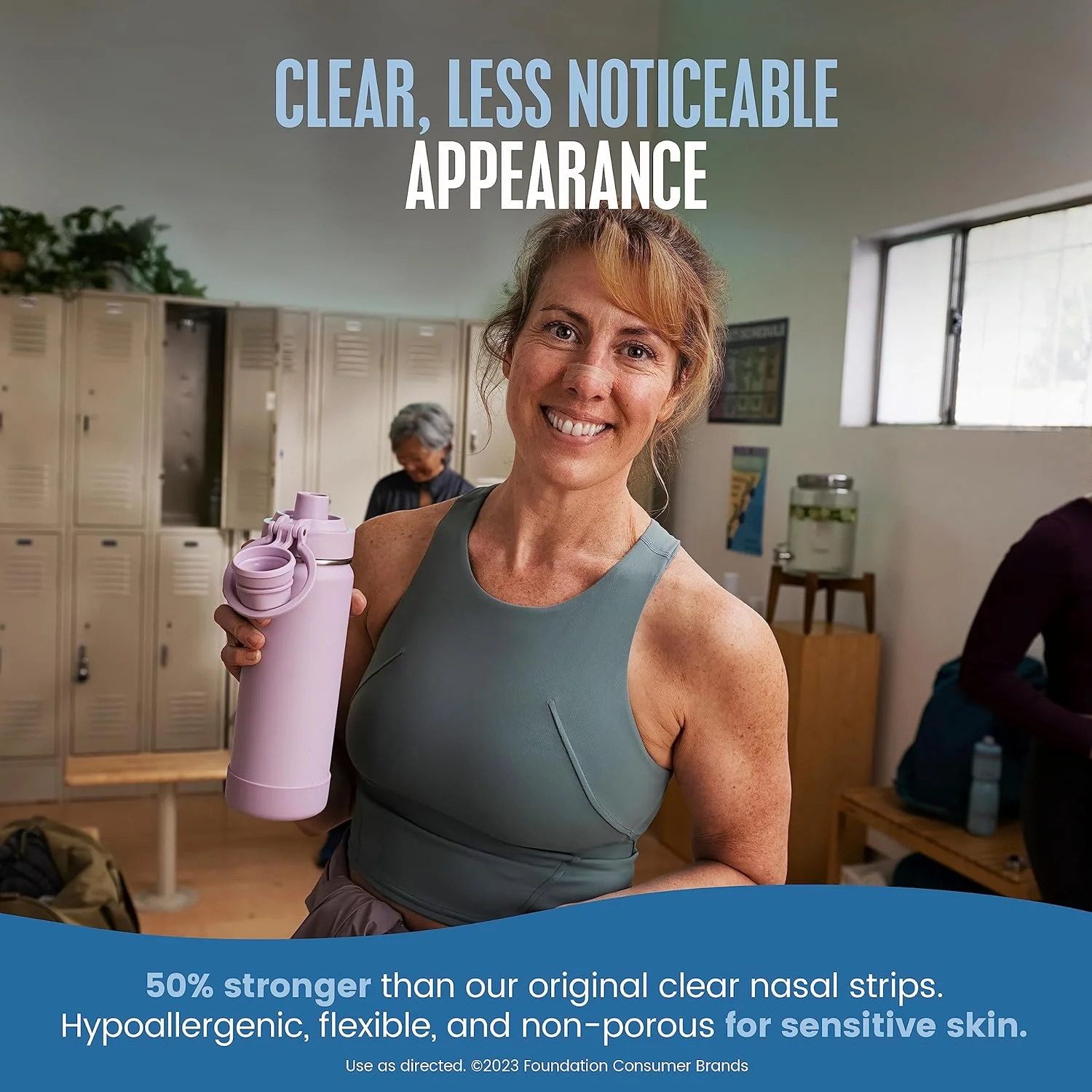
Breathe Right Extra Strength Nasal Strips — 44 Count (Tan, For Sensitive Skin)
A widely used nasal strip brand that mechanically opens the nasal passage from outside — a different mechanism from mouth taping, and one sleep specialists describe as compatible with CPAP use.
As an Amazon Associate, SmartSleepCalc earns from qualifying purchases at no cost to you. This does not change our summary of the evidence above.
Before Considering Any Trial: What Sources Recommend
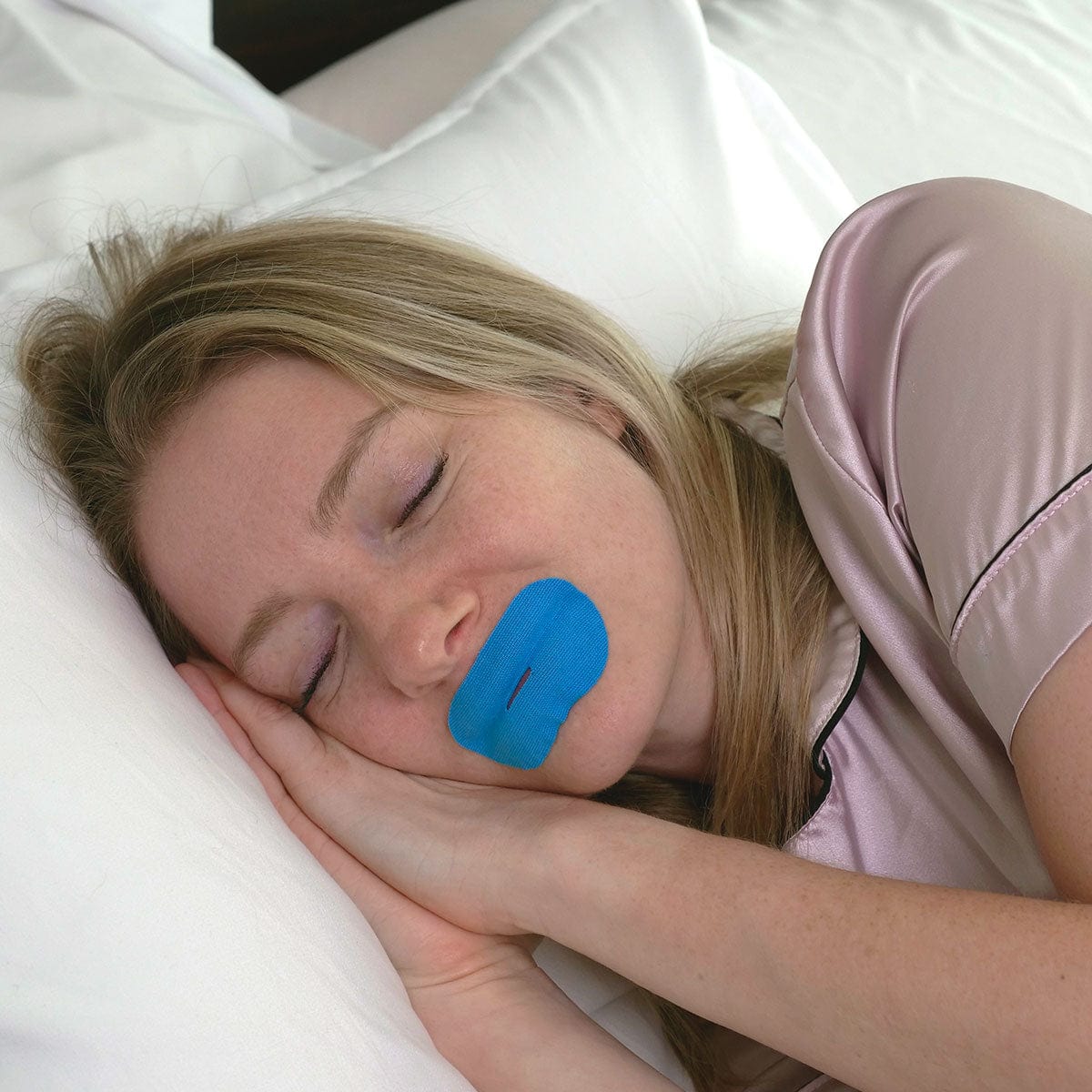
Sleep specialists consistently recommend medical evaluation before trying mouth taping — not self-assessment based on how you feel in the morning. Image: Relaxus Professional | smartsleepcalc.com
🚨 Before You Consider This
Cleveland Clinic’s Dr. Brian Chen warns mouth taping “could significantly impede airflow” for people with nasal obstruction or chronic allergies. The 2025 systematic review found 4 of 10 studies flagged asphyxiation risk — while only 2 showed any benefit, both limited to mild sleep apnea under study conditions.
Sources across this article point to talking to a doctor first if you:
- ✗Have diagnosed or suspected obstructive sleep apnea
- ✗Have nasal congestion, a deviated septum, or seasonal allergies
- ✗Have asthma or a chronic respiratory condition
- ✗Have GERD, reflux, or a history of nighttime vomiting
- ✗Are considering it for a child
- ✗Have anxiety or claustrophobia
Sources: Cleveland Clinic (Chen) · Rhee et al., PLOS One (2025) · Banner Health (Palmer) · OSF HealthCare (Verma)
An estimated 80% of sleep apnea cases in the US go undiagnosed, according to figures widely cited by sleep medicine researchers — which is part of why Cleveland Clinic, OSF HealthCare, and Banner Health all point to formal screening before self-experimenting with any airway technique.
Even among people formally screened and cleared, the evidence for mouth taping’s benefit remains thin. Cleveland Clinic states plainly that “there’s not enough scientific evidence that shows mouth taping works as a way to stop snoring,” and that most of what exists is anecdotal. That applies broadly, not just to higher-risk groups.
This article is a safety and evidence review, not a how-to guide. Educational content based on current research — not a substitute for medical advice. Anyone considering mouth taping should talk to a doctor first, ideally one familiar with their nasal, respiratory, and sleep history.
Is any type of mouth tape lower-risk?
No mouth tape is risk-free without medical input, but Houston Methodist’s Dr. Faisal Zahiruddin notes that hypoallergenic tape applied as a small horizontal strip — rather than a full seal — allows some airflow through the lips and tape itself, which he considers the lower-risk option if someone chooses to try it. Even so, he recommends talking to a doctor first regardless of tape type.
Frequently Asked Questions — Mouth Taping for Sleep
Is mouth taping safe for sleep?
Mouth taping is not considered safe without prior sleep evaluation, according to the doctors and researchers who have studied it. Cleveland Clinic’s Dr. Brian Chen warns it can cause severe respiratory distress and significant oxygen drops, especially for people with undiagnosed sleep apnea or nasal obstruction. A 2025 systematic review of 10 studies found four explicitly discussed asphyxiation risk in the presence of nasal obstruction or regurgitation. Talk to a doctor before trying it.
Does mouth taping stop snoring?
The evidence is weak and mixed. The 2025 systematic review of 10 studies covering 213 patients found only two showed statistically significant improvement in sleep apnea markers, both in people with mild disease. OSF HealthCare’s Dr. Kaninika Verma says mouth taping “is nothing a physician would ever recommend to a patient.” Most researchers rate the current evidence as too thin to support routine use for snoring.
Can mouth taping worsen sleep apnea?
It’s a real concern raised by multiple sources. People with sleep apnea sometimes rely on mouth breathing as a backup when nasal passages partially obstruct during apnea events. Taping the mouth removes that backup, and the 2025 systematic review specifically flagged asphyxiation risk in the presence of nasal obstruction. This is why every source cited here recommends screening for sleep apnea before considering mouth taping.
What are the best alternatives to mouth taping for snoring?
The strongest evidence-supported alternatives to mouth taping for snoring are: a sleep study to rule out sleep apnea first, side sleeping, nasal strips or a saline rinse to open nasal passages, a bedroom humidifier to reduce nasal dryness, and CPAP therapy if sleep apnea is confirmed. Each of these has more research behind it than mouth taping currently does.
Should I tape my mouth if I have sleep apnea?
Sleep specialists advise against it. Your mouth breathing may be your body’s compensatory airway during apnea events, and taping it shut without medical supervision could worsen oxygen drops that already occur with sleep apnea. Talk to a sleep specialist about CPAP therapy, which has a far larger body of research behind it for treating diagnosed sleep apnea.
The Bottom Line on Mouth Taping for Sleep
The idea behind mouth taping — encouraging nasal breathing during sleep — has a real physiological basis. Nasal breathing does offer better filtration, humidification, and nitric oxide production than mouth breathing. But sealing your mouth shut while unconscious, without knowing why you’re mouth breathing in the first place, is what sleep specialists at Cleveland Clinic, OSF HealthCare, Banner Health, and Houston Methodist are now specifically cautioning against. The current evidence base is small — 213 patients across 10 studies — and four of those studies raised a genuine asphyxiation concern.
If you snore, talk to a doctor about a sleep study first. If you mouth breathe, look at treating the nasal cause rather than the symptom. And if you want a simple starting point for better sleep overall, our free Sleep Cycle Calculator can help you find a consistent, cycle-aligned bedtime.
Still Snoring? Start Here — Free Sleep Cycle Calculator
Find your exact cycle-aligned bedtime and build the consistent wake time that’s the real foundation of better sleep — before any tape, supplement, or gadget.
🧮 Calculate My Bedtime Free →No account · No email · Instant
📚 Sources & References
- Cleveland Clinic. Chen, B., MD (2025). Is Mouth Tape Safe To Use While Sleeping? health.clevelandclinic.org/mouth-taping
- OSF HealthCare. Verma, K., MD (2022). Is it safe to use mouth tape for sleeping? osfhealthcare.org
- Banner Health. Palmer, K. Can Mouth Taping Help You Sleep Better? bannerhealth.com
- Houston Methodist. Zahiruddin, F., MD (2025). Can Mouth Tape During Sleep Be Dangerous? houstonmethodist.org
- Rhee, J., Iansavitchene, A., Mannala, S., Graham, M.E., Rotenberg, B. (2025). Breaking social media fads and uncovering the safety and efficacy of mouth taping in patients with mouth breathing, sleep disordered breathing, or obstructive sleep apnea: A systematic review. PLOS One, 20(5): e0323643. journals.plos.org (DOI: 10.1371/journal.pone.0323643)
- CNN Health (July 11, 2025). The pros and cons of mouth taping for sleep. cnn.com
- National Geographic (September 5, 2024). Some people claim taping your mouth shut helps you sleep better — but what are the risks? Quotes Dr. Indira Gurubhagavatula, American Academy of Sleep Medicine spokesperson. nationalgeographic.com
- Sleep Foundation. (Updated 2026). Mouth Taping for Sleep: Does It Work? sleepfoundation.org
Affiliate Disclosure: SmartSleepCalc participates in the Amazon Services LLC Associates Program (tag: thedigmag-20). We may earn a commission on qualifying purchases at no cost to you. This does not change our summary of the evidence above.