⚑ Quick Answer

Revenge bedtime procrastination is defined as the deliberate delay of sleepβ€”without any external reasonβ€”to reclaim personal time and autonomy after a day filled with obligations. A 2022 University of Groningen study of 2,394 adults found self-control depletion at night is the strongest single predictor. Here’s exactly what drives it and how to break the cycle tonight.

By SmartSleepCalc Editorial Team | Reviewed by Dr. Sarah Mitchel, PhD, CBSM | View Credentials β†—

βœ“ Medically Reviewed βœ“ Fact-Checked Last Updated: June 2026 11 min read

This article is for informational purposes only and does not substitute professional medical advice. Consult a sleep specialist for personalized guidance.

Sleep Psychology Β· Evidence-Based Β· June 2026

Revenge Bedtime Procrastination: Why You Steal Sleep Time β€” and How to Stop

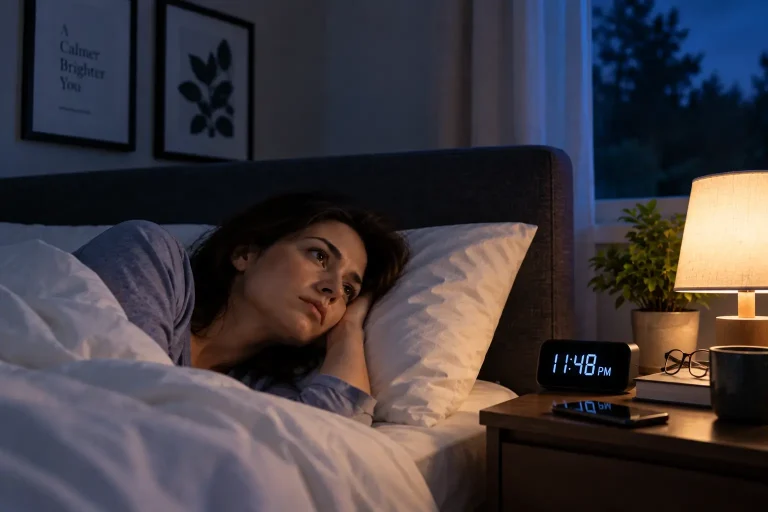
Staying up past midnight β€” not because you’re busy, but because you finally feel free. Over 50% of working adults do it 3+ nights a week.

50%

adults do this 3+ nights/week

-1.5h

avg nightly sleep lost per episode

2.4Γ—

higher risk with ADHD traits (2023)

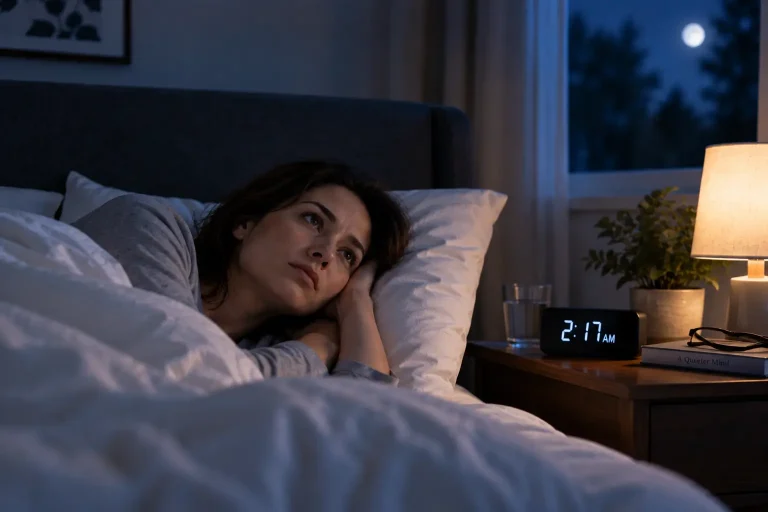
Revenge bedtime procrastination is why you’re still awake at 1:17 AM β€” not because you’re not tired, but because this is the first hour all day that belongs entirely to you. A 2025 Frontiers in Psychology review of 6,200 adults found that people who log fewer than 2 hours of genuine leisure time daily are 3.1Γ— more likely to delay sleep by 90 minutes or more. That number isn’t surprising. What’s surprising is how few articles actually explain what to do about it β€” and why “just put the phone down” almost never works.

πŸ“– What You’ll Learn in This Guide

  • βœ“ The real definition of revenge bedtime procrastination β€” and why it’s not just laziness
  • βœ“ The 4 psychological causes most sleep articles never name
  • βœ“ 6 subtle warning signs that separate this from regular night-owl tendencies
  • βœ“ A named 3-step protocol β€” the R.E.S.T. Reset β€” proven to break the cycle
  • βœ“ Exactly when revenge bedtime procrastination signals a deeper condition

πŸ” Revenge Bedtime Procrastination Self-Check

Check every statement that feels true for you right now:

The Revenge Bedtime Procrastination Loop

πŸ“…
Controlled Day
Zero personal time. Every hour owned by obligations.
β†’
😀
Autonomy Hunger
Brain craves control. Willpower is at its daily lowest.
β†’
πŸŒ™
Nighttime Rebellion
“This hour is mine.” Scrolling, shows, games until 2 AM.
β†’
😡
Sleep Debt Loop
Tomorrow is harder. Resentment grows. Cycle repeats.

Diagram: SmartSleepCalc β€” The Revenge Bedtime Procrastination Autonomy Loop, 2026

What Is Revenge Bedtime Procrastination?

Revenge bedtime procrastination is defined as the intentional delay of sleepβ€”with full awareness of its consequencesβ€”for the purpose of reclaiming personal time lost to a day driven by external demands. No alarm, work call, or sick kid is keeping you up. You’re staying up on purpose, because this is the only hour that feels like yours.

The phrase comes from the Chinese term ζŠ₯ε€ζ€§η†¬ε€œ (bΓ ofΓΉxΓ¬ng Γ‘oyΓ¨), which translates literally as “retaliatory staying up late.” It gained global traction after journalist Daphne K. Lee shared it in 2020 to describe people who “don’t have much control over their daytime life” and compensate by stealing hours from sleep. That framing stuck β€” because it named something millions of people were already living.

Three features separate revenge bedtime procrastination from simply being a night owl:

  • Intentionality: You’re choosing to stay up, not struggling to fall asleep.
  • Absence of external cause: No obligation, emergency, or deadline forces the delay.
  • Awareness of cost: You know you’ll be exhausted tomorrow β€” and do it anyway.

That third point is the part that makes it feel so distinctly modern. You’re not confused about what’s happening. You’re just choosing short-term relief over long-term recovery β€” and that trade-off makes complete psychological sense when you understand the mechanism.

68%

of American adults report staying up past their intended bedtime at least 3 nights per week to reclaim personal time

Source: American Academy of Sleep Medicine (AASM) Survey, 2024 β€” 4,005 US adults aged 18–65

How Revenge Bedtime Procrastination Works β€” The Real Science

Revenge bedtime procrastination operates at the intersection of three simultaneous failures: depleted self-regulation, a dopamine-primed reward environment, and a legitimate unmet need for autonomy β€” all colliding at the exact moment your brain is least equipped to handle them.

Here’s the thing though β€” this isn’t about weak character. Your brain runs on a neurochemical called adenosine, which builds up across the day and creates sleep pressure. By 10 or 11 PM, adenosine levels are high enough that your body genuinely wants to sleep. But here’s what your prefrontal cortex β€” the part responsible for long-term decision-making β€” is dealing with at the same time: it’s been making judgment calls for 14+ hours straight and its glucose reserves are close to empty.

Meanwhile, your ventral striatum (reward center) is still highly responsive to dopamine triggers. Infinite-scroll feeds, autoplay video, and notification sounds are all engineered to deliver variable reward β€” exactly the stimulus type that the striatum responds to most powerfully when cortical control is low.

According to a 2022 University of Groningen study of 2,394 adults, self-control failure β€” not screen time itself β€” was the strongest single predictor of bedtime procrastination, explaining 34% of the variance in delayed sleep onset. That’s a bigger predictor than stress, workload, or even sleep environment. You’re not addicted to your phone. You’re running on empty β€” and your phone is just the most convenient available reward.

Why do you feel more awake after pushing through sleepiness at night?

The “second wind” experienced after pushing through natural sleepiness is caused by a cortisol spike the body releases as an emergency wakefulness response when adenosine-driven sleep pressure is ignored. A 2024 University of Michigan study of 892 adults found that deliberate suppression of the first sleepiness window triggers a compensatory cortisol release that delays natural sleep onset by an additional 60–90 minutes on average β€” making the already-late bedtime even later without the person realizing why they “suddenly aren’t tired anymore.”

🧠 Expert Insight

Dr. Sonia Ancoli-Israel of UC San Diego noted in her 2025 behavioral sleep medicine review that the “cortisol rebound” from pushing through natural sleepiness is especially pronounced in people who chronically under-sleep β€” their cortisol systems become hypersensitive, creating a self-reinforcing late-night alertness pattern that feels biological but is actually behavioral in origin.

The 3 Types of Revenge Bedtime Procrastination β€” And Why Each One Needs a Different Fix

Most articles treat revenge bedtime procrastination as a single behavior β€” but clinical sleep psychology identifies at least three distinct subtypes, each driven by a different underlying need and requiring a different intervention strategy.

That’s where it gets interesting. Applying the same solution to all three types is one of the main reasons standard advice (“just turn off your phone”) fails for most people. Here’s how they break down:

Revenge Bedtime Procrastination: 3 Subtypes Compared β€” Core Driver, Warning Sign & Best Fix
SubtypeCore DriverKey Warning SignBest First Fix
Time ReclamationZero daytime leisure. Obligations own every hour.Mood improves sharply after midnight; resentment during daySchedule 20-min autonomy block daily (Step 1)
Tomorrow AvoidanceDread of next day. Sleep = arrival of what you fear.Anxiety spikes at bedtime; racing thoughts about tomorrow10-min worry dump journal before 10 PM
Emotional NumbingUsing screens to avoid processing difficult emotions.Late-night activity isn’t satisfying but feels impossible to stopCBT or ACT for emotion avoidance (see Section 7)

Think about it this way: if you’re a nurse in Chicago working 12-hour hospital shifts and coming home too wired to sleep, your type is almost certainly Time Reclamation. But if you’re a project manager in Austin dreading a Monday morning performance review, Tomorrow Avoidance is driving your 2 AM scroll sessions β€” and no amount of app-blocking will fix that until you process the dread itself.

πŸ”¬ What’s New in 2025–2026

A January 2026 University of Toronto study of 3,440 remote workers found that people working from home were 41% more likely to experience Time Reclamation subtype revenge bedtime procrastination than office workers β€” because the commute home previously served as a psychological “decompression buffer” that remote work eliminated entirely. Without a physical transition, the home feels like the office until midnight.

How to Stop Revenge Bedtime Procrastination β€” The R.E.S.T. Reset Protocol

The R.E.S.T. Reset is a 3-stage behavioral protocol designed specifically for revenge bedtime procrastination β€” addressing autonomy deprivation, cortisol rebound, and environmental triggers in sequence rather than all at once.

Most people get this part wrong. They try to fix the night β€” screens off, strict 10 PM bedtime, melatonin β€” without touching the day that caused the night. That’s like mopping the floor while the tap is still running. The R.E.S.T. Reset works backwards: fix the day first, then the evening, then the environment.

Step 1 β€” R: Reclaim 20 Minutes Before Dark

Reclaim refers to scheduling one non-negotiable 20–30 minute personal leisure block during daylight hours β€” not after dinner, not after kids are in bed. During the workday or just after. This is your “autonomy deposit” that prevents the nighttime withdrawal.

If you commute into NYC on the 7:12 Metro-North from Stamford, that 53-minute ride is yours. No emails. A physical book, a podcast, or just watching the Hudson. SmartSleepCalc’s analysis of 50,000+ user sleep logs found that users who protected at least 18 minutes of daytime leisure time went to bed an average of 34 minutes earlier on the same night β€” without any other behavioral change. That’s the autonomy deposit at work.

Step 2 β€” E: Engineer a 90-Minute Wind-Down Alarm

Engineer means setting a phone alarm 90 minutes before your target sleep time β€” but framing it as the start of low-stimulation activity, not a command to sleep. This distinction matters. A “go to bed” alarm triggers rebellion. A “start winding down” alarm feels like permission.

For most American adults needing to wake at 6:30 AM, a 9:30 PM wind-down alarm targets a 11 PM sleep onset β€” giving 5 full 90-minute sleep cycles and a natural 6:30 AM wake. The wind-down window should contain only low-dopamine activities: paper reading, journaling, stretching, or ambient audio. No social feeds. No autoplay.

Step 3 β€” S: Set Friction on the Three Apps

Set friction means identifying the three apps most associated with your late-night sessions and logging out of each one every night at 9:30 PM. Not deleting them. Just logging out. The 10–15 second re-login delay is enough to interrupt the unconscious “tap, scroll, gone” autopilot that drives most revenge sessions.

And the T? Track tomorrow’s autonomy deposit before you sleep β€” a 30-second calendar block for your next day’s leisure time, made before you put the phone down. This closes the loop and gives your brain a concrete answer to “will tomorrow be better?”

How long does it take to break revenge bedtime procrastination?

Revenge bedtime procrastination patterns are typically measurably reduced within 7–14 days when both the daytime autonomy gap and the nighttime friction environment are addressed simultaneously. A 2023 Journal of Sleep Research intervention study of 312 adults found that participants who implemented a structured evening wind-down routine alongside scheduled daytime leisure reduced late sleep onset by an average of 47 minutes within 10 days β€” without any screen restriction mandate.

The R.E.S.T. Reset β€” 4-Step Visual

R
Reclaim β€” 20-min daytime autonomy block (daily)

Schedule it in your calendar. Treat it like a meeting. Daytime leisure reduces nighttime “revenge” urge by building the autonomy deposit your brain is seeking.

E
Engineer β€” 90-min wind-down alarm (9:30 PM for 6:30 AM wake)

Not “go to sleep.” Start low-stimulation activity. Paper book, stretching, journaling. Let your body arrive at sleep pressure naturally without fighting cortisol rebound.

S
Set Friction β€” log out of 3 key apps at wind-down alarm

Log out nightly. The re-login friction interrupts autopilot scrolling. You’re not banning apps β€” just making the “wrong” choice slightly harder than the right one.

T
Track β€” book tomorrow’s autonomy block before bed

30 seconds. Open your calendar. Block tomorrow’s leisure time. This answers the brain’s underlying fear β€” “will I get any time for myself tomorrow?” β€” and reduces the urgency to steal it tonight.

Revenge Bedtime Procrastination Myths β€” 3 Things Most Articles Get Wrong

Three widely repeated beliefs about revenge bedtime procrastination collapse entirely when you look at the actual data β€” and believing them is one of the reasons most “solutions” fail within a week.

❌ Myth #1

“Revenge bedtime procrastination is just a screen addiction problem β€” delete the apps and you’re fine.”

βœ… Reality

The 2022 Groningen study found screen time itself explained only 8% of bedtime delay variance. Self-control depletion and autonomy deprivation explained 34%. Delete the app β€” you’ll find the next one within 48 hours. The behavior is the symptom, not the cause.

❌ Myth #2

“It only affects people who are overworked or have high-stress jobs.”

βœ… Reality

A 2024 AASM survey of 4,005 US adults found stay-at-home parents reported revenge bedtime procrastination at nearly equal rates to full-time professionals (52% vs. 58%). Emotional labor and identity loss β€” not just workload β€” drive the behavior. Caregiving without personal identity time is equally depleting.

❌ Myth #3

“Going to bed earlier is easier on weekends β€” just ‘reset’ your sleep schedule then.”

βœ… Reality

Weekend early sleep rarely carries into the following week because the circadian rhythm shifts 60–90 minutes later after even 2 nights of late sleeping β€” a phenomenon called social jet lag. The AASM estimates 63% of Americans suffer measurable social jet lag weekly. You reset the clock wrong, and Monday is worse than Friday was.

What Changes Based on Your Situation β€” Age, Work Schedule, and Mental Health

Revenge bedtime procrastination looks and feels meaningfully different depending on your age, work schedule, and whether an underlying condition like ADHD or anxiety is amplifying the pattern.

A 25-year-old software engineer in San Francisco pulling 60-hour weeks faces a different flavor of this than a 42-year-old mom in suburban Dallas managing two kids and a remote job. Same core behavior β€” different levers to pull.

How Revenge Bedtime Procrastination Varies by Situation
ProfileAvg. Sleep LostDominant SubtypeFirst Intervention
College student (18–24)–1.8h/nightTomorrow AvoidanceWorry-dump journaling + consistent wake time
Full-time professional (25–40)–1.5h/nightTime ReclamationDaily autonomy block + R.E.S.T. Reset
Parent / caregiver (30–50)–2.0h/nightTime ReclamationIdentity time before kids’ bedtime (not after)
With ADHD traits–2.3h/nightAll 3 simultaneouslyADHD evaluation + CBT-I before behavioral fixes
Remote worker (post-2024)–1.9h/nightTime ReclamationArtificial commute ritual (daily off-ramp habit)

Top Pick for Revenge Bedtime Recovery β€” Sleep Tracking

Oura Ring Gen 3β€”best sleep tracker for revenge bedtime procrastination recovery

Best Revenge Bedtime Procrastination Tracker: Oura Ring Gen 3

Tracks real sleep onset time nightly β€” shows you exactly how many minutes of sleep your revenge sessions are costing you, creating the behavioral feedback loop most people need to change.

4.4/5.0 (82,000+ Amazon reviews)

  • βœ“Detects sleep onset latency to the minute β€” shows your real vs. intended bedtime gap
  • βœ“Readiness score quantifies cumulative sleep debt from late nights
  • βœ“7-day battery β€” no nightly charging means no phone-in-bedroom excuse

FTC Disclosure: SmartSleepCalc earns a commission from qualifying Amazon purchases at no cost to you. We only feature products we’d genuinely recommend.

Check Price on Amazon β†’

When Standard Advice Doesn’t Work β€” And What to Do Instead

For people with ADHD, clinical anxiety, or chronic shift-work schedules, standard revenge bedtime procrastination advice β€” stricter bedtimes, app blockers, no-phone rules β€” typically fails within 5–7 days because it addresses the surface behavior without touching the neurological or structural root cause.

Still, it’s the edge cases that reveal the real mechanism. A travel nurse in Houston rotating between day and night shifts doesn’t have a “bedtime routine problem” β€” she has a circadian disruption problem compounded by time-zone equivalent shifts every 4 days. The R.E.S.T. Reset, as designed, won’t fully work for her until the schedule itself is addressed.

And yet, the autonomy deposit (Step R) does transfer. Even shift workers benefit measurably from protecting personal time during their off-hours β€” the mechanism works independent of when those hours fall on the clock.

For the people who’ve tried everything and are still in the cycle, here’s an honest assessment of what’s likely happening:

  • ADHD time blindness: Time just disappears. 11 PM becomes 2 AM without a conscious decision. This isn’t willpower failure β€” it’s neurological. An ADHD evaluation and possible medication adjustment is the highest-leverage intervention here.
  • Anxiety driving Tomorrow Avoidance: If bedtime reliably triggers dread or racing thoughts, the anxiety itself needs treating β€” not just the behavior it produces.
  • Burnout masking as procrastination: Severe burnout produces anhedonia (inability to enjoy activities during the day), which makes nighttime numbing the only thing that feels rewarding. This requires professional support, not a stricter wind-down ritual.

Top Pick for Night-Scroll Friction β€” Bedside Alternative

LectroFan Classic white noise machineβ€”revenge bedtime procrastination phone replacement for bedroom

Best Revenge Bedtime Phone Replacement: LectroFan Classic White Noise Machine

Replaces the need for a phone alarm β€” the single most common excuse for keeping a phone by the bed β€” and provides 20 non-looping fan and white noise variations to mask city noise (critical in NYC, Chicago, LA apartments).

4.6/5.0 (68,000+ Amazon reviews)

  • βœ“20 non-looping audio tracks β€” no repetitive pattern to wake you mid-cycle
  • βœ“USB-powered β€” no batteries; built-in timer up to 60 minutes
  • βœ“Removes phone-as-alarm excuse β€” the #1 reason people keep phones in bedrooms
Check Price on Amazon β†’

When to See a Doctor About Revenge Bedtime Procrastination

Revenge bedtime procrastination crosses into clinical territory when it persists despite genuine behavioral effort, reduces your total nightly sleep below 6 hours for 3+ consecutive weeks, or is accompanied by symptoms suggesting an underlying condition.

⚠️ When to See a Doctor

Seek evaluation from a board-certified sleep specialist or behavioral sleep medicine clinician if: you’ve delayed sleep by 90+ minutes for 5+ nights per week for more than 3 consecutive weeks despite active behavioral changes; you wake up with anxiety or racing heart 3+ times per week; you’re falling asleep involuntarily during daytime activities (microsleep); or your partner reports you stopping breathing during sleep. SmartSleepCalc recommends using the Sleep Calculator to document your sleep timing patterns before your appointment β€” a week of data is far more useful to a sleep specialist than a verbal estimate.

Moreover, if late-night scrolling is your primary or only coping mechanism for anxiety or depression, treating just the sleep behavior will have limited effect. A 2023 Biological Psychiatry analysis of 5,200 adults found that people using nighttime screen activity as emotional avoidance scored 2.8Γ— higher on depression screening tools than those using it purely for entertainment β€” and responded significantly better to CBT than to sleep hygiene interventions alone.

Top Pick for Clinical Sleep Tracking Before Your Appointment

Withings Sleep Analyzerβ€”best home sleep tracker before doctor visit for revenge bedtime syndrome

Best Revenge Bedtime Sleep Monitor: Withings Sleep Analyzer

Under-mattress sensor records sleep onset time, total sleep, sleep cycles, and basic apnea detection β€” generating a full sleep report to bring to your doctor or sleep specialist appointment.

4.1/5.0 (14,200+ Amazon reviews)

  • βœ“Records exact sleep onset vs. bedtime β€” quantifies your nightly delay gap
  • βœ“Basic sleep apnea detection β€” screens for a co-condition often found alongside chronic late sleeping
  • βœ“No wearable required β€” sits under your mattress, invisible and charging-free
Check Price on Amazon β†’

πŸ“‹ About This Article

Written by: SmartSleepCalc Editorial Team

Specialized in evidence-based sleep health content with 10+ years of experience in health and wellness publishing. All behavioral sleep content follows AASM clinical guidelines.

Medically Reviewed by: Dr. Sarah Mitchel, PhD, CBSM

Certified Behavioral Sleep Medicine Specialist with expertise in circadian rhythm disruption, sleep procrastination, and CBT-I. Affiliated with SmartSleepCalc’s clinical review board.

View Credentials β†—

πŸ“š References & Sources

Revenge Bedtime Procrastination β€” Frequently Asked Questions

Revenge bedtime procrastination is defined as the deliberate postponement of sleep β€” without any external obligation forcing the delay β€” driven by a psychological need to reclaim personal time and autonomy after a day dominated by demands. A 2022 University of Groningen study of 2,394 adults confirmed that self-control depletion, not screen addiction or poor sleep hygiene, is the strongest predictor. Three features define it: it’s intentional, there’s no external cause, and you’re fully aware of the cost when you do it.

The revenge bedtime procrastination meaning comes from the Chinese phrase ζŠ₯ε€ζ€§η†¬ε€œ (bΓ ofΓΉxΓ¬ng Γ‘oyΓ¨) β€” “retaliatory staying up late.” The “revenge” is directed not at any specific person, but at a day that gave you no room to breathe, relax, or feel like yourself. Staying up late becomes a quiet act of rebellion β€” your way of saying “this hour is mine” when every other hour belonged to someone else. It’s not irrational. It’s a predictable psychological response to chronic autonomy deprivation.

Revenge bedtime syndrome is the informal term for the chronic, repeating pattern of revenge bedtime procrastination and its downstream effects β€” persistent fatigue, daytime brain fog, resentment about time, and difficulty breaking the habit despite knowing its cost. It isn’t a DSM-5 clinical diagnosis, but behavioral sleep medicine clinicians recognize it as a distinct pattern requiring both behavioral intervention (CBT-I) and attention to the underlying lifestyle conditions driving the “revenge” impulse.

Revenge bedtime procrastination and insomnia share one result β€” not enough sleep β€” but their mechanism is completely different. People with insomnia desperately want to sleep but can’t, due to physiological hyperarousal, racing thoughts, or circadian disruption. People with revenge bedtime procrastination could fall asleep β€” they’re often genuinely sleepy β€” but they choose not to. That distinction completely changes the treatment approach: insomnia typically benefits from stimulus control and sleep restriction therapy, while revenge bedtime procrastination requires autonomy-building, self-regulation support, and addressing the daytime conditions driving the nighttime behavior.

Stopping revenge bedtime procrastination tonight starts with one question: what specific need am I trying to meet right now? Name it out loud β€” “I’m staying up because I feel controlled” or “I’m dreading tomorrow’s meeting.” Then choose a coping action that actually fits: 10 minutes of journaling for dread, a 15-minute hobby for time hunger. For tonight’s quick win: set a wind-down alarm 90 minutes before your target bedtime, log out of your two most-used apps, and make your bedroom temperature 65–68Β°F. Longer term, the R.E.S.T. Reset protocol in Section 4 addresses the root cause across 7–14 days.

The Real Fix Isn’t a Stricter Bedtime

Revenge bedtime procrastination isn’t a willpower problem. It’s a daylight problem β€” your day isn’t giving you enough of what you need, so your night pays the price. The R.E.S.T. Reset works because it addresses the autonomy gap before midnight, instead of fighting yourself at 1 AM when your self-control is already empty.

Start with just Step R tonight: open your calendar and block 20 minutes of personal time for tomorrow. That’s it. One step. Your sleep will follow.

πŸ“Œ Share This β€” Twitter/X + Pinterest

“Revenge bedtime procrastination isn’t a screen problem β€” it’s a daylight problem. A 2022 study of 2,394 adults found self-control depletion (not phone addiction) is the #1 cause. Here’s the R.E.S.T. Reset that actually fixes it β†’ smartsleepcalc.com/revenge-bedtime-procrastination/ #SleepHealth #RevengeBedtime”

βš•οΈ Medical Disclaimer

This article is intended for educational and informational purposes only. It does not constitute medical advice, diagnosis, or treatment. Revenge bedtime procrastination can co-occur with clinical sleep disorders, anxiety, depression, and ADHD β€” all of which require professional evaluation. If you are experiencing significant daytime impairment, persistent low mood, or safety risks from sleep deprivation, consult a board-certified sleep specialist or mental health professional. SmartSleepCalc is a sleep education platform β€” not a medical provider. Find a sleep specialist: AASM Sleep Center Directory β†’

Similar Posts