Tired but Can’t Sleep? Why It Happens and What Helps
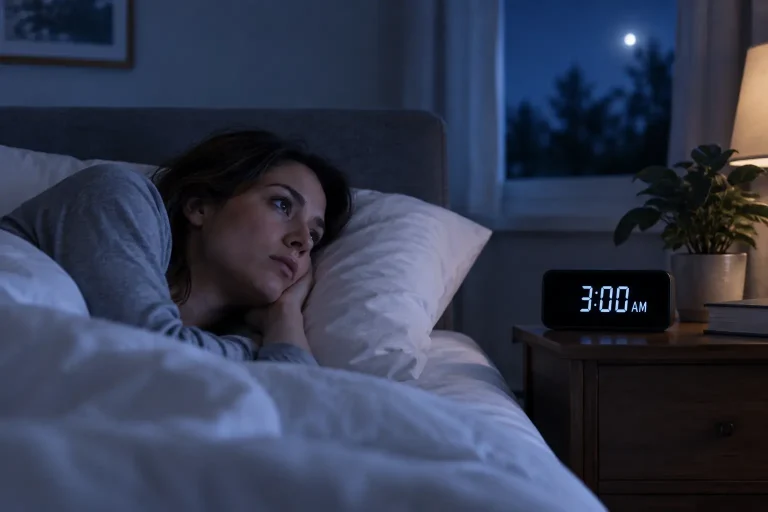
Feeling exhausted does not always mean your brain is ready to fall asleep at that moment. Sleep pressure, body-clock timing, stress or worry, caffeine, habits, medications, and sleep or health problems can all affect the gap between feeling worn out and actually becoming sleepy.
If you are tired but cannot sleep, the feeling may reflect fatigue without strong sleepiness, an alerting body-clock signal, stress-related or sleep-related arousal, caffeine or another substance, an irregular schedule, or a sleep/health problem. “Tired but wired” is a useful description, but it is not a diagnosis and does not automatically mean your cortisol is high.
Tired Is Not Always the Same as Sleepy
People often use “tired,” “fatigued,” and “sleepy” as if they mean the same thing. They overlap, but the distinction can help explain why you feel drained while still lying awake.
You are fighting to stay awake, your eyelids feel heavy, and you could doze if given the chance.
You feel low in energy, mentally or physically worn out, but you may not feel able to drift into sleep.
You may feel exhausted and still notice worry, mental activity, frustration, physical tension, or a strong “awake” feeling.
Sleep Pressure, Body-Clock Timing and Arousal Can Pull in Different Directions
Sleep is shaped by more than one process. Sleep pressure generally builds while you are awake. At the same time, your circadian system helps organize when your brain promotes alertness and when sleep is easier to initiate.
Insomnia research also supports a role for hyperarousal, especially cognitive-emotional arousal such as worry and sleep-related thoughts. Physiological findings are more complex. Research does not support treating one symptom such as “tired but wired” as proof of a specific cortisol problem.
Longer time awake usually increases pressure for sleep, but that does not guarantee instant sleep at a chosen bedtime.
Your body clock can make sleep easier or harder depending on timing, light exposure, shift work, travel and schedule consistency.
Stress, worry, frustration about sleep, conditioned wakefulness in bed and other forms of arousal can interfere with sleep onset.
Common Reasons You May Feel Tired but Still Struggle to Sleep
These are possible contributors, not diagnoses. More than one can occur at the same time.
| Possible contributor | What you might notice | What it does not prove |
|---|---|---|
| Insomnia / sleep-related arousal | Difficulty falling asleep despite enough opportunity, worry about sleep, clock-watching, frustration, or repeated nights of poor sleep. | One restless night does not diagnose insomnia disorder. |
| Body-clock mismatch | You become sleepier later than your required bedtime, have a drifting schedule, work shifts, or recently traveled across time zones. | Being alert late at night does not by itself diagnose a circadian rhythm disorder. |
| Caffeine, nicotine or other stimulants | Use later in your waking day, larger doses, energy drinks, pre-workout products, nicotine, or medicines with stimulating effects. | There is no universal “2 PM” cutoff that fits every person, dose or schedule. |
| Stress, worry or mood symptoms | Racing thoughts, rumination, tension, persistent low mood, panic symptoms, trauma-related arousal, or major life stress. | The symptom cannot tell you which mental-health condition, if any, is present. |
| Naps or irregular sleep opportunity | Long or late naps, sleeping in, large weekend schedule changes, or spending much more time in bed than you actually sleep. | A nap is not automatically “bad”; timing and individual circumstances matter. |
| Light and stimulating activity | Bright light, work, gaming, emotionally intense content, or active problem-solving close to bedtime. | A screen is not always the sole cause, and there is no universal 90-minute screen-ban rule. |
| Sleep apnea or another sleep disorder | Loud snoring, gasping, witnessed pauses, unrefreshing sleep, excessive daytime sleepiness, restless-leg symptoms, or unusual sleep events. | Fatigue alone cannot identify a sleep disorder. |
| Pain, reflux, breathing symptoms or other health issues | Physical discomfort, cough, heartburn, urinary symptoms, hot flashes, itching, medication effects or other recurring symptoms. | The sleep complaint does not identify the underlying medical cause. |
What to Do Tonight if You Are Tired but Cannot Sleep
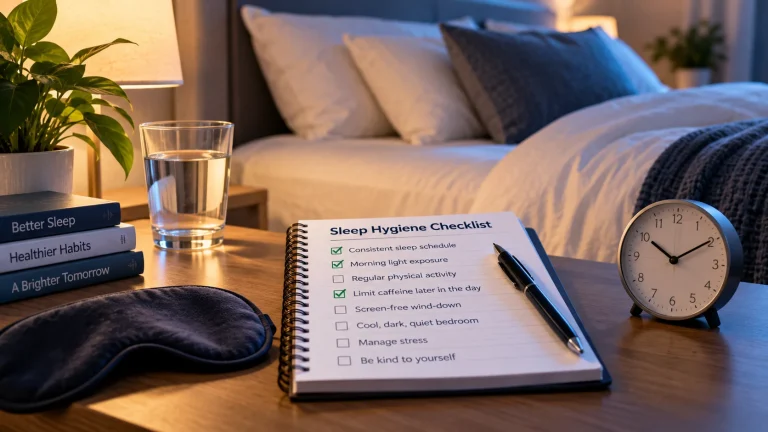
You do not need to identify a hormone or sleep stage before making basic changes that reduce wakefulness and protect sleep opportunity.
If you are lying awake and becoming frustrated, shift the goal from “make myself sleep now” to creating quiet conditions in which sleep can happen.
Stimulus-control therapy uses getting out of bed when you cannot sleep and returning when sleepy. Use your sense of wakefulness rather than repeatedly watching the clock.
Choose something quiet and non-stimulating. Avoid turning a wakeful period into work, gaming, intense scrolling or a stressful problem-solving session.
A stable schedule can support circadian timing. Avoid treating one bad night as a reason to dramatically shift the whole sleep window.
If caffeine seems relevant, move the last dose earlier and observe the pattern rather than assuming one universal cutoff works for everyone.
Snoring, gasping, pain, reflux, hot flashes, restless legs, severe mood symptoms or medication changes can be more informative than bedtime itself.
Track These Clues for 1–2 Weeks
NHLBI recommends a sleep diary when insomnia symptoms are being evaluated. A short record can help separate schedule, substance, symptom and sleep-opportunity problems.
Write down when you got into bed and roughly when you think you fell asleep.
Record your final wake time plus nap timing and length.
Note whether you were actually dozing or mainly felt depleted, foggy or physically worn out.
Record amount and timing without assuming any one item caused the problem.
Note unusually bright light or stimulating activity close to your intended sleep time.
Record racing thoughts, pain, reflux, hot flashes, breathing symptoms, restless legs or other recurring clues.
Track sleepiness, concentration, mood, energy and whether the problem affects work, school, driving or daily tasks.
When to Get Medical or Sleep Evaluation
Talk with a healthcare professional when difficulty falling or staying asleep is persistent, happens despite enough opportunity to sleep, or is affecting your daytime functioning. NHLBI notes that chronic insomnia involves sleep difficulty at least three nights per week for three months or longer, but diagnosis also requires clinical context and exclusion of other explanations.
Difficulty sleeping several nights each week, especially when the problem persists and affects concentration, mood, energy or daily function.
Loud snoring, gasping, witnessed breathing pauses, unrefreshing sleep or marked daytime sleepiness.
Falling asleep unintentionally, struggling to stay awake while driving, or difficulty staying awake despite adequate sleep opportunity.
Restless legs sensations, pain, reflux, hot flashes, medication changes, breathing symptoms or another health issue repeatedly interfering with sleep.
The Insomnia Severity Index can organize symptoms from the previous two weeks. It is a screening instrument, not a diagnosis.
Open the Insomnia Severity Calculator →Where CBT-I Fits
Cognitive behavioral therapy for insomnia (CBT-I) is a recommended treatment for chronic insomnia. It usually combines more than generic “sleep hygiene.” Components can include stimulus control, sleep scheduling or restriction approaches, cognitive strategies and education tailored to the person.
If your main problem is a circadian rhythm disorder, sleep apnea, restless legs syndrome, medication effect, pain, mood disorder or another health condition, the appropriate plan may be different. That is why persistent “tired but can’t sleep” symptoms should not be self-diagnosed from one webpage.
Tired but Can’t Sleep FAQs
Can you be exhausted without being sleepy?
Yes. Fatigue can feel like low energy, physical heaviness or mental exhaustion without the strong tendency to doze that defines sleepiness. The distinction can help when discussing symptoms with a clinician.
Does “tired but wired” mean my cortisol is high?
Not necessarily. Hyperarousal is an important insomnia model, and some insomnia studies find differences in stress-system activity. But the evidence is complex, and feeling tired but alert is not a cortisol test.
Can being sleep-deprived make falling asleep harder?
Sleep loss usually increases sleep pressure, but stress, schedule mismatch, conditioned arousal, substances or another problem can still interfere with sleep. A universal “overtired cortisol surge” should not be assumed.
Should I get out of bed after exactly 20 minutes?
Stimulus-control therapy recommends getting out of bed when you cannot sleep and returning when sleepy. The goal is not to stare at the clock. Treat “about 20 minutes” as an approximation used in some protocols, not a timer you must monitor.
Is a strict 2 PM caffeine cutoff necessary?
No single cutoff fits everyone. Caffeine effects depend on dose, timing, individual sensitivity and sleep schedule. If it may be contributing, moving your last caffeine earlier and tracking the result is more useful than assuming one universal hour.
Does being tired but unable to sleep mean I have insomnia?
No. It can occur occasionally with stress, schedule changes or substances. Insomnia involves a repeated pattern of difficulty sleeping despite adequate opportunity, with daytime consequences, and may require clinical evaluation.
Sources
- National Heart, Lung, and Blood Institute. Insomnia — What Is Insomnia? Definition, chronicity and daytime impact.
- National Heart, Lung, and Blood Institute. Insomnia Diagnosis Clinical evaluation, sleep diary, circadian/sleep-apnea testing context and diagnostic thresholds.
- National Heart, Lung, and Blood Institute. Insomnia Treatment Sleep-supportive habits, substances and treatment context.
- National Heart, Lung, and Blood Institute. Your Sleep/Wake Cycle Circadian timing, environmental cues and caffeine/light context.
- American Academy of Sleep Medicine. Behavioral and Psychological Treatments for Chronic Insomnia Disorder in Adults Stimulus control and CBT-I components.
- Dressle R, Riemann D. Hyperarousal in insomnia disorder: current evidence and potential mechanisms. Journal of Sleep Research, 2023.
- Dressle R, et al. HPA axis activity in patients with chronic insomnia: systematic review and meta-analysis. Evidence that cortisol findings are group-level and heterogeneous rather than a simple individual explanation.
Track the Pattern Before Guessing the Cause
For the next one to two weeks, record when you feel sleepy versus merely fatigued, your sleep schedule, naps, caffeine and other substances, evening stimulation, symptoms, and how you function the next day. If the pattern persists or your daytime safety or function is affected, bring the record to a healthcare professional.