How to Stay Asleep: Why You Wake Up at Night
Waking briefly during the night can be normal. The problem is when awakenings are frequent, prolonged, unwanted, or leave you short on sleep. Common contributors include insomnia, stress, alcohol, bathroom trips, pain or reflux, menopause symptoms, sleep apnea, medications, circadian timing, and the sleep environment.
To stay asleep more consistently, first separate normal brief awakenings from a repeated sleep-maintenance problem. If you wake and become alert or frustrated, reduce stimulation and avoid turning the waking into a performance test. If the pattern is frequent or persistent, look for contributors such as insomnia, alcohol, pain/reflux, nocturia, menopause symptoms, sleep apnea, medications, environment, or circadian timing. Chronic insomnia is best treated with CBT-I rather than increasingly rigid sleep-hygiene rules.
Night-Waking Pattern Checker
Choose the pattern that sounds closest. The result suggests categories worth checking; it does not identify a medical cause.
Why You May Keep Waking Up at Night
Several factors can coexist. The wake time alone rarely tells you which one is responsible.
| Contributor | Clues that make it worth checking | What the evidence supports | What not to assume |
|---|---|---|---|
| Chronic insomnia / hyperarousal | Long wake periods, frustration about sleep, repeated clock-checking, worry about consequences, adequate opportunity for sleep. | CBT-I is strongly recommended for chronic insomnia and improves wake after sleep onset. | That every nighttime awakening is insomnia disorder. |
| Alcohol | Worse sleep on drinking nights, easy sleep onset but more disrupted sleep later. | 2025 meta-analysis found alcohol alters sleep architecture and REM even at relatively low doses. | That a drink predicts a waking exactly 4–6 hours later or that one universal cutoff prevents it. |
| Nocturia | Repeated bathroom trips, urinary symptoms, older age, diuretics, fluid timing, or other medical factors. | Insomnia and nocturia are strongly associated and can influence each other. | That the bladder always woke you first—or that nocturia automatically means sleep apnea. |
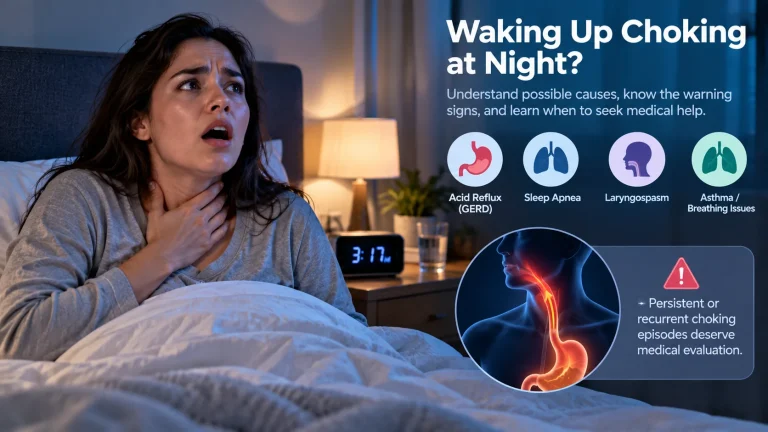
| Sleep apnea / breathing disruption | Loud habitual snoring, witnessed pauses, gasping/choking, morning headaches, marked daytime sleepiness. | OSA causes repeated breathing-related arousals and fragmented sleep. | That nighttime waking alone diagnoses OSA. |
| Pain, reflux, cough, hot flashes | Awakening coincides with symptoms you can feel or identify. | Physical symptoms can fragment sleep and may need condition-specific treatment. | That generic insomnia tips will fix an untreated medical trigger. |
| Environment | Heat, sweating, noise, light, partner/pet movement, uncomfortable bedding. | Higher ambient temperatures are generally associated with worse sleep quantity and quality. | That one bedroom temperature is medically ideal for everyone. |
| Medications / substances | Pattern began after a medication change, stimulant use, withdrawal, or other substance change. | Many agents can affect sleep continuity in different ways. | That you should stop a prescribed medicine on your own. |
| Circadian timing / early final waking | You wake earlier than intended and cannot return to sleep, especially with an early schedule or mood/circadian symptoms. | Early-morning awakening can occur with insomnia, circadian timing, mood problems, aging and other causes. | That cortisol is the default explanation. |
If You Wake Up and Cannot Fall Back Asleep
The goal is to avoid adding extra alertness, frustration, or stimulation.
If possible, avoid repeatedly checking the time or calculating how many hours remain. Monitoring can increase sleep-related arousal.
Use dim light if you need to get up. Avoid work, upsetting news, or activities that make you more alert.
A body scan, quiet breathing, or neutral imagery may help some people. If a technique makes you try harder to sleep, drop it.
Stimulus control uses a simple principle: spend long awake periods somewhere calm and return to bed when sleepy. You do not need to watch a stopwatch.
Avoid building a large extra time-in-bed window to “force” recovery. If you are dangerously sleepy, prioritize safety and do not drive or perform safety-critical work until alert enough.
CBT-I Is the Strongest Evidence-Based Treatment for Chronic Insomnia
AASM strongly recommends multicomponent cognitive behavioral therapy for insomnia (CBT-I) for adults with chronic insomnia disorder. CBT-I can improve both sleep onset and sleep maintenance. It typically includes tailored behavioral and cognitive components rather than a generic list of bedtime tips.
Rebuilds the bed-sleep association by reducing prolonged wakefulness in bed and supporting a consistent wake time.
Adjusts time in bed based on a sleep diary. This is a structured treatment with safety considerations, not something this page calculates.
Targets worry, monitoring, catastrophic predictions and effortful attempts to control sleep.
Night Wakings Deserve More Than Sleep Tips When Other Symptoms Are Present
Loud habitual snoring, witnessed breathing pauses, gasping/choking, morning headaches, or marked daytime sleepiness can justify evaluation for obstructive sleep apnea.
If trouble staying asleep is frequent, persistent, and affecting mood, concentration, work, relationships, or daytime function, ask about insomnia evaluation and CBT-I.
Frequent bathroom trips may involve bladder, prostate, medication, fluid, metabolic, sleep-apnea, or insomnia factors. Persistent nocturia deserves its own assessment rather than one assumed cause.
Night sweats, significant pain, reflux, coughing, palpitations, or new symptoms that repeatedly wake you should be evaluated on their own merits.
Common Night-Waking Claims That Go Beyond the Evidence
No. Cortisol has a circadian rhythm, but an exact wake time does not diagnose an abnormal cortisol awakening response or HPA-axis problem.
Not as a default explanation in healthy adults. Nocturnal hypoglycemia is a real medical issue, especially in diabetes treatment, but ordinary waking is not proof of low glucose.
Sleep cycles vary and clock time cannot identify your stage. Brief arousals occur, but exact 90/180/270-minute matching is not a diagnostic test.
There is no general evidence-based bedtime-snack prescription for sleep-maintenance insomnia. Diabetes-related snack decisions are individualized.
Heat can disrupt sleep, but comfort, bedding, clothing, humidity, age and health matter. One exact temperature is not a universal clinical target.
Stimulus control is evidence-based, but repeatedly checking the clock can work against its goal. The practical cue is being clearly awake/frustrated rather than timing every minute.
How to Stay Asleep FAQs
Why do I keep waking up in the middle of the night?
Possible contributors include insomnia, stress, alcohol, nocturia, pain, reflux, menopause symptoms, medications, sleep apnea, environmental disturbance, and circadian timing. The wake time itself usually cannot identify the cause.
Is it normal to wake up during the night?
Brief awakenings can happen during normal sleep. They become more clinically relevant when they are frequent, prolonged, unwanted, reduce total sleep, or cause daytime impairment.
What should I do if I wake up and cannot fall back asleep?
Keep stimulation low, avoid repeated clock-checking, use a quiet relaxation approach if helpful, and if you are clearly awake and frustrated, spend some time somewhere calm before returning to bed when sleepy. That last step reflects stimulus-control principles used in CBT-I.
Can alcohol make me wake up later in the night?
Yes, alcohol can disrupt sleep architecture and REM. A 2025 systematic review found REM disruption even at relatively low doses, but the research does not support predicting one person’s wake-up time from a fixed number of hours after the last drink.
Does waking to urinate mean I drank too much water?
Not necessarily. Nocturia can involve fluid timing, medications, urinary/prostate conditions, sleep apnea, insomnia, aging and other factors. Sometimes a person wakes first and urinates because they are already awake.
When does waking at night count as insomnia?
Insomnia disorder is not diagnosed from one wake-up or one clock time. Clinicians consider repeated difficulty maintaining sleep despite adequate opportunity, associated daytime impairment, duration, frequency, and whether another disorder better explains the problem.
Related SmartSleepCalc Guides
Sources
- VA/DoD. Clinical Practice Guideline for the Management of Chronic Insomnia Disorder and Obstructive Sleep Apnea. 2025. Guideline hub
- Edinger JD, et al. Behavioral and psychological treatments for chronic insomnia disorder in adults: AASM clinical practice guideline. J Clin Sleep Med. 2021;17(2):255–262. PubMed
- Cuddihy LJ, Grandner MA, Nowakowski S. Implementation of Stimulus Control and Sleep Restriction Therapy for Insomnia: Standard Definitions and Best Practices. 2025. PubMed
- Gardiner C, et al. The effect of alcohol on subsequent sleep in healthy adults: a systematic review and meta-analysis. Sleep Med Rev. 2025;80:102030. PubMed
- Verbakel I, et al. From nocturnal awakenings to nocturnal voiding: the relationship between insomnia and nocturia — a systematic review. Minerva Urol Nephrol. 2025;77(2):181–191. PubMed
- Nocturia and obstructive sleep apnea syndrome: a systematic review. Sleep Med Rev. 2023. PubMed
- A systematic review of ambient heat and sleep in a warming climate. Sleep Med Rev. 2024. PubMed
- Bedtime snack evidence context. A systematic review in type 2 diabetes found no consistent relationship between bedtime snacks and improved glycemic control. PubMed