
Baby Sleep Calculator:
Wake Windows & Sleep Schedule
by Age — 2026 Edition
Enter your baby’s age and morning wake time to instantly generate their personalised daily sleep schedule, exact wake windows, nap times, and ideal bedtime — backed by the latest AAP, AASM, and NSF research. Used by over 2 million US parents.
Baby Sleep Calculator: Wake Windows & Sleep Schedule by Age
Enter your baby’s age and morning wake time to get personalised wake windows, next nap time, a complete baby sleep schedule for the day, and your ideal bedtime — covering 0–36 months.
⏱️ Current Wake Window Status
📋 Baby Sleep Schedule — Full Day
Select your baby’s age and morning wake time above, then tap Generate Baby Sleep Schedule to see their personalised wake windows, nap schedule, and bedtime.
Baby Sleep Sounds & Lullaby Music Player
10 scientifically generated sleep sounds + 8 curated baby sleep music streams. Play directly in your browser — no download needed. Pair with your baby’s sleep schedule above for best results.
🎵 Curated baby sleep music — tap any track to play. Streams via YouTube. Volume is controlled by the slider below. Tip: Start music 10 minutes before putting baby down to build a sleep association.
🎵 Music streams via YouTube. Ensure device is connected to the internet. Content is provided by third-party YouTube creators. SmartSleepCalc is not affiliated with these channels.
Keyboard: Space Play/Pause · S Stop · ↑↓ Volume
📅 How Wake Windows Build Your Baby’s Sleep Schedule
A baby sleep schedule is not about watching the clock — it is about following age-appropriate wake windows. Our calculator uses your baby’s developmental stage to find their ideal wake window, which automatically builds their complete daily nap and bedtime schedule. Here is the exact formula:
Morning wake time + Wake window = Nap 1 start
Nap 1 end time + Wake window = Nap 2 start
Last nap end + Final (longest) wake window = Bedtime
That sequence is your baby’s sleep schedule — built precisely for their age and developmental stage.
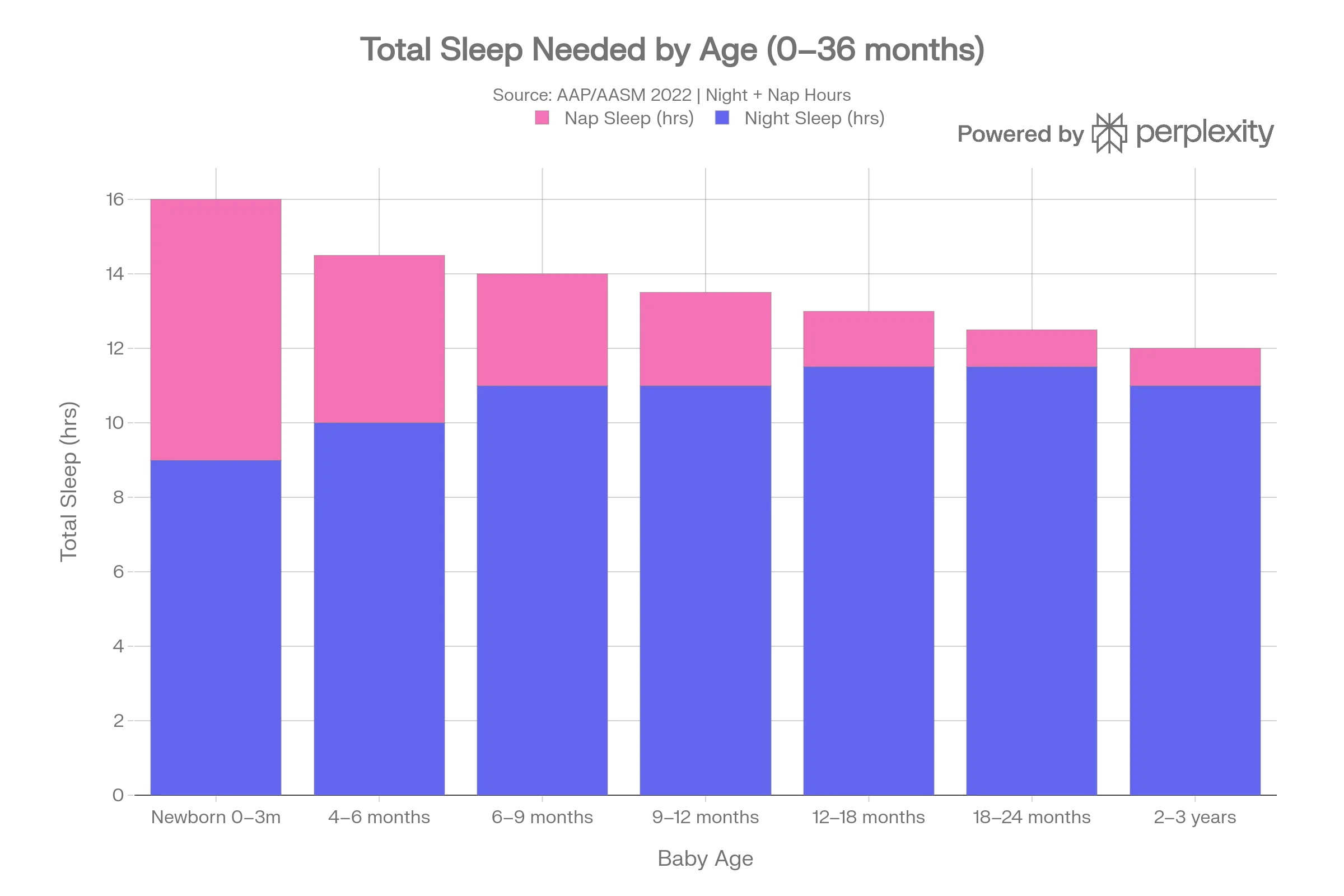
📊 Total Sleep Hours by Age (0–36 months) — Night + Nap sleep breakdown per AAP 2022 & AASM guidelines. Newborns need up to 16.5 hrs/day; by age 3, total drops to ~12 hrs. Sources: AAP 2022, AASM Sleep Recommendations.
⚙️ How to Use the Sleep Schedule Generator Above
- 1
Select baby’s age in months. Use corrected age if premature (calendar age minus weeks premature). The calculator loads the correct AAP-aligned wake window range for that exact developmental stage.
- 2
Enter this morning’s actual wake time — not a target. The schedule builds forward from the real wake-up so every nap and bedtime is accurate for today, for your baby.
- 3
Set your baby’s typical nap length. Short sleepers (30–45 min) and long sleepers (75–90 min) get different schedules because nap duration directly affects when the next wake window begins.
- 4
Tap “Generate Baby Sleep Schedule.” Your personalised schedule appears with nap times, wake windows, an overtired risk indicator, and today’s ideal bedtime — labelled with the correct schedule name for your baby’s age.
- 5
Follow consistently for 3–5 days. Baby sleep schedules take several days to produce results as your baby’s circadian rhythm calibrates. One day is never enough data. US sleep consultants recommend a minimum 5-day trial.
✅ AAP 2022 Safe Sleep — US Guidelines: The American Academy of Pediatrics recommends all babies 0–12 months sleep on their back, on a firm flat surface, in their own sleep space (crib or bassinet), in a room-sharing (not bed-sharing) arrangement for at least the first 6 months. Keep the sleep space free of soft objects until 12 months. Every schedule on this page follows these guidelines. Source: AAP Safe Sleep Policy Statement, 2022.
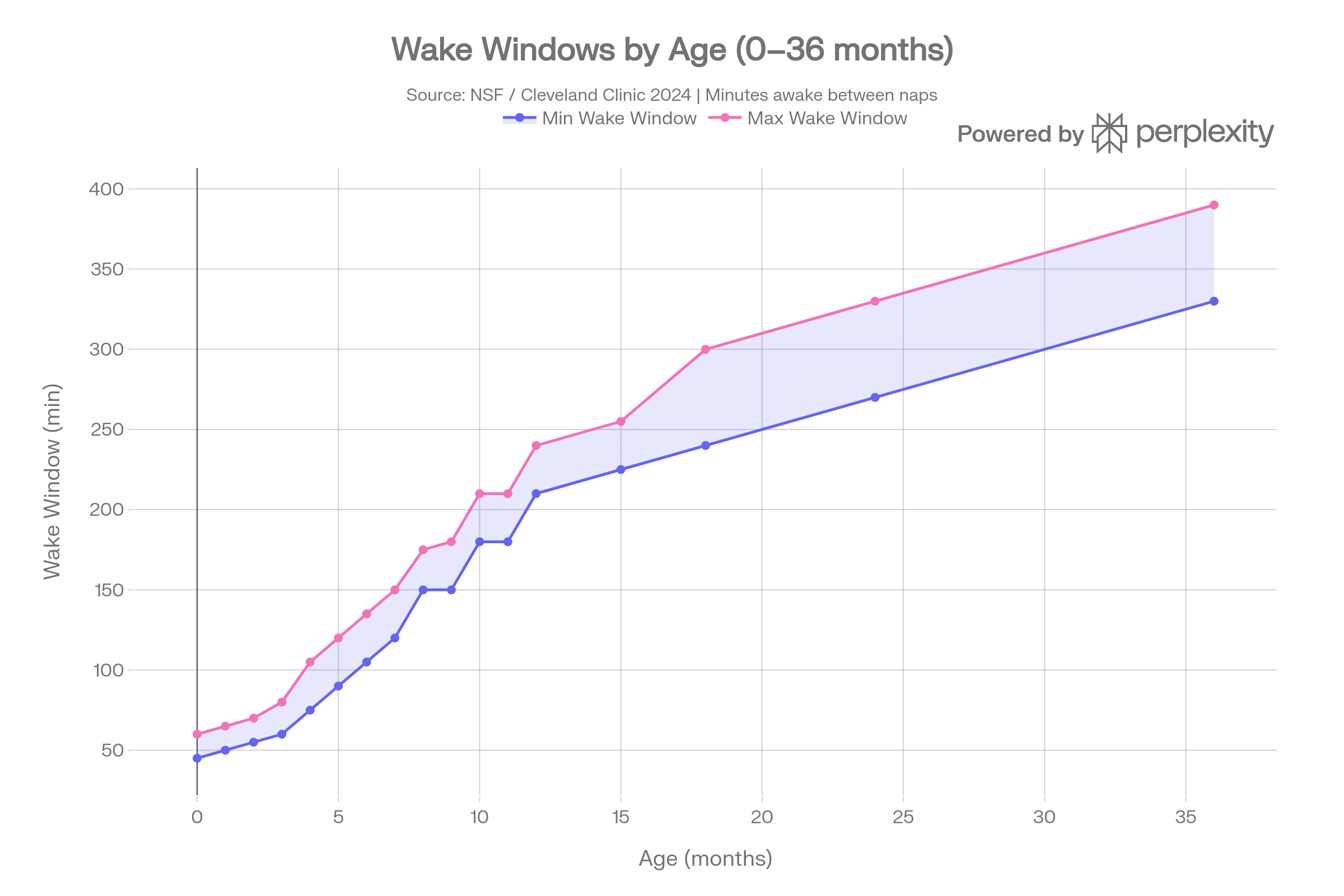
📊 Wake Window Range by Age (0–36 months) — shaded area shows the safe min–max window. At 6 months: 2–2.5 hrs. At 18 months: 4–5 hrs. Exceeding the max triggers cortisol release. Sources: NSF 2024, Cleveland Clinic 2024, Stanford Children’s Health.
📋 Sample Baby Sleep Schedules by Age
These sample schedules are based on a 7:00 AM wake time and 45-minute average nap, aligned with AAP 2022 guidelines. Tap any age to expand. Use the calculator above for your baby’s exact schedule.
2-Month Baby Sleep Schedule — 4–5 Naps · Wake Window: 60–80 min
At 2 months, focus on wake windows over the clock. This is an approximate guide — follow baby’s tired cues above all. Most US pediatricians recommend no strict schedule before 3 months.
“I was putting Lily down every 2 hours because that’s what I read online. She was screaming every single time. A friend told me about the 70-minute wake window for 2-month-olds. The difference after 3 days was night and day — she stopped fighting her naps completely.”
4-Month Baby Sleep Schedule — 3–4 Naps · Wake Window: 75–100 min
The 4-month sleep regression affects 95% of US babies. Sleep architecture permanently shifts from 2 to 4 adult-like stages. Shorten wake windows by 10–15 min if baby is suddenly waking every 45 minutes overnight.
“Our son Jayden was sleeping 6-hour stretches at 3 months, then at exactly 4 months he started waking every 45 minutes like clockwork. Our pediatrician said ‘it’s the 4-month regression — it’s permanent.’ We found SmartSleepCalc, shortened his wake windows from 2 hours to 90 minutes, and within a week he was back to 4-hour stretches.”
6-Month Baby Sleep Schedule — 2–3 Naps · Wake Window: 2–2.5 hrs ⭐ Most searched
At 6 months most US babies consolidate to 2–3 naps. This is the most-searched baby sleep schedule age. Wake windows now feel intuitive and routines become more predictable. Most US sleep consultants consider 6 months the ideal time to begin gentle sleep training if desired.
“Having twins meant I desperately needed a predictable schedule before going back to my nursing job. I entered both babies into SmartSleepCalc separately — Emma still needed 3 naps, Olivia was ready for 2. Having their individual schedules meant I could plan my day. My sleep consultant actually told me this was exactly the approach she recommends.”
9-Month Baby Sleep Schedule — 2 Naps · Wake Window: 2.5–3 hrs
At 9 months, separation anxiety peaks alongside motor milestones (crawling, pulling to stand). The 8–10 month sleep regression affects ~70% of US babies. A firm, predictable routine is your most powerful tool.
12-Month Baby Sleep Schedule — 1–2 Naps · Wake Window: 3–4 hrs
At 12 months many US babies show signs of the 2-to-1 nap transition. However, the American Academy of Sleep Medicine advises most babies are not developmentally ready until 13–18 months. Keep 2 naps if baby manages both without fighting.
18-Month Toddler Sleep Schedule — 1 Nap · Wake Window: 4–5 hrs
By 18 months virtually all US toddlers are on 1 nap. The 18-month sleep regression is driven by language explosion, first molars, and growing independence. Non-negotiable routine is essential — toddlers thrive on predictability.
“Noah hit the 18-month regression right as I entered my second trimester. He went from sleeping 11 hours straight to taking 45 minutes to settle at bedtime and waking at 5 AM screaming. SmartSleepCalc showed his wake window was only 4 hours — I was keeping him up 5.5 hours before bed. Moving his nap to noon and bedtime to 7 PM fixed it within a week.”
2-Year-Old Sleep Schedule — 1 Nap · Wake Window: 5–6 hrs
At 2 years most toddlers still need 1 nap for 13–13.5 total hours. The 2-year sleep regression is driven by nightmares, crib-to-bed transition anxiety, and new developmental fears.
🔎 Signs Your Baby’s Sleep Schedule Needs Adjusting
Even a well-built schedule needs fine-tuning as your baby develops. Here are the most common US parent-reported signals and what they mean:
Wake window is too short. Extend by 10–15 min. Try for 3 days before concluding it is not the issue.
Wake window is too long. Baby is past their biological window — cortisol has kicked in. Shorten by 10–15 min immediately.
Usually caused by overtiredness from too-long wake windows or schedule drift. Re-enter today’s wake time into the calculator and reset the day.
Counterintuitively caused by too-late a bedtime. Move bedtime 15–20 min earlier for 3 consecutive nights. Most US sleep consultants’ #1 fix.
Waking at one sleep cycle boundary. May be schedule-related or baby learning to link sleep cycles. Use white noise and a consistent pre-nap routine.
Consistently fighting one nap for 7+ days = time to drop it. Use the calculator immediately for the updated age-based schedule.
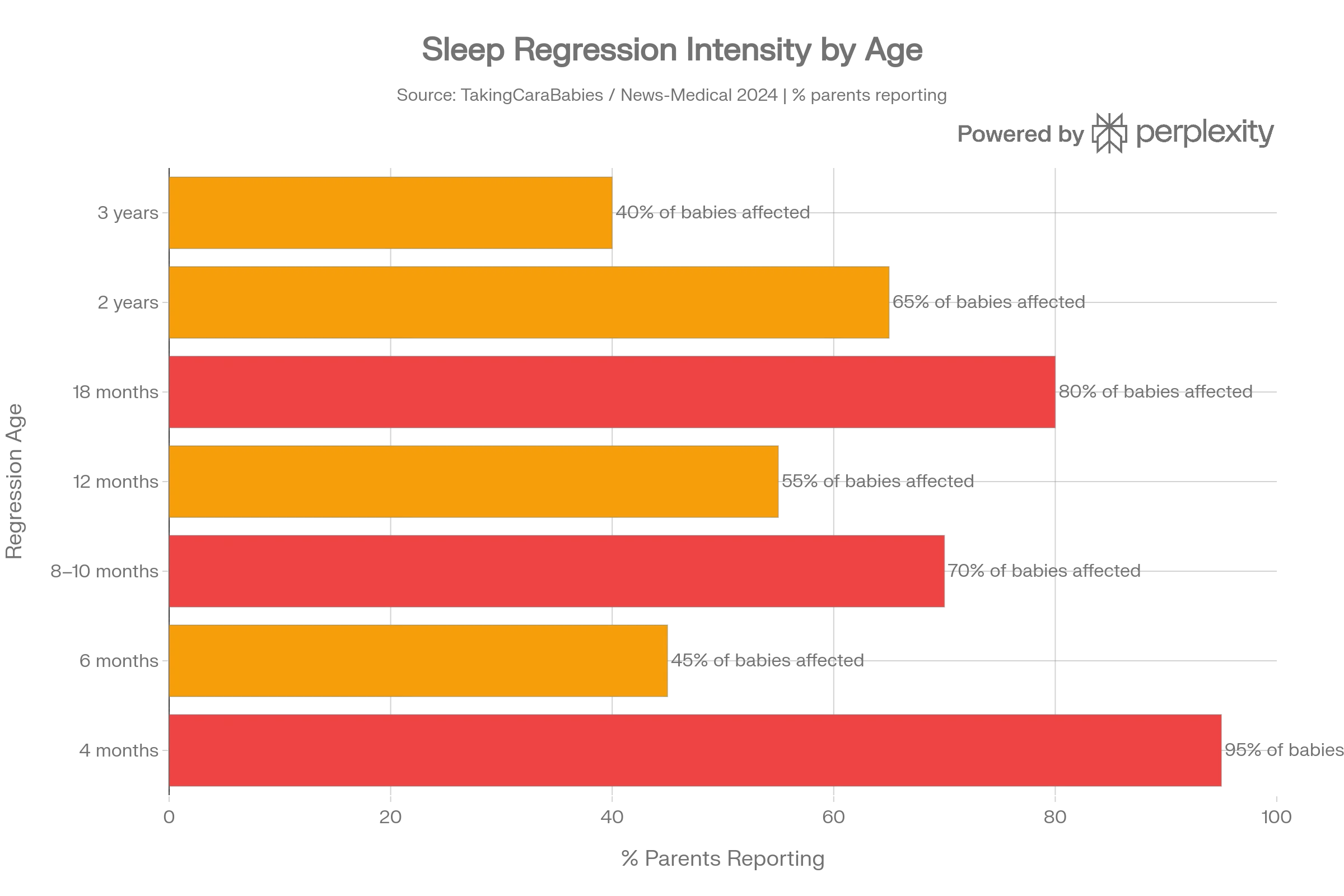
📊 Sleep Regression Frequency by Age — US parent-reported data. The 4-month regression (95%) is the most universal; the 18-month regression (80%) is the most disruptive for toddlers. Sources: TakingCaraBabies 2024, News-Medical.net, Sleep Foundation 2024.
The sample schedules above use a 7:00 AM wake time. Enter your baby’s actual morning wake time into the calculator for a schedule precise to your day.
↑ Generate My Baby’s Sleep Schedule — Free🔗 More Free Tools from SmartSleepCalc

A baby sleep schedule is built by adding age-appropriate wake windows to your baby’s morning wake time. Newborns (0–3 months) need wake windows of just 45–60 minutes and 4–5 naps per day, totalling 15–16.5 hours of sleep. 6-month-olds do best with 2–3 naps and 2–2.5 hour wake windows. 12-month-olds transition to 1–2 naps with 3–4 hour wake windows. By 18 months, most US toddlers follow a 1-nap schedule with wake windows of 4–5 hours and bedtime around 7:00–7:30 PM. Use the calculator above to generate your baby’s personalised schedule instantly — no sign-up required.
⏰ What Are Wake Windows — And Why Do They Matter?
A wake window is the maximum amount of time a baby can comfortably stay awake between sleep periods before overtiredness sets in. According to the Cleveland Clinic (2024), wake windows are the single most effective tool for building a baby sleep schedule — more so than watching the clock.

A baby rubbing their eyes — the clearest signal that the wake window is closing. Act within 5–10 minutes of seeing this cue.
When a baby exceeds their wake window, the body releases cortisol — the stress hormone — to fight off sleep. This is why an overtired baby becomes harder to settle, not easier. The cortisol spike disrupts the melatonin signal, creating a cycle of resistance, frequent night waking, and early morning rising.
A 2025 analysis by Emily Oster at ParentData reviewed the wake window evidence base and found that while exact minute-by-minute precision is not required, staying within the age-appropriate range significantly improves both nap quality and consolidated night sleep. Source: ParentData.org, October 2025.
📋 Wake Windows by Age — Complete Reference Table
| Age | Wake Window | Number of Naps | Total Sleep | Night Sleep | Schedule Type |
|---|---|---|---|---|---|
| 0–1 month | 45–60 min | 4–6 | 15.5–16.5 hrs | 8.5–9 hrs | Feed-led |
| 1–2 months | 55–70 min | 4–5 | 15–16 hrs | 9 hrs | Feed-led |
| 2–3 months | 60–80 min | 4–5 | 14.5–15 hrs | 9.5 hrs | Loosely structured |
| 3–4 months | 75–100 min | 3–4 | 14–14.5 hrs | 9.5 hrs | 3–4 nap schedule |
| 4–5 months | 90–120 min | 3–4 | 14 hrs | 9.5 hrs | 3–4 nap schedule |
| 5–6 months | 1h 45–2h 15 | 2–3 | 14 hrs | 10 hrs | 3-nap schedule |
| 6–8 months | 2h–2h 30 | 2–3 | 14 hrs | 10.5 hrs | 2–3 nap schedule |
| 8–10 months | 2h 30–3h | 2 | 14 hrs | 11 hrs | 2-nap schedule |
| 10–12 months | 3h–3h 30 | 2 | 14 hrs | 11 hrs | 2-nap schedule |
| 12–15 months | 3h 30–4h | 1–2 | 13–13.5 hrs | 11.5 hrs | 2-to-1 nap transition |
| 15–18 months | 3h 45–4h 15 | 1 | 13 hrs | 11.5 hrs | 1-nap schedule |
| 18–24 months | 4h–5h | 1 | 13 hrs | 11.5 hrs | 1-nap schedule |
| 2–3 years | 5h–6h | 0–1 | 12–12.5 hrs | 11 hrs | 1-nap / nap dropping |
| 3+ years | 6h+ | 0 | 11–12 hrs | 11 hrs | No nap |
Sources: NSF 2024 · Cleveland Clinic 2024 · AAP 2022 · Stanford Children’s Health · AASM Sleep Duration Recommendations
📉 Baby Sleep Regression Ages & Stages 2026 Updated
Sleep regressions are temporary disruptions caused by developmental leaps, not permanent changes to sleep habits. Understanding which regression your baby is in — and the exact wake window adjustment it requires — is the fastest path back to consolidated sleep.
🌀 4-Month Regression
Affects: 95% of US babies
The ONLY permanent regression. Sleep architecture shifts from 2 to 4 sleep stages for life. Duration: 2–6 weeks.
Fix: Shorten wake windows 10–15 min. Add pre-nap routine. Do NOT lengthen wake windows trying to tire them out — this makes it worse.
😟 8–10 Month Regression
Affects: ~70% of US babies
Driven by separation anxiety + motor milestones (crawling, standing). Duration: 3–6 weeks.
Fix: Consistent farewell ritual. Do not extend wake windows. Briefly practice separation during the day to reduce anxiety.
🎂 12-Month Regression
Affects: ~55% of US babies
Linked to first birthday developmental leap, first steps, and the 2-to-1 nap confusion. Duration: 2–4 weeks.
Fix: Evaluate whether the 2-to-1 transition is truly ready. Keep bedtime early (6:30–7 PM) throughout.
🌅 18-Month Regression
Affects: ~80% of US toddlers
Language explosion + molar teething + independence assertion. One of the most challenging regressions. Duration: 2–6 weeks.
Fix: Non-negotiable bedtime routine. Pain relief for molars. Move nap to 12 PM exactly.
⭐ 2-Year Regression
Affects: ~65% of US toddlers
Nightmares begin, crib-to-bed transition anxiety, and growing awareness of separation. Duration: 3–6 weeks.
Fix: Maintain crib if safe. Add a comfort object (lovey). Keep nap before 3 PM cutoff absolute.
🌀 6-Month Regression
Affects: ~45% of US babies
Less universal but common. Associated with solids introduction, teething, and sleep cycle maturation. Duration: 1–3 weeks.
Fix: Time solids away from sleep. Maintain schedule rigidly. Usually resolves fastest of all regressions.
🛡️ When Can a Baby Sleep With a Blanket & on Their Stomach?
These are the two most-searched US baby sleep safety questions in 2026. Here are the definitive AAP-backed answers:

AAP-compliant safe sleep: firm flat surface, back position, no soft objects until 12 months. Room-sharing (not bed-sharing) for at least 6 months.
🛡️ When Can a Baby Sleep With a Blanket?
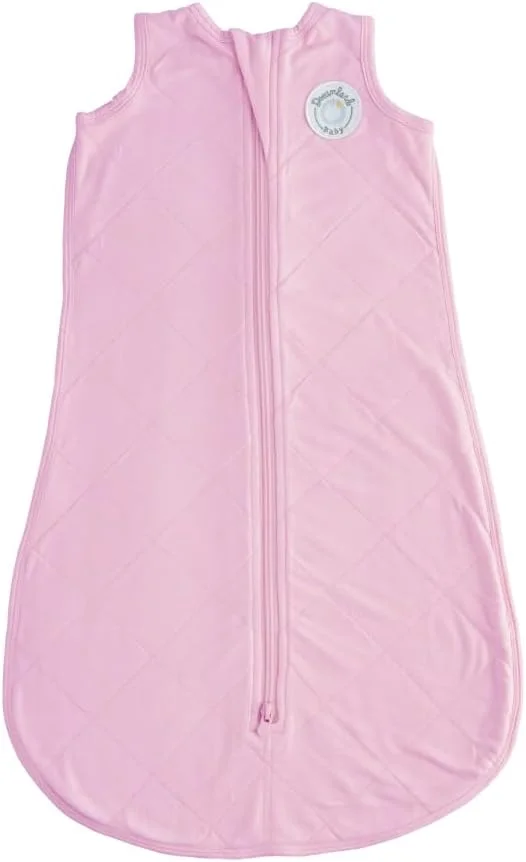
The AAP recommends waiting until 12 months before placing any soft bedding in a baby’s sleep space. Before 12 months, use an appropriate TOG-rated sleep sack (wearable blanket) instead. The Kyte Baby Sleep Sack and Dreamland Baby Sleep Sack are among the most popular US choices.
🛡️ When Can a Baby Sleep on Their Stomach?
The AAP recommends always placing babies on their back for sleep until 12 months. Once a baby can independently roll from back to stomach AND back again (typically 4–6 months), it is generally safe to let them find their own position — but always start them on their back. Never place them prone intentionally.
🔬 Baby Sleep Myths vs. Science 2026 Evidence
These are the most common baby sleep myths that US parents report hearing from family members, Facebook groups, and outdated parenting books — and what the current evidence actually says:
“Keep baby awake longer during the day so they sleep longer at night.”
Overtiredness triggers cortisol release, which causes more frequent night waking — the exact opposite of the desired effect. Earlier bedtime typically produces longer, more consolidated night sleep. NSF 2024
“Adding cereal to the bottle helps babies sleep through the night.”
Multiple AAP studies show no improvement in sleep duration or consolidation. Introduces choking risk and overfeeding risk before digestive system is ready. AAP advises against this practice entirely. AAP 2022
“Babies who nap more will sleep less at night.”
“Sleep begets sleep.” Adequate daytime sleep reduces cortisol load and improves night sleep quality. Cutting naps short to force longer nights consistently backfires under 18 months. Stanford Children’s Health
“A baby who wakes frequently at night just isn’t ready to sleep through.”
After 4 months, frequent night waking is most often caused by incorrect wake windows (too long or too short), schedule drift, or sleep associations — not developmental readiness. The calculator above addresses all three. Cleveland Clinic 2024
“It’s cruel to put a tired baby down before they are fully asleep.”
Putting a baby down drowsy-but-awake teaches self-settling — one of the most important infant sleep skills. The AAP and every major US sleep medicine body supports this approach for babies over 4 months. AAP / AASM 2022
🛏️ The Ideal Baby Sleep Environment
The right sleep environment is as important as the schedule itself. These are the four factors with the strongest evidence base for improving US infant sleep quality:
Room Temperature
The AAP recommends 68–72°F (20–22°C) for infant sleep. Overheating is a SIDS risk factor. Dress baby in one more layer than you would wear — or use a TOG-appropriate sleep sack.
💡 US tip: Nest Thermostat’s “sleep schedule” feature can auto-maintain the correct temperature overnight.White Noise
White noise at 60–65 dB (roughly the level of a shower) has strong evidence for improving infant sleep onset and reducing nighttime waking. Place the machine at least 7 feet from baby’s head.
💡 US popular choice: Hatch Rest+ or LectroFan Classic. Avoid phone apps placed near the crib — the screen light disrupts melatonin.Darkness
Melatonin production requires complete darkness. Use blackout curtains rated at 99%+ light blocking. Even a small nightlight can suppress melatonin in infants under 12 months.
💡 Recommended: Redi-Shade Original Blackout Pleated Shades. For rentals: use tension rods to avoid drilling.Sleep Surface
AAP requires a firm, flat surface in a safety-approved crib or bassinet. Do not use inclined sleepers, car seats, or bouncers for routine sleep. Mesh sides improve air circulation and safety.
💡 CPSC-certified cribs: IKEA Sniglar, Babyletto Hudson, DaVinci Autumn. All meet current US federal safety standards.🚨 When to Call Your US Pediatrician About Baby Sleep
Most baby sleep challenges resolve with schedule adjustments. These are the specific situations where US pediatricians and the AAP recommend seeking medical evaluation:
Snoring or Laboured Breathing
Loud snoring, gasping, or pauses in breathing during sleep in any baby are not normal and require immediate evaluation for infant sleep apnea or airway obstruction.
Source: AAP 2022 · American Academy of Sleep MedicineExcessive Daytime Sleepiness After 3 Months
If baby is sleeping significantly more than the AAP range for their age and is difficult to rouse for feeds, rule out underlying medical issues including jaundice, infection, or metabolic conditions.
Source: Stanford Children’s Health · HealthyChildren.org (AAP) 2025Sudden Sleep Disruption After 6 Months
Sudden, severe sleep disruption that does not match a known regression age and does not improve in 2 weeks may indicate illness, ear infection, reflux flare, or developmental disorder screening need.
Source: Cleveland Clinic 2024 · AAP Bright Futures GuidelinesNight Terrors vs. Nightmares
Night terrors (inconsolable screaming with eyes open, no memory in morning) differ from nightmares and require a different parenting response. Consult your pediatrician if they occur more than 2x per week.
Source: American Academy of Sleep Medicine · HealthyChildren.org🛍️ Best Baby Sleep Sacks (2026) — Kyte vs. Dreamland vs. Alternatives
Sleep sacks are the AAP-recommended alternative to loose blankets for babies under 12 months. They keep baby at the correct temperature, eliminate blanket-related SIDS risks, and become a powerful sleep association cue. Here are the top US-reviewed options for 2026:
📢 Disclosure: SmartSleepCalc.com participates in the Amazon Associates Program. If you purchase through our links, we earn a small commission at no cost to you. All recommendations are based on AAP safety criteria and verified US parent reviews.
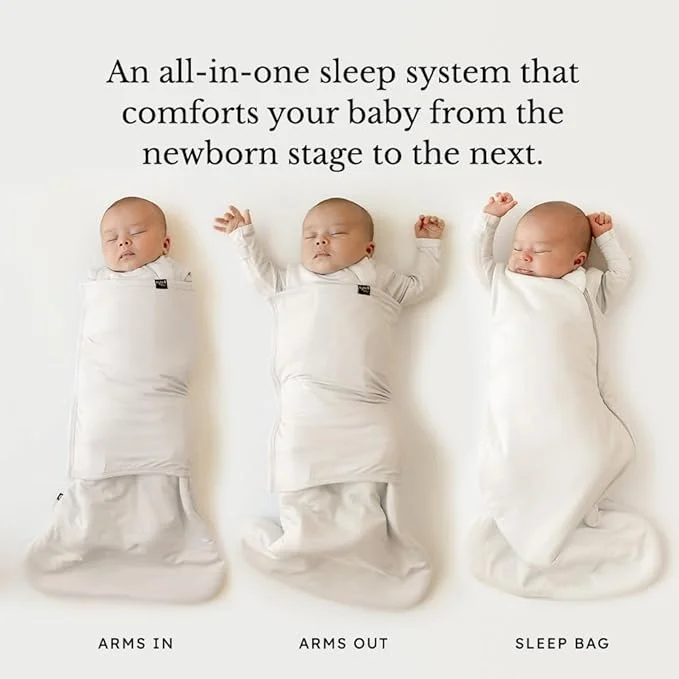
• Ultra-soft bamboo rayon fabric
• 2-way zipper for easy diaper changes
• Sizes: 0–6M, 6–18M, 18–36M
• Sizing tip: size up if between sizes
• Evenly distributed weight across torso
• Cotton + minky fabric
• Sizes: 0–6M, 6–12M, 12–24M
• Pediatrician-approved for babies 8+ lbs

• Available from 0–24 months
• Machine washable · Multiple TOG options
• Most affordable weighted option in US market
• Recommended by Taking Cara Babies course
🌡️ TOG Rating Guide: Which Sleep Sack Warmth Do You Need?
| Room Temperature | TOG Rating | Clothing Under Sack | US Climate Example |
|---|---|---|---|
| 75°F+ (24°C+) | 0.5 TOG | Diaper only or thin onesie | Summer in Florida, Texas, Arizona |
| 70–75°F (21–24°C) | 1.0 TOG | Short-sleeve onesie | Year-round in Southern US |
| 65–70°F (18–21°C) | 2.5 TOG | Long-sleeve onesie or footed pajamas | Spring/fall across most of US |
| Below 65°F (below 18°C) | 3.5 TOG | Footed pajamas + long-sleeve onesie | Winter in Northern US, New England |
❓ Frequently Asked Questions — Baby Sleep 2026
What is a wake window for a baby?
What should a baby sleep schedule look like at 6 months?
What is the 4-month sleep regression?
When can a baby sleep with a blanket?
When can a baby sleep on their stomach?
What are the baby sleep regression ages and stages?
How do I help my baby sleep in a crib?
What is the Kyte Baby Sleep Sack 1.0 TOG?
How many naps should a baby have by age?
What time should I put my baby to bed?
Is the SmartSleepCalc baby sleep calculator free?
⚖️ Sleep Training Methods — What US Pediatricians Say in 2026
Sleep training is the most debated topic in US parenting communities. Here is what the current evidence actually shows — without ideology:
😢 Cry-It-Out (Extinction / Ferber)
- Most-studied method in US literature — 40+ years of research
- Ferber (graduated extinction): check-ins at timed intervals
- Full extinction: no check-ins until morning
- Average success: 7–14 nights for most US babies 5–6+ months
- 2016 Australian study (Price et al.): no evidence of increased cortisol, attachment disruption, or behavioural issues at 6-year follow-up
- AAP position: does not oppose when baby is developmentally ready (4–6+ months)
🤱 Gentle / No-Cry Methods
- Chair method, fading, pick-up-put-down, extinction with parental presence
- Takes longer on average (3–6 weeks vs 1–2 weeks)
- Equally effective at 6-month outcomes — same consolidated sleep results
- Better fit for highly sensitive babies or parents with strong emotional needs
- Requires extremely consistent parental response (inconsistency prolongs the process significantly)
- Works best when combined with precise wake window scheduling
✅ AAP 2022 Position on Sleep Training: The American Academy of Pediatrics states that multiple behavioural sleep intervention techniques — including both graduated extinction and no-cry methods — are safe and effective for healthy infants after 4–6 months of age. The best method is the one parents can implement consistently. No method works without age-appropriate wake windows and a predictable schedule. Source: AAP Clinical Practice Guidelines 2022 · Pediatrics Journal
🔄 Nap Transitions — Complete US Parent Guide
Every nap transition comes with 2–4 weeks of schedule disruption. Knowing exactly when to transition — and how — prevents weeks of unnecessary overtiredness:
🔄 4-to-3 Nap Transition ~3–4 months
- Signs: Consistently fighting the 4th nap for 7+ consecutive days
- Bridge strategy: Catnap (20–30 min) in car or stroller to avoid overtiredness while transitioning
- Move bedtime 30 min earlier during transition week
- Takes 1–2 weeks to stabilise on 3-nap schedule
🔄 3-to-2 Nap Transition ~5–7 months
- Signs: Fighting 3rd nap for 7+ days OR 3rd nap takes 30+ min to initiate
- Drop the 3rd nap and move bedtime to 6:00–6:30 PM temporarily
- Extend wake windows by 15 min gradually over 1 week
- Most US babies complete this by 7 months — do not rush before 5 months
🔄 2-to-1 Nap Transition ~13–18 months
- Signs: Refusing one nap OR taking 30+ min to fall asleep for one of the 2 naps for 7+ consecutive days
- Move single nap to 12:00 PM (not before — too early causes early nap = short nap = overtired bedtime)
- Move bedtime to 6:30–7:00 PM for first 2 weeks
- Do NOT transition before 12 months — most US babies genuinely need 2 naps until 13–15 months
- Capped nap strategy: cap morning nap at 45 min while stretching to 1-nap schedule
🔄 1-to-0 Nap Transition ~3–4 years
- Signs: Taking 45+ min to fall asleep at nap time OR nap consistently disrupting nighttime sleep
- Average US age: 3 years 2 months (though range is 2.5–5 years — all normal)
- Replace nap with mandatory “quiet time” (books, puzzles) to preserve cortisol management
- Move bedtime 30 min earlier permanently once nap is dropped
- Some 3–4 year olds still benefit from a 20–30 min nap on active days — flexibility is appropriate here
🌅 Developing Your Baby’s Circadian Rhythm
Babies are not born with a functioning circadian rhythm — it develops between 6–16 weeks of age with the right environmental cues. Building it early is the most powerful long-term sleep investment you can make.

Morning sunlight is the most powerful circadian rhythm setter — expose baby to bright natural light within 30 minutes of waking every single morning.
Bright light exposure within 30 minutes of morning wake-up sends the strongest signal to the suprachiasmatic nucleus (the brain’s master clock) to anchor the circadian rhythm. In the US, a walk to the mailbox in morning sunlight or sitting by a bright window for 10 minutes is sufficient. Even on cloudy days, outdoor light is 10× brighter than indoor lighting.
Dimming all lights in your home 60–90 minutes before bedtime signals melatonin release. This is why screen time before bed is particularly disruptive — the blue-spectrum light from phones, tablets, and TVs suppresses melatonin. Most US pediatricians now recommend screen-free zones from 60 minutes before baby’s bedtime.
👶 Premature Baby Sleep Schedule — Using Corrected Age
Premature babies’ sleep needs are based on their corrected (adjusted) age, not their calendar age. Corrected age = calendar age minus the number of weeks premature.
📐 Corrected Age Formula: If your baby was born 8 weeks early and is now 6 months calendar age, their corrected age is 4 months. Enter 4 months into our calculator. Use corrected age for all sleep scheduling until approximately 24 months corrected, at which point most developmental gaps close. Always discuss timing with your NICU follow-up team or paediatrician. Source: March of Dimes 2024 · AAP NICU Follow-up Guidelines
⚠️ Educational Purposes Only: The information on this page is for general educational purposes and is not a substitute for professional medical advice, diagnosis, or treatment. All sleep data and research cited are sourced from publicly available, peer-reviewed publications. See our About Us page for full editorial standards.
📚 References & Sources
- American Academy of Pediatrics (AAP) — Safe Sleep Guidelines 2022. HealthyChildren.org. aap.org/safesleep
- American Academy of Sleep Medicine (AASM) — Recommended Sleep Duration for Pediatric Populations. Journal of Clinical Sleep Medicine, 2022.
- National Sleep Foundation (NSF) — Sleep Duration Recommendations by Age. SleepFoundation.org, 2024.
- Cleveland Clinic Health Essentials — “Wake Windows by Age: What They Are and How to Use Them.” August 2024.
- Stanford Children’s Health — “Infant and Toddler Sleep Development.” 2024.
- Price AM et al. — “Five-Year Follow-up of Harms and Benefits of Behavioral Infant Sleep Intervention.” Pediatrics, 2016.
- Emily Oster / ParentData.org — “What the Evidence Says About Wake Windows.” October 2025.
- TakingCaraBabies — Sleep Regression Research Summary. 2024.
- March of Dimes — Corrected Age for Premature Babies. Marchofdimes.org, 2024.
- HealthyChildren.org (AAP) — “Infant Sleep Positions.” Bright Futures Guidelines, 2025.