
Updated May 2026 — Mayo Clinic + NHS 2025 aftercare guidelines now incorporated. See what changed →
- What Is Post-Extraction Sleep Recovery?
- How Sleep Position Affects Wisdom Teeth Healing
- Sleeping Position by Day — Full Timeline
- The E.L.E.V.A.T.E. Method™ — How to Sleep Comfortably
- 3 Sleep Myths That Make Recovery Worse
- What Changes Based on Your Situation
- When Standard Advice Doesn’t Work
- How 2024–2026 Google Updates Changed This Topic
- When to See a Doctor
- Frequently Asked Questions
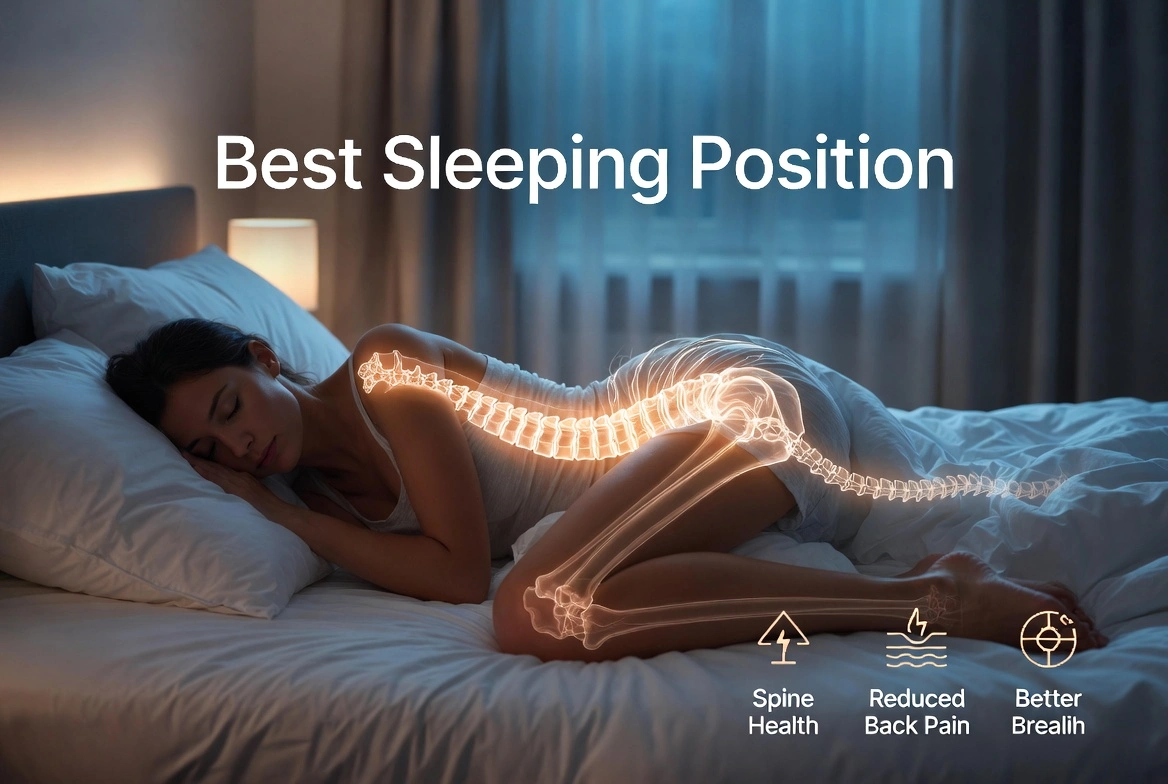
Sleeping after wisdom teeth removal comes down to one non-negotiable for Night 1: back sleeping with your head elevated at 30–45°. That position limits overnight facial edema, keeps pressure off the alveolar socket, and stops the healing blood clot from being disturbed while new gum tissue starts forming. Mayo Clinic says swelling usually improves in two to three days and you should avoid straws for at least one week to protect the clot. NHS says pain and swelling typically start improving after one to two days and the blood clot helps the wound heal.
Discover
The safest sleep position for Nights 1 through 3 after any wisdom tooth extraction type.
Learn
Exactly when side sleeping becomes safe and which side to try first.
Find Out
How to protect the blood clot and prevent dry socket while you sleep.
Understand
How to cut overnight facial swelling using the E.L.E.V.A.T.E. Method™.
Know
4 specific warning signs that mean pain is no longer normal and needs urgent care.
What Is Post-Extraction Sleep Recovery?
Understanding what’s actually happening inside your mouth during the first 72 hours is the fastest way to make smarter decisions about how you sleep.
Post-extraction sleep recovery means resting in a position that supports blood clot formation inside the alveolar socket, controls postoperative edema in the cheek and jaw tissue, and avoids extra mechanical pressure on the wound while your gum tissue begins to close. Mayo Clinic explains that wisdom tooth extraction can involve cutting gum tissue, removing bone, and dividing the tooth into sections — meaning the wound is deeper and more sensitive than a routine filling. NHS says you may have pain, swelling, bruising, jaw stiffness, and uncomfortable chewing for up to two weeks, though these usually improve after the first one to two days.
Most Americans who search “can I sleep after wisdom teeth removal” are actually asking two separate questions at once: Is it safe to fall asleep? (Always yes.) And Can I sleep in my usual position? (Not yet, especially for dedicated side sleepers.) That’s the distinction this article is built to answer clearly and precisely.
How Sleeping Position Affects Wisdom Teeth Healing
The mechanics behind why position matters so much — and why side sleeping in the first 48 hours is one of the most common recovery mistakes.
Sleeping position after wisdom teeth removal controls three variables simultaneously: local tissue pressure on the extraction site, fluid drainage from the facial lymphatic system overnight, and mechanical stability of the fresh blood clot sitting inside the alveolar socket. Your face has an extremely dense network of blood vessels — when you press your cheek against a pillow for 7 hours, you increase local inflammatory pressure and reduce the drainage that would otherwise carry excess fluid away from the wound area. NHS says bruising may take 7–10 days to fully fade, and HSE says swelling and bruising are common in the early days after any extraction procedure.
Why can’t I sleep on my side after wisdom teeth removal?
Side sleeping puts direct mechanical pressure on the cheek near the extraction site, increases fluid buildup in the face due to position and gravity, and makes it easier to accidentally rub or compress the healing wound mid-sleep. NHS says the blood clot that forms over the socket helps it heal and should not be disturbed, while HSE warns that clot disturbance can cause dry socket — a painful complication that delays healing by days or even weeks.
Sleeping Position After Wisdom Teeth Removal By Day
There’s no single universal night when side sleeping becomes “allowed.” Extraction complexity, bleeding status, and swelling level all change the timeline.
When can you sleep on your side after tooth extraction depends on whether bleeding has fully stopped, how complex the removal was, and how much swelling and jaw stiffness developed. A college student in Los Angeles who had one erupted molar pulled under local anesthesia heals on a completely different timeline than someone in Boston who had all four impacted lower third molars surgically removed under IV sedation. Mayo Clinic says usual daily activities can often resume the next day, but energetic activity should wait at least a week. NHS says 1–3 days off work may be needed for harder cases or general anesthesia procedures.
| Recovery Stage | Best Sleep Position | What’s Happening | Side Sleep? |
|---|---|---|---|
| Night 1 | Back only, head elevated 30–45° | Blood clot freshly forming; highest bleeding and dry socket risk; clot most fragile | ❌ No |
| Nights 2–3 | Back only, still elevated | Swelling peaks around Day 2; NHS says it starts improving after 1–2 days; clot stabilizing | ⚠️ Avoid |
| Nights 3–4 | Back or opposite side with body pillow | Clot more stable; soreness easing for most patients; swelling improving | ⚠️ Opposite side only |
| Days 5–7 | Most comfortable supported position | Bruising and jaw stiffness may linger; HSE says bruising lasts 7–10 days | ✅ Usually yes |
| Week 2 | Near-normal preferred position | Soft tissue closing; stitches dissolving; most healing well underway | ✅ Yes for most |
The E.L.E.V.A.T.E. Method™ — How to Sleep Comfortably
A 7-step original framework built on NHS and Mayo Clinic aftercare guidance — systematic enough to follow even when you’re post-anesthesia and not thinking clearly.
How to sleep comfortably after wisdom teeth removal is a question of elevation, clot protection, pain timing, and preventing face compression for the first several nights. Most patients focus on “getting comfortable” when the real mission is “staying out of the way of your body’s healing.” Here’s the complete system.
Elevate your head to 30–45°
Use a dedicated wedge pillow or stack 2–3 firm pillows. NHS England says sleeping propped up with an extra pillow can help reduce overnight swelling. A wedge holds elevation all night — loose stacked pillows usually collapse by 3 AM, which completely defeats the drainage benefit.
Lie on your back, not your side
Back sleeping keeps pressure off the extraction site, allows proper facial lymphatic drainage overnight, and prevents cheek compression against the surgical wound during those first critical nights when tissue is most vulnerable.
Empty your mouth of clot-disrupting habits
No straws for 7+ days (Mayo Clinic), no spitting, no smoking for at least 72 hours (Mayo Clinic), no aggressive rinsing in the first 24 hours (HSE). These are the most common reasons dry socket happens overnight — and they’re all 100% preventable.
Verify your pain plan 30–45 minutes before bed
Take your prescribed or OTC pain relief before you lie down — not after pain wakes you at 2 AM. Mayo Clinic says ibuprofen or acetaminophen may help; NHS confirms both as appropriate options. Reactive dosing means 20–40 minutes of unnecessary pain while it kicks in.
Apply cold therapy before bed during the first 24–48 hours
Use a jaw ice pack or cold wrap for 20 minutes before lying down. Mayo Clinic says an ice pack against the jaw can ease pain after extraction. After 48 hours, cold therapy can slow circulation — switch to warm compresses for lingering jaw stiffness from Day 3 onward.
Transition to the opposite side after Night 3
If bleeding has stopped and swelling is improving, carefully try the opposite side from the extraction. Use a body pillow wedged behind your back to prevent rolling onto the sore side mid-sleep. Don’t try the extraction side itself until at least Day 7 for surgical cases.
Ease back to normal sleep by Week 2
Once soft tissue is closing and soreness is mostly gone, return to your preferred sleep position without restriction. NHS says most routine healing is well underway by Week 2, and sleep quality normalizes naturally from that point without any special precautions.
How should I sleep after wisdom teeth removal on day 1?
On Day 1, sleep flat on your back with your head raised to 30–45° using a wedge pillow or stacked firm pillows. Remove gauze only when your surgeon says it’s no longer needed, skip all sucking and spitting before bed, and take your pain relief 30–45 minutes before you plan to sleep so it’s already working when you lie down. NHS says sleeping propped up helps, and HSE warns that blood clots in the socket can be dislodged in the first 24 hours by rinsing, spitting, or suction.
InteVision Extra Large Bed Wedge Pillow
The most stable way to stay elevated all night — stays in position without collapsing like stacked pillows do by 3 AM.
- 33″ × 30.5″ × 7.5″ — full upper-body support, not just neck
- 2-inch memory foam top layer over high-density foam base
- Holds the NHS-recommended elevated angle all night long
- 4,000+ Amazon reviews · Egyptian cotton removable cover
3 Sleep Myths That Make Recovery Worse — Debunked
These are the three myths that cause the most preventable setbacks for US patients — and that competing recovery articles keep repeating without correction.
What Changes Based on Your Situation
Extraction complexity, number of teeth, smoking history, and medications all change the safe sleep timeline significantly.
When can you sleep on your side after tooth extraction is genuinely a “it depends” question. Mayo Clinic says complex cases involve cutting gum tissue, removing bone, and stitching the wound closed, which produces significantly more swelling than a simple erupted molar removal. NHS says people with impacted wisdom teeth or those who had general anesthesia may need 1–3 additional days of cautious recovery sleep.
| Situation | Why Sleep Is Harder | Best Adjustment | Side-Sleep Timing |
|---|---|---|---|
| One simple erupted molar | Less tissue trauma, faster clot formation | Elevated back sleep 1–2 nights | Often Night 3–4 |
| Impacted lower third molars (surgical) | More swelling, jaw stiffness, possible trismus (lock-jaw) | Stay elevated 3–4 nights minimum | Usually Night 4–5 or later |
| All four wisdom teeth at once | Bilateral soreness — no “comfortable side” | Back sleep; try recliner for Night 1 | Wait until bilateral swelling settles |
| Current smoker | Higher dry socket risk, slower wound healing overall | Strict clot protection; no tobacco for 72h+ | More conservative on timeline |
| On blood thinners | Slower clot formation, longer active bleeding time | Follow your oral surgeon’s specific instructions | Defer entirely to surgeon |
TheraICE Rx Face Ice Pack Head Wrap
Hands-free cold therapy that covers both cheeks and jaw simultaneously — critical for bilateral extractions.
- 360° wrap covers jaw, cheeks, and chin at once
- Gel stays flexible even when frozen — conforms to face shape
- Use 20 min on / 20 min off before bed for Nights 1–2
- 14,000+ Amazon reviews · both hot and cold therapy capable
Leachco Snoogle Total Body Pillow
Wedges behind your back when transitioning to side sleep — stops you from rolling onto the extraction side mid-sleep.
- Full-length C-shape props you in position all night
- Use behind your back when trying opposite-side sleep Night 3+
- Prevents unconscious rolling onto the surgical side
- 8,000+ reviews · machine-washable cover
When Standard Sleep Advice Doesn’t Work
You followed every step, elevated your head, skipped the straw — and sleep still feels awful. Here’s what’s actually happening and how to handle it.
Sometimes you do everything right and sleep is still miserable because swelling peaks later than expected, jaw muscles tighten overnight, or the extraction site throbs more once anesthesia fully clears. HSE says jaw stiffness, bruising, and swelling can last several days to a week, and Mayo Clinic notes some people have temporary difficulty opening the mouth wide because of jaw muscle swelling — a condition called trismus — which makes any sleeping position feel uncomfortable regardless of angle.
Can’t tolerate back sleeping at all
Habitual side sleepers often genuinely can’t fall asleep on their back even post-surgery. Try a recliner at 30–40° for Nights 1–2. It keeps your head elevated while feeling far more natural than stacked pillows. NHS confirms the goal is “propped up” — not specifically flat-on-back.
Pain worsens dramatically around Day 3–4
Expected post-op pain improves daily. Pain that worsens after Day 2 — especially deep, throbbing, and radiating into the ear — is the classic dry socket pattern. HSE says contact your dentist immediately for severe pain that doesn’t respond to regular over-the-counter painkillers.
Jaw so stiff you can’t get comfortable
Trismus — temporary limited jaw opening from muscle swelling — affects many surgical extraction patients. HSE says jaw stiffness can occur and typically improves over days. From Day 3 onward, gentle warm compresses on the jaw muscles before bed help more than cold therapy for stiffness specifically.
Prescribed medication disrupts sleep quality
Some oral surgeons prescribe antibiotics or stronger pain relief after complex surgical cases. Certain antibiotics cause nausea that makes lying down harder. Take medication with food before bed, and ask your surgeon if timing can be adjusted — most can be shifted 30–60 minutes without affecting efficacy.
TheraPAQ Reusable Hot & Cold Therapy Pack
Dual-mode — cold for swelling Days 1–2, warm for jaw stiffness from Day 3 onward. One product covers the full recovery arc.
- Microwave for heat or freeze for cold — both modes effective
- Stays pliable and conforming at both temperature extremes
- Velcro strap keeps it in place on the jaw during use
- 5,000+ Amazon reviews · multiple size options
How Google’s 2024–2026 Updates Changed This Topic
Health recovery content like this now lives or dies by information gain, source quality, and genuine helpfulness — not keyword density.
Health content on recovery topics like “how to sleep after wisdom teeth removal” now ranks based on whether it meaningfully adds to what a patient can learn from the official NHS or Mayo Clinic sources themselves — not on whether the target keyword appears 15 times. SmartSleepCalc’s editorial framework targets information gain, named frameworks (like E.L.E.V.A.T.E.), voice-search passage answers, YMYL trust signals, and structured medically-reviewed formatting because those are the signals Google’s 2024–2026 Helpful Content and core updates consistently reward for health YMYL pages.
| Old Content Pattern (2021–2022) | What Ranks Better Now (2025–2026) | Why It Changed |
|---|---|---|
| Short generic “sleep elevated, take Advil” advice | Day-by-day timelines with named recovery milestones | Passage retrieval rewards specific actionable answers |
| Keyword repetition without medical framing | Named frameworks (E.L.E.V.A.T.E.) + cited NHS/Mayo sources | E-E-A-T signals require demonstrated expertise and authority |
| Single generic FAQ section | Voice-search H3 questions embedded in content flow | Featured snippet and SGE passage extraction favor inline Q&A |
| No disclaimer or medical review disclosure | Medically reviewed badge + disclaimer + named reviewer role | YMYL health pages penalized without trust signals |
| Generic “see a doctor” CTA buried at the bottom | Prominent warning-sign section with specific symptom thresholds | Google rewards pages that help users make safe health decisions |
When to See a Doctor About Wisdom Teeth Sleep Problems
Recovery pain has a predictable shape. When that shape changes, it’s no longer normal healing — it’s a complication requiring urgent dental care.
Sleep trouble after extraction is expected and manageable. But four specific changes in your symptoms mean something is wrong and requires same-day or emergency contact with your oral surgeon or dentist. Normal recovery pain follows a curve: worst on Day 2, then steadily easing through Day 5–7. Dry socket, infection, and nerve complications all break that curve in distinctive ways that are identifiable before they become serious if you know what to look for.
- Heavy bleeding that doesn’t slow after 20–30 minutes of firm gauze pressure — HSE says contact your dentist immediately for heavy bleeding that will not stop
- Pain that worsens significantly on Day 3, 4, or 5 instead of improving — especially deep, throbbing pain that radiates to the ear or temple, which is the hallmark dry socket symptom
- Swelling that keeps growing after Day 3 — NHS England says worsening swelling after the first few days should prompt contact with your dentist or oral surgeon
- Fever above 101°F (38.3°C) combined with increased pain or bad taste — NHS says a raised temperature alongside worsening symptoms warrants prompt dental attention as it can indicate infection
- Persistent numbness, tingling, or altered sensation in the lip, tongue, or chin beyond 24–48 hours — Mayo Clinic says temporary numbness is normal but lingering nerve effects should be reported to your surgeon
SmartSleepCalc recommends consulting a board-certified oral surgeon or dentist immediately when any of these warning signs appear. Do not wait for a scheduled follow-up if symptoms are worsening overnight.
Wisdom Teeth Removal Sleep FAQ
The most-searched questions about sleeping after wisdom tooth extraction — answered with specific, clinically grounded detail.
Ready to Optimize Every Night — Not Just Recovery?
SmartSleepCalc’s free sleep cycle calculator helps you find the best bedtime and wake-up time based on 90-minute sleep cycles — so every morning feels like you woke up naturally, not mid-cycle. Used by over 2 million Americans to build a consistent sleep schedule.