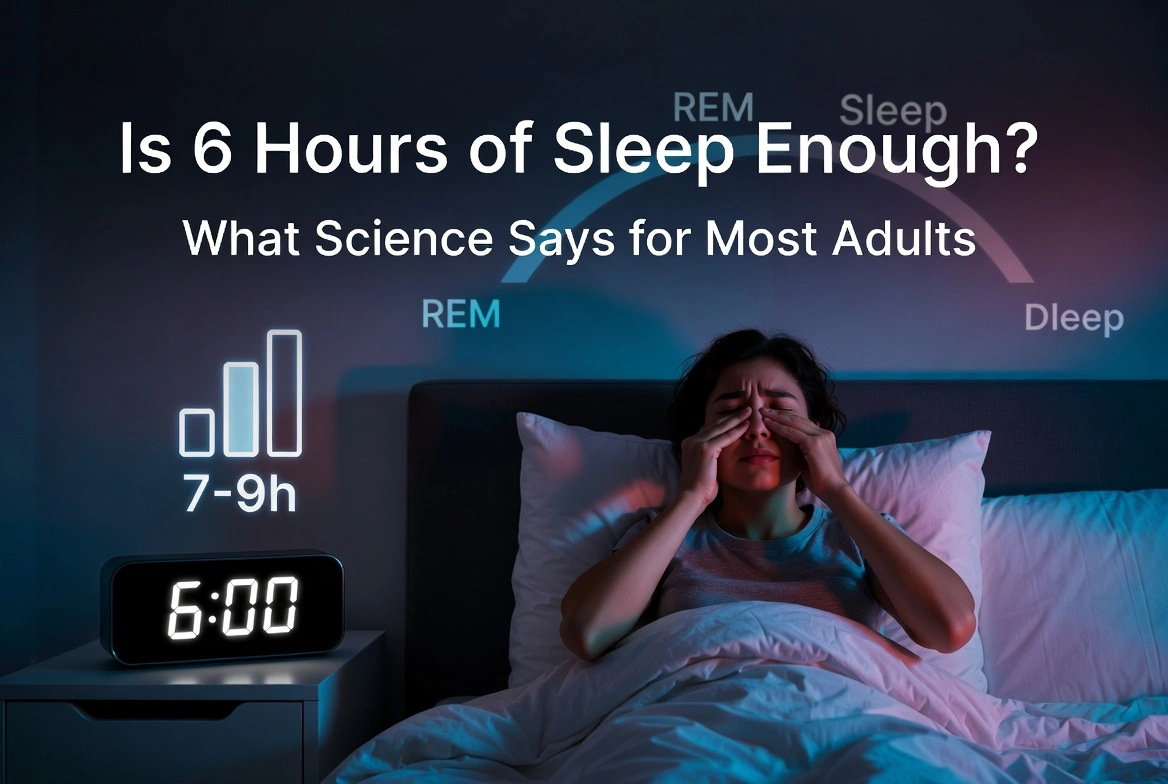
Is 6 Hours of Sleep Enough?
Here’s What the Science Actually Says

No — for most adults, 6 hours of sleep is not enough. The American Academy of Sleep Medicine (AASM) and Sleep Research Society set a minimum of 7 hours per night for all healthy adults. Regularly sleeping only 6 hours impairs memory, reaction time, immune function, and long-term cardiovascular health — often without any subjective sense of impairment.
Six hours. It is the number millions of Americans quietly negotiate with themselves — the bare minimum before the alarm fires, the compromise between a packed schedule and a rested mind. The “I’ll sleep when I’m dead” attitude runs deep in U.S. work culture, from Silicon Valley to hospital night shifts. But is 6 hours of sleep enough to actually sustain health, performance, and longevity?
The short answer is: not for most people. After a 12-month, 15-expert consensus panel, the AASM and the Sleep Research Society concluded that sleeping six or fewer hours is inadequate to sustain health and safety in adults. Yet millions treat it as their normal, unaware that performance has been quietly degrading beneath a fog of habituation and coffee.
What Happens to Your Body on 6 Hours
When you sleep only 6 hours per night, the damage rarely feels immediate — that invisibility is precisely what makes it so dangerous. Research published via the NIH shows that adults sleeping fewer than 7 hours on a regular basis face significantly elevated risk of weight gain, obesity, type 2 diabetes, hypertension, heart disease, stroke, and clinical depression.
Kevin, 38, Seattle, WA: Software engineer, start-up culture. Averaged 5.5–6 hours for three years, fueled by cold brew and willpower. His annual physical at age 38 showed pre-hypertension, elevated CRP, and fasting glucose creeping toward prediabetes — classic chronic sleep deprivation markers. His cardiologist pointed to sleep as the most addressable lever before medication. Adding 90 minutes of sleep nightly reversed his CRP levels within eight weeks.
⚠️ Important: Many of these health consequences accumulate silently without obvious symptoms for months or years before manifesting as diagnosable conditions — making 6-hour sleep particularly deceptive.
“Sleeping six or fewer hours per night is inadequate to sustain health and safety in adults. Seven or more hours of sleep per night is recommended for all healthy adults.”— Dr. Nathaniel F. Watson, AASM President & Consensus Panel Moderator, Sleep Research Society
The Cognitive Cost You Can’t Feel
Perhaps the most alarming research on 6-hour sleep is what it does to your brain — especially because the impairment becomes invisible to the person experiencing it. The landmark Van Dongen et al. study found that people sleeping 6 hours per night for two weeks showed the same cognitive impairment as someone who had been awake for 48 hours straight — yet reported feeling only “slightly sleepy.”
The Whitehall II study, tracking over 5,400 participants across 25 years, showed that decreasing sleep from 7–8 hours was associated with significantly poorer reasoning, vocabulary, and executive function — effects equivalent to aging 4–7 years cognitively. The cruelest aspect is what researchers call “renorming”: your brain recalibrates its impaired state as its new normal, so you genuinely believe you feel fine even while performance collapses around you.

Rachel, 31, New York, NY: Marketing director, two toddlers, 6 hours average. Always felt “basically fine.” Her performance reviews over two consecutive years reflected creeping issues — missed deadlines, uncharacteristic errors in campaign copy, irritability with her team. Her sleep physician identified classic renorming and set a CBT-I plan. Six weeks later, back at 7.5 hours consistently, she described it as “thinking in HD again.”
Are Short Sleepers Real? The Genetics
Yes — but they are exceptionally rare. A small subset of the population carries a mutation in the BHLHE41 gene (the “short sleep gene”) that allows optimal function on 4–6 hours with no measurable health or cognitive deficit. Researchers estimate this applies to fewer than 3% of the population. The key diagnostic marker: without an alarm clock, do you naturally wake after ~6 hours feeling completely rested — consistently, not just occasionally?
For the vast majority, the belief that “I’m fine on 6 hours” is not genetic adaptation. It is sleep deprivation that has been normalised through the renorming effect. If you need caffeine to function before 10AM, you are almost certainly not a natural short sleeper.
✅ Self-test: On two consecutive weekend mornings with no alarm and no obligations, record when you naturally wake. If it is consistently after 7–8 hours, your biological requirement is not 6 hours — regardless of what you have conditioned yourself to believe.
Recommended Sleep by Age (AASM 2026)
The Mayo Clinic, AASM, and CDC publish the following minimum sleep guidelines. Notice: no healthy adult age group has a lower recommended bound of 6 hours.
| Age group | Recommended sleep | Status at 6 hrs | Key risk at 6 hrs |
|---|---|---|---|
| Adults (18–64) | 7–9 hours | Insufficient | Cardiovascular, cognitive decline |
| Older Adults (65+) | 7–8 hours | Insufficient | Fall risk, dementia, immune fragility |
| Teenagers (13–18) | 8–10 hours | Seriously insufficient | Mental health, academic performance |
| School-Age (6–12) | 9–12 hours | Seriously insufficient | Attention, behavior, obesity |
| Toddlers (1–2 yrs) | 11–14 hours | Critical deficit | Brain development, language |
| Infants (4–12 months) | 12–16 hours | Critical deficit | Neural development, SIDS risk |
Why Americans Get Stuck at 6 Hours
Understanding why so many U.S. adults chronically undersleep is the first step to fixing it. This is not primarily a willpower problem — it is a structural one.
Early commutes in metro areas like Los Angeles, Atlanta, and Chicago add 45–75 minutes of pre-work time, compressing available sleep by the same margin. Childcare, overtime, and second jobs follow the same pattern.
A documented behavior pattern — especially post-pandemic — where people stay up late scrolling as the only personal time they experience in a full day, trading sleep for autonomy.
Screens suppress melatonin production and delay natural sleep onset by 30–90 minutes — effectively turning a 10PM bedtime into an 11:30PM sleep onset without the user feeling any different.
Caffeine’s half-life is 5–7 hours. A 3PM coffee still has 50% stimulant effect active at 9–10PM — fighting your adenosine sleep drive precisely when you need it most.
The American Academy of Sleep Medicine estimates up to 80% of obstructive sleep apnea cases in the U.S. are undiagnosed. These patients may spend 8 hours in bed but function on 5 hours of actual restorative sleep due to nightly micro-arousals.
In the U.S. especially, “I only need 4 hours” has historically been treated as a productivity virtue. Research now classifies this as a public health risk attitude — and C-suite burnout data is beginning to change the conversation.
Tanya, 45, Dallas, TX: A high school teacher who got up at 5AM and rarely fell asleep before midnight. She assumed she was simply “not a good sleeper.” A home sleep test revealed moderate sleep apnea — 24 events per hour — fragmenting every night into shallow micro-sleep. After starting CPAP, her subjective sleep quality improved within two weeks and she averaged 7.2 hours for the first time in years without any other change.
How to Get From 6 Hours to 7+
You do not need a dramatic lifestyle overhaul. Incremental behavioral changes compound quickly into significantly better sleep — and the research shows that even recapturing 45–60 minutes per night produces measurable cognitive and health improvements within one to two weeks.
Your circadian rhythm locks to when you wake, not when you sleep. Fix the wake time and your bedtime drive naturally pulls earlier within a few days.
Gradual shifts avoid the frustration of lying wide awake for an hour. Moving 15 minutes every 7 days adds a full hour in 4 weeks with minimal friction.
Caffeine’s 5–7 hour half-life means a 3PM coffee is half-active at 9–10PM — actively blocking the adenosine-driven sleep pressure that makes falling asleep fast and staying asleep possible.
Waking mid-cycle at 6h feels far worse than waking at a complete 90-min cycle endpoint. Timing matters as much as duration — a perfectly timed 6h feels better than a poorly timed 7h.
Dim lights to below 50 lux, no screens, and a consistent pre-sleep routine prime your nervous system for faster, deeper sleep onset — shortening sleep latency by 15–30 minutes on average.
Not sure what time to go to bed to get a full 7 hours without waking groggy mid-cycle? SmartSleepCalc calculates your optimal bedtime based on 90-minute REM/NREM cycles — so you wake at a natural cycle endpoint, not trapped mid-REM.
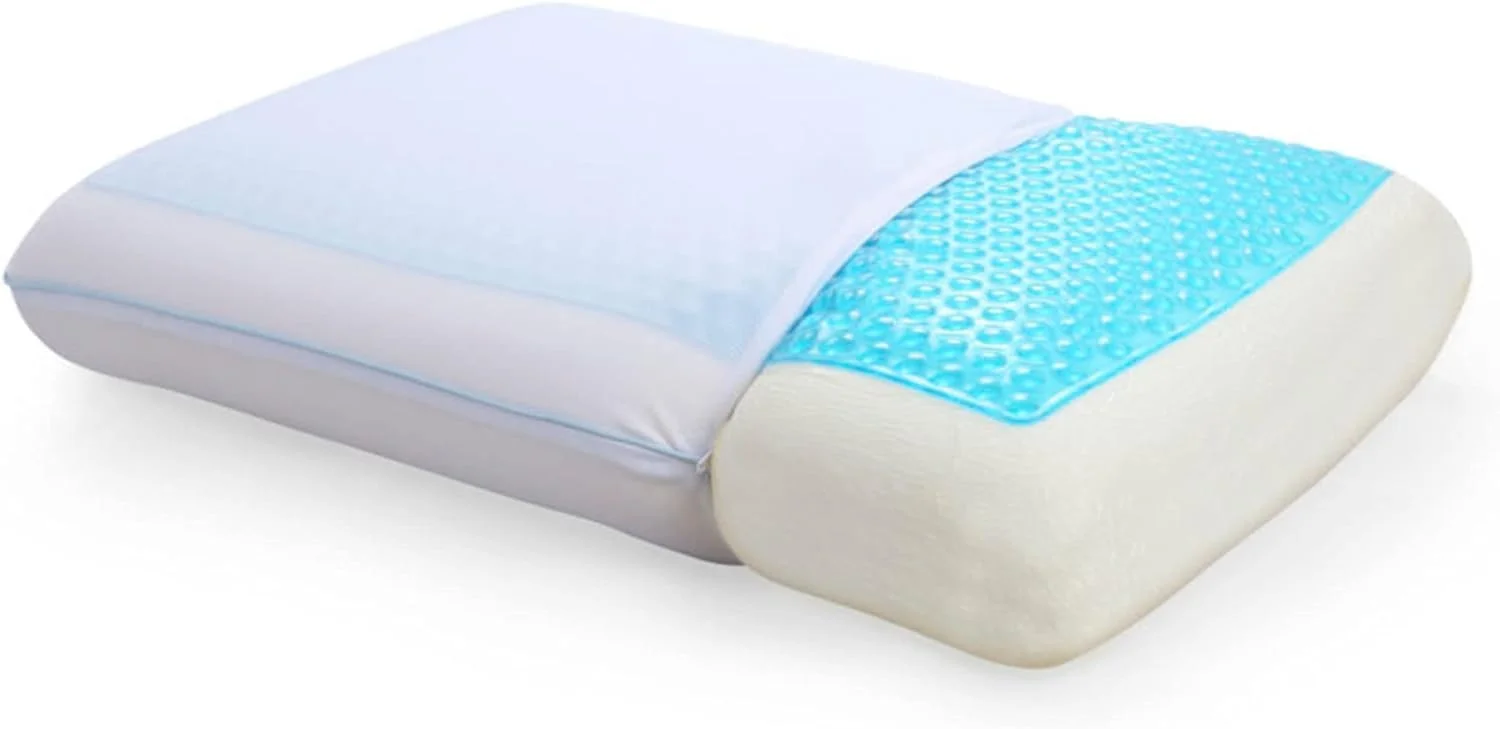
🌙 Calculate My Optimal Bedtime → Free · No sign-up · Results in 3 secondsThese are the most evidence-aligned tools for the specific barriers discussed above — light exposure, caffeine timing, sleep tracking, and temperature regulation.


- 6 hours of sleep is not enough for the vast majority of adults — the AASM minimum is 7 hours per night, with no exceptions by lifestyle or habit.
- Two weeks of 6-hour sleep produces cognitive impairment equivalent to 48 hours of total sleep deprivation — and you won’t feel it happening due to renorming.
- Chronic short sleep is causally linked to heart disease, type 2 diabetes, obesity, depression, weakened immunity, and accelerated cognitive aging.
- Fewer than 3% of people carry the BHLHE41 short-sleep gene; most Americans who “feel fine” on 6 hours are chronically impaired and don’t know it.
- The single most powerful fix: anchor a consistent wake time 7 days a week, then shift bedtime 15 minutes earlier per week until you reach 7+ hours naturally.
- Timing your sleep to complete 90-minute cycles (use SmartSleepCalc) makes 7 hours feel dramatically better than a poorly timed 7.5 hours.
📚 Citations & Sources
- Watson, N.F. et al. (2015). Recommended Amount of Sleep for a Healthy Adult. AASM & Sleep Research Society. PMC4434546 →
- Van Dongen, H.P.A. et al. (2003). The Cumulative Cost of Additional Wakefulness. SLEEP. Oxford Academic →
- Czeisler, C.A. (2011). Sleep Duration, Cognitive Decline: Whitehall II Study. SLEEP. Oxford Academic →
- Cohen, S. et al. (2009). Sleep Habits and Susceptibility to the Common Cold. Archives of Internal Medicine.
- Walker, M. (2017). Why We Sleep. Scribner. NK cell activity and cancer risk, Chapter 8.
- Fatigue Science (2024). Think You Are Performing Your Best With 6 Hours of Sleep? fatiguescience.com →
- Sleep Foundation (2025). Is 6 Hours of Sleep Enough? sleepfoundation.org →
- Mayo Clinic (2026). How Many Hours of Sleep Are Enough? mayoclinic.org →