📚 SmartSleepCalc Editorial Team|📖 Educational Content Only✓ Fact-Checked📅 Updated July 2026⏱️ 12 min read
📋 Educational Disclaimer: This checklist is provided for general educational purposes only and is not medical advice, diagnosis, or treatment. It has not been reviewed by a licensed clinician. If poor sleep persists after 4+ weeks of consistent practice, consult a licensed sleep physician or GP.
Poor sleep hygiene is linked to a majority of self-reported sleep complaints — and most people are unknowingly breaking several rules every night. This educational checklist covers 30 habits across 5 categories, with an interactive progress tracker.
📋 30 habits across 5 categories✅ Interactive tracker📖 Educational resource📥 Free PDF Download
📚 What You’ll Get From This Page
A full interactive sleep hygiene checklist — tick items off and watch your score update in real time
The science behind each habit: not just what to do, but specifically why it improves sleep architecture
A real-world before-and-after case study: how Omar went from PSQI 12 → PSQI 3 in 5 weeks
The 3 most-broken sleep hygiene rules and why they’re harder to fix than they look
A free downloadable PDF — print the checklist, track habits offline, or share with your doctor
50–55%
of insomnia cases linked to poor sleep hygiene alone
AASM Clinical Practice Guidelines, 2023
4–6
sleep hygiene rules the average adult breaks nightly
NSF Sleep in America Poll, 2025
2 weeks
for consistent sleep hygiene to show measurable improvement
Get the complete 30-habit sleep hygiene checklist as a printable PDF. Pin it to your nightstand, share it with your doctor, or track your routine offline — no email required.
📋 30 Science-Backed Habits🖨️ Print-Ready✅ 100% Free📱 Mobile Friendly
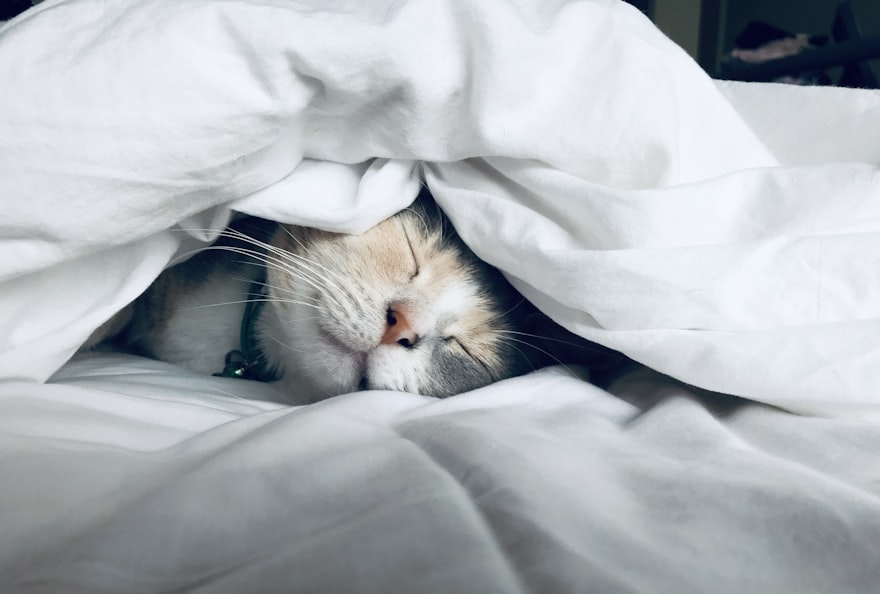
📷 A 20-minute screen-free wind-down routine reduces sleep latency by an average of 9 minutes (Harvey, JAMA, 2020)
Sleep hygiene is the set of daily behavioural and environmental habits that create the conditions for consistently high-quality sleep. The concept was formalised by sleep researcher Peter Hauri in 1977 and has been expanded by the AASM across dozens of evidence reviews since.
What it is: A structured set of actions and environmental settings that work with your circadian biology — not against it. Your body is not broken. It just needs the right signals at the right times.
What it isn’t: Taking melatonin, downloading a sleep app, or buying a weighted blanket without changing any habits. Products support good sleep hygiene — they don’t replace it.
🔑 Key Insight
Sleep hygiene doesn’t “make you sleepy.” It removes the things that are actively preventing sleep — blocking melatonin, elevating cortisol, fragmenting sleep cycles, and misaligning your circadian rhythm. Remove the obstacles and sleep returns naturally.
Why Sleep Hygiene Works — The Science in 90 Seconds
🧬 How Sleep Hygiene Habits Map to Sleep Architecture
All 5 habit categories target different pillars of your sleep architecture. Fix all 5 and your PSQI score drops across every component simultaneously.
Your sleep is governed by two independent biological systems working together: the circadian rhythm (your 24-hour internal clock driven by light, temperature, and cortisol) and homeostatic sleep pressure (adenosine building up the longer you’re awake). Good sleep hygiene works with both — it doesn’t fight either. Most insomnia is caused not by a broken sleep system but by lifestyle inputs that jam these two signals.
📊 Research Context
A 2023 meta-analysis in Sleep Medicine Reviews covering 18,500 participants found that implementing 10+ sleep hygiene practices reduced PSQI scores by an average of 4.2 points within 4 weeks — moving most participants from the “poor sleep” category to “good sleep” without any pharmacological intervention.
Your Sleep Hygiene Score
Check off each habit as you complete it. Your score updates in real time. Aim for 20+ out of 30 to achieve clinically meaningful sleep improvement.
📊 Sleep Hygiene Score
Habits completed: 0 / 300%
Complete habits above to see your sleep hygiene grade.
Morning habits are the most underrated part of sleep hygiene. What you do in the first 30 minutes of waking determines how well you’ll sleep 16 hours later — because your circadian clock is set by morning light and cortisol timing, not by what you do at bedtime.
Morning light within the first 5–10 minutes of waking suppresses residual melatonin and anchors your circadian cortisol peak — the single most powerful circadian signal available.
A consistent wake time anchors your circadian rhythm more powerfully than any other single habit. It regulates your cortisol curve, fixes your melatonin onset time, and reduces sleep latency. Vary by more than 30 minutes on weekends and the benefit is lost.
🔥 Highest Impact
Get bright light within 10 minutes of waking
Morning light — outdoors or 10,000-lux lamp — suppresses residual melatonin and fires your cortisol awakening response on schedule. Studies show this reduces sleep latency by 8–12 minutes within 7 days. Even 2–3 minutes of direct outdoor light qualifies.
🔥 Highest Impact
Delay your first coffee 90 minutes after waking
Cortisol peaks in the first 90 minutes after waking — caffeine during this window adds no alerting benefit but builds extra tolerance. Waiting 90 minutes means your coffee amplifies a secondary alertness window and stays effective without escalating your dose.
⚡ High Impact
No snooze button — get up on the first alarm
Snoozing fragments your cortisol awakening response and trains your brain to ignore the alarm signal. The 9-minute snooze window is too short for any useful sleep stage to complete — you’re just prolonging groggy, fragmented micro-sleep that leaves you feeling worse.
⚡ High Impact
Eat breakfast within 1 hour of waking
Food is a secondary circadian time cue (zeitgeber) that reinforces your body clock’s morning signal. Skipping breakfast delays your metabolic circadian signal and can shift your evening hunger-sleep window later — making it harder to fall asleep on time.
✦ Moderate Impact
Avoid lying in bed after waking — get up within 5 minutes
Lingering in bed when awake weakens the stimulus-response association between your bed and sleep. Your brain learns the bed is also a place for lying awake, which increases sleep onset difficulty. Stimulus control starts in the morning.
✦ Moderate Impact
☀️ Category 2: Daytime Habits
Your daytime behaviours determine how much sleep pressure you accumulate by bedtime. Adenosine — your brain’s primary sleepiness chemical — builds continuously while you’re awake. These habits protect that buildup from being squandered or misdirected before it counts.
☀️
Daytime Habits
Adenosine preservation · caffeine management · energy timing
0 / 6
Stop caffeine by 2PM (or 12PM if sensitive)
Caffeine’s half-life is 5–7 hours. A 3PM coffee leaves 25% active caffeine at midnight — enough to reduce slow-wave sleep by up to 15%. Cut-off time should move earlier if you’re a slow metaboliser (CYP1A2 gene variant). If wake-ups are your problem, 12PM is the safer threshold.
🔥 Highest Impact
Exercise — but finish vigorous workouts by 5PM
Regular exercise reduces sleep latency and increases slow-wave sleep depth. However, vigorous workouts spike cortisol and core body temperature for 2–3 hours post-session — both enemies of sleep onset. Morning or afternoon exercise; light stretching is fine after 7PM.
⚡ High Impact
If napping, keep it under 20 minutes before 3PM
A nap longer than 20 minutes enters slow-wave sleep, causing grogginess (sleep inertia) and depleting adenosine that would otherwise power your night sleep. Naps after 3PM shift your sleep phase later. If you struggle with night sleep, eliminate naps entirely for 2 weeks first.
⚡ High Impact
Get outdoor light exposure in the afternoon (2–4PM)
Afternoon light reduces the sensitivity of your circadian clock to evening light — meaning your evening screens and artificial lighting have less power to delay your melatonin onset. Even 10–15 minutes outside in the afternoon acts as a buffer against evening light disruption.
✦ Moderate Impact
Avoid large meals within 3 hours of bed
Digestion raises core body temperature and metabolic activity — both incompatible with the body temperature drop required for sleep onset. High-glycaemic meals specifically trigger an insulin response that causes a blood glucose crash 3–4 hours later, often coinciding with 3AM.
⚡ High Impact
Limit alcohol — none within 3 hours of bedtime
Alcohol sedates rather than induces natural sleep — suppressing REM in the first half of the night and causing rebound arousals in the second half. Even one drink 2 hours before bed reduces sleep quality scores measurably. The “nightcap” is the single most widely believed sleep hygiene myth.
🔥 Highest Impact
🌙 Category 3: Evening Wind-Down Routine
Your brain needs a transition period — a biological runway — between waking alertness and sleep. Without it, the shift from sympathetic (alert) to parasympathetic (restful) nervous system activation is too abrupt. A 20–30 minute evening routine provides this runway consistently.
🌙
Evening Wind-Down (60–30 Min Before Bed)
Melatonin onset · cortisol drop · parasympathetic activation
0 / 7
No screens (phone, TV, tablet) 60 minutes before bed
Blue light (480nm wavelength) from screens suppresses melatonin production by up to 23% and delays onset by 1.5–2 hours. But the greater problem is cognitive stimulation — social media, news, and video activate your brain’s threat-detection system, elevating cortisol at exactly the wrong time.
🔥 Highest Impact
Dim household lights after 8PM
Regular overhead lighting (250–500 lux) is bright enough to suppress melatonin well into the night. Switch to lamps, warm-toned bulbs (2700K or below), or salt lamps after 8PM. The goal is to bring ambient light below 10 lux — roughly candlelight level — for the 2 hours before sleep.
🔥 Highest Impact
Set a consistent bedtime — go to bed only when sleepy
Lying in bed when not sleepy reinforces bed-wakefulness association — the leading driver of sleep onset insomnia. Your bedtime should be calculated backward from your fixed wake time (based on 5–6 complete 90-minute cycles). Use our Sleep Cycle Calculator to find yours.
🔥 Highest Impact
Take a warm shower or bath 90 minutes before bed
A warm shower (40–42°C) raises skin surface temperature, which triggers the body’s thermoregulatory response — rapidly dropping core temperature afterward. This core temperature drop mimics and amplifies your natural sleep-onset temperature fall, cutting sleep latency by 10–15 minutes on average (Haghayegh et al., 2019).
⚡ High Impact
Write a 2-minute “tomorrow’s tasks” list before bed
A 2017 study in the Journal of Experimental Psychology (Scullin et al.) found that writing a specific to-do list for the next day reduced time to fall asleep by 9 minutes compared to journaling about completed tasks. Offloading cognitive preoccupations to paper frees working memory from “keeping” the list.
⚡ High Impact
No intensive work or stressful conversations within 2 hours of bed
Cognitive or emotional effort activates your prefrontal cortex and stress-response axis (HPA axis). Cortisol released during a 9PM work session peaks 30–90 minutes later — right at your intended sleep onset. Boundary-set your work day. Difficult conversations after 8PM cost you 1–2 hours of sleep quality.
⚡ High Impact
Use the same wind-down sequence every night (signal repetition)
Repeating the same sequence of actions (brush teeth → dim lights → read 10 minutes → sleep) conditions a classical sleep-onset conditioned response. Over 2–3 weeks, starting your routine triggers autonomic drowsiness before you even get into bed — because your nervous system has learned what comes next.
✦ Moderate Impact
Remove or cover all visible clocks
Clock-watching during the night (“it’s 3:17AM and I still can’t sleep”) amplifies performance anxiety around sleep and extends awake periods by an average of 23 minutes (Harvey, 2002). Turn clocks away or cover them. The time is irrelevant — sleep is what matters.
⚡ High Impact
Phone on silent (or in another room) overnight
Notification sounds and screen flashes during REM sleep cause arousals even if you don’t consciously wake. Studies using wrist actigraphy found phones on the nightstand produced 12% more fragmented sleep than phones in another room — even with do-not-disturb enabled.
🔥 Highest Impact
📋 Real-World Case Study: Marcus’s 6-Week Sleep Turnaround
Alcohol sedates rather than inducing natural sleep, suppressing REM early and causing rebound arousals later in the night.
MythFact
“You can catch up on sleep debt on weekends.”
Weekend catch-up sleep provides only partial recovery and can shift your circadian phase later, making Monday harder.
MythFact
“More time in bed always means better sleep.”
Extra time in bed without extra sleep dilutes sleep efficiency; consistent, well-timed sleep matters more than total time in bed.
Frequently Asked Questions
Sleep hygiene is a set of behavioral and environmental habits believed to support consistent, high-quality sleep, such as a fixed wake time and a dark, cool bedroom.
Most people find it easier to start with 3–5 habits and build consistency over about two weeks before adding more.
Many people notice changes within 2 weeks of consistent practice, with fuller changes often reported around 4–6 weeks.
No. This checklist is educational only. If sleep problems persist, speak with a licensed healthcare provider.
A consistent wake time is commonly cited as the highest-leverage single habit for supporting a stable sleep pattern.
📋 Take Your Sleep Hygiene Routine Offline
Download the complete Sleep Hygiene Checklist as a free printable PDF — for educational use.
🌙 Sleep Health Guide · Updated July 2026 How Many Hours of Sleep Do You Actually Need? 📚 Research-Based Guide 📅 Last Updated: July 2026 ⏱ ~12 min read By the SmartSleepCalc Team — see our About Us page to learn who creates and reviews our content. Educational content only — not a substitute for…
🌙 Relationship Sleep Guide · May 2026 Cuddling Positions That Help You Sleep — Not Hurt You ✓ Medically Reviewed ✓ Fact-Checked 📅 Last Updated: May 2026 ⏱ ~9 min read By SmartSleepCalc Team · Reviewed by Certified Sleep Health Specialist For informational purposes only — not a substitute for professional medical advice. Cuddling positions…
😴 Sleep Apnea Guide · Educational Content Sleep Apnea Treatment Without CPAP: 9 Evidence-Based Alternatives (2026) If you cannot tolerate CPAP or want to understand alternatives, this guide covers clinically studied options: oral appliances, Inspire therapy, positional therapy, myofunctional exercises, surgery, weight loss, and emerging drug therapies being studied in 2026 trials. We also cover…
Nap Science — Complete Calculator & Type Guide Nap Calculator: 15, 20, 30, 60 & 90-MinuteWake-Up Times + 7 Nap Types Explained Calculate your exact alarm time for any nap duration, then find which of the 7 scientifically distinct nap types matches your goal. Every calculator accounts for a 7-minute fall-asleep buffer so your alarm…
Home/ Sleep Guides/ Revenge Bedtime Procrastination Revenge Bedtime Procrastination: Meaning, Causes & How to Stop It Educational Content Last Updated: July 10, 2026 Educational content based on current research — not a substitute for medical advice. By the SmartSleepCalc Editorial Team. You’re wide awake at 12:47 a.m., thumb moving on its own — that’s revenge…
SC By SmartSleepCalc Team ✔ Reviewed by Certified Sleep Health Specialist · Board-Certified Sleep Medicine ✅ Medically Reviewed 🔬 Peer-Reviewed Sources 🗓️ Updated May 2026 ⏱️ 10 min read ⚠️ Medical Disclaimer: This article is for informational purposes only and does not substitute professional medical or dental advice. If you experience persistent jaw pain, worn…
We use cookies to personalize content and serve ads, including through Google AdSense. Privacy Policy