How Much Sleep Do You Actually Need? Science-Backed Answer by Age | SmartSleepCalc
Sleep Science · NSF-Referenced · Updated May 2026
How Much Sleep Do You Actually Need? Science-Backed Answer by Age
🔬 NSF Guidelines📅 April 2026⏱️ 12-min read✅ Free · No sign-up
Most adults need 7–9 hours of sleep per night, according to the National Sleep Foundation. Newborns need up to 17 hours; teenagers 8–10 hours; adults over 65 need 7–8 hours. Sleep needs are driven by age, genetics, health status, and lifestyle — not by personal preference or habit.
📊NSF Sleep Recommendations by Age Group
The National Sleep Foundation (NSF) publishes evidence-based sleep duration recommendations updated through expert panel consensus. The table below reflects their most current guidance across the full human lifespan.
1 in 3
US adults sleep less than 7 hours nightly (CDC)
$411B
Annual economic loss from sleep deprivation in the USA
70%
Drop in NK immune cell activity with under 6 hrs sleep
90 min
Average length of one full sleep cycle (NREM + REM)
Source: National Sleep Foundation Sleep Duration Recommendations (Hirshkowitz et al., Sleep Health, 2015 — updated 2023)
Age Group
Recommended Hours
May Be Appropriate
Clinical Notes
Newborn (0–3 months)
14–17 hrs
11–19 hrs
Sleep is polyphasic; essential for rapid synaptic development and neurogenesis
Infant (4–11 months)
12–15 hrs
10–18 hrs
Circadian rhythm begins emerging; naps remain essential for memory consolidation
Toddler (1–2 years)
11–14 hrs
9–16 hrs
Afternoon nap still developmentally beneficial; language acquisition occurs during sleep
Preschool (3–5 years)
10–13 hrs
8–14 hrs
Growth hormone peaks in slow-wave sleep; emotional regulation strongly sleep-dependent
School Age (6–13 years)
9–11 hrs
7–12 hrs
Academic performance, attention, and immune function closely tied to sleep adequacy
Teenager (14–17 years)
8–10 hrs
7–11 hrs
Circadian phase is biologically delayed ~2hrs; synaptic pruning is active during REM
Young Adult (18–25 years)
7–9 hrs
6–11 hrs
Prefrontal cortex development continues until ~25; sleep deprivation amplifies risk-taking
Adult (26–64 years)
7–9 hrs
6–10 hrs
Chronic 6-hour sleep associated with elevated CVD risk, metabolic syndrome, and immune dysfunction
Older Adult (65+)
7–8 hrs
5–9 hrs
Slow-wave sleep decreases with age; sleep fragmentation increases; melatonin production declines
📊 NSF Recommended Sleep Duration by Age Group — SmartSleepCalc Visual Guide (2026)
🧬Why Sleep Needs Vary Between People
Two adults of identical age can have meaningfully different sleep requirements. This isn’t willpower or discipline — it’s biology. Sleep need is a polygenic trait influenced by genetics, physiology, and accumulated lifestyle stressors.
🇺🇸 Real-World US Example
Consider Sarah, a 34-year-old marketing manager in Chicago pulling 60-hour work weeks. She sleeps 5.5 hours on weeknights and “catches up” with 9 hours on weekends. Her FitBit shows she’s hitting the numbers — but her afternoon crash at 2 PM, reliance on three coffees daily, and frequent colds are textbook signs of chronic sleep debt. According to CDC data, 1 in 3 American adults share Sarah’s pattern — particularly in high-pressure careers aged 25–54.
Genetics: The Short Sleeper Gene
A small subset of the population — estimated at 1–3% — carries a mutation in the DEC2 gene (also called BHLHE41), identified by researchers at UCSF in 2009. These “natural short sleepers” genuinely thrive on 5–6 hours without any measurable cognitive or health deficit. This is a rare, heritable biological trait — not a skill that can be trained. If you function poorly on 6 hours, you almost certainly do not carry this mutation.
Lifestyle Factors That Increase Sleep Need
1
Intense ExerciseEndurance athletes and strength trainers require up to 10 hours — HGH and muscle repair are sleep-dependent
2
PregnancyFirst and third trimesters increase total sleep need by 1–2 hours daily due to progesterone elevation
3
Illness & RecoveryCytokine production during immune response elevates adenosine — causing the “sick sleepiness” drive
4
ADHDUp to 75% of individuals with ADHD have comorbid sleep disorders, delayed circadian phase, and increased sleep requirement
5
Chronic StressElevated cortisol fragments deep sleep stages, increasing total sleep needed to achieve the same restorative outcome
⚠️10 Signs You Need More Sleep
Most people significantly underestimate their own sleep deprivation. Because cognitive impairment from sleep loss alters the brain’s ability to self-assess performance, sufferers often feel “fine” while objective testing reveals severe deficits. These are the most clinically validated warning signs.
⚠️ Effects of sleeping 6 hrs/night for 1 week — based on peer-reviewed research (Walker 2017; CDC 2024)
1
You need an alarm to wake upHealthy sleepers completing full cycles wake naturally before or with their alarm
2
Caffeine dependency to functionRequiring caffeine just to reach baseline alertness signals a sleep debt, not a caffeine deficiency
3
Falling asleep within 5 minutesSleep onset under 5 minutes is a clinical marker of severe sleep deprivation (Epworth score indicator)
4
Microsleeps during the dayBrief 1–30 second involuntary sleep episodes indicate dangerous levels of sleep pressure
5
Mood swings & irritabilityThe amygdala becomes 60% more reactive to negative stimuli after one night of sleep restriction
6
Increased hunger & carb cravingsSleep loss elevates ghrelin (+24%) and suppresses leptin (−18%), driving caloric overconsumption
7
Frequent illnessUnder 6 hours of sleep reduces natural killer cell activity by 70%, directly impairing immune defence
8
Difficulty concentrating or rememberingHippocampal memory encoding requires REM sleep — skipped REM means memories literally don’t form
9
Slowed reaction time17 hours of wakefulness produces impairment equivalent to a 0.05% blood alcohol concentration
10
Sleeping significantly longer on weekendsMore than 90 minutes of “weekend oversleep” is a reliable indicator of chronic weekday sleep debt
🔎 Assess Your Sleepiness: Use our free Epworth Sleepiness Scale Calculator to get a clinically-validated score for your daytime sleepiness level in under 2 minutes.
📉Can You Catch Up on Sleep?
Sleep debt is the cumulative deficit between the sleep your brain requires and the sleep it actually receives. It is not a metaphor — it represents a measurable build-up of adenosine, inflammatory cytokines, and cortisol that has real physiological consequences. The concept was rigorously quantified by researcher David Dinges at the University of Pennsylvania, whose studies showed that subjects restricted to 6 hours nightly performed progressively worse over two weeks while their subjective fatigue ratings paradoxically plateaued — meaning they stopped noticing how impaired they had become.
Each hour of deficit requires approximately 4 hours of recovery sleep to neurologically reverse.
The Weekend Recovery Myth
A widely cited 2019 study in Current Biology (Depner et al.) showed that weekend recovery sleep partially restored metabolic markers after five nights of short sleep — but did not fully reverse insulin sensitivity impairment, and subjects re-accumulated the deficit within two subsequent weekdays. A 2021 meta-analysis in Sleep Medicine Reviews confirmed that while acute cognitive deficits can partially recover with one to two recovery nights, the metabolic, cardiovascular, and neuroinflammatory consequences of chronic sleep debt require extended, consistent adequate sleep over multiple weeks to reverse — not a single weekend lie-in.
🇺🇸 Real-World US Example
James, a 28-year-old nurse in Houston, TX works rotating 12-hour shifts. After studying his own Oura Ring data, he found he accumulated 11 hours of sleep debt every week. His solution: extending his off-day sleep by just 45 minutes (not the full 11 hours), maintaining a strict 6:30 AM wake time even on days off, and using blackout curtains + a white noise machine. Within 3 weeks, his resting heart rate dropped 6 bpm and his HRV improved by 18% — measurable signs of real recovery. Consistency, not marathon sleeping, is the fix.
⚠️ Key Takeaway: Weekend catch-up sleep is useful for acute recovery but is not a sustainable strategy. The only evidence-based solution for chronic sleep debt is consistently meeting your nightly sleep requirement 7 days a week.
🔄How Sleep Needs Change With Age
Sleep architecture — the distribution of NREM stages and REM across the night — changes substantially across the lifespan. Understanding these changes helps explain why the same 8-hour window produces very different restorative outcomes at age 7, 27, and 70.
👶
Infants & Toddlers
11–17h
REM sleep constitutes up to 50% of total sleep time (vs 20% in adults). Active REM is essential for synaptogenesis, language acquisition, and motor skill encoding. Sleep is polyphasic — multiple naps required.
🏫
School-Age Children
9–11h
Slow-wave sleep (SWS) is at lifetime peak — 20–25% of total sleep. Growth hormone is released almost exclusively during SWS. Academic memory consolidation of the day’s learning occurs during stage 2 NREM and REM.
📱
Teenagers (14–17)
8–10h
Puberty triggers a biological circadian phase delay of ~2 hours. Melatonin onset shifts to 11 PM or later. Early school start times before 8:30 AM are classified as a public health concern by the AAP. Synaptic pruning during REM shapes adult cognition permanently.
💼
Adults (18–64)
7–9h
Sleep architecture is most stable in this range. SWS begins gradual decline from the mid-30s. Prefrontal cortex consolidation continues through age 25. Sleep need is consistent across this range but life demands — work, parenting, stress — most frequently compromise it.
🧓
Older Adults (65+)
7–8h
SWS decreases by 50–80% vs young adulthood. Melatonin production declines significantly. Circadian rhythm advances (earlier bedtime, earlier wake). Sleep becomes more fragmented. Despite needing less total sleep, quality declines — making sleep hygiene more important, not less.
🧠 Clinical Note: Contrary to common belief, older adults do not “need less sleep.” Their ability to generate deep sleep decreases — but their neurological requirement for restorative sleep remains. Chronic sleep deficiency in adults over 65 is strongly associated with accelerated cognitive decline and elevated Alzheimer’s biomarkers (β-amyloid accumulation).
💎Quality vs Quantity: Why Architecture Matters
Total sleep time (TST) is only one dimension of sleep health. Sleep architecture — the sequence and proportion of sleep stages within a night — determines how restorative those hours actually are. A fragmented 9-hour night can leave you more exhausted than a consolidated 6.5-hour night aligned to complete REM cycles, because fragmentation prevents the completion of the slow-wave and REM processes that deliver the actual biological benefits of sleep.
✅ High-Quality Sleep
6.5 hrs — Consolidated, Cycle-Aligned
4–5 complete 90-min REM cycles
15–25% slow-wave sleep achieved
Continuous — minimal awakenings
Sleep efficiency >85%
Wake feeling refreshed
Memory consolidation complete
❌ Poor-Quality Sleep
9 hrs — Fragmented, Interrupted
Frequent awakenings reset cycle
SWS suppressed — body temp too high
REM interrupted — no consolidation
Sleep efficiency <70%
Wake feeling unrefreshed
Daytime fatigue persists
The key metrics of sleep quality include: sleep efficiency (time asleep ÷ time in bed, target >85%), sleep latency (time to fall asleep, target 10–20 minutes), WASO (wake after sleep onset, target <20 minutes), and REM percentage (target 20–25% of TST). Wearable devices like the Oura Ring and WHOOP provide approximations of these metrics — though polysomnography (PSG) remains the clinical gold standard.
💡 How to Improve Sleep Quality: Align your wake time to complete 90-minute REM cycles (use our Sleep Cycle Calculator), maintain a cool bedroom (16–18°C), eliminate blue light 90 minutes before bed, and keep a consistent sleep-wake schedule — even on weekends.
🔁Understanding Your Sleep Cycle
A full night’s sleep is composed of 4–6 sleep cycles, each lasting approximately 90 minutes. Every cycle moves through four stages — three NREM stages and one REM stage — and each serves a distinct biological purpose. Waking mid-cycle (especially in deep sleep) causes sleep inertia: the groggy, disoriented feeling that can last 30–60 minutes.
Sleep Cycle Stage Distribution (Healthy Adult)
Stage 1 NREM
~5%
Stage 2 NREM
~50%
Stage 3 NREM (Deep)
~25%
REM Sleep
~20%
🔁 Typical hypnogram for a healthy adult sleeping 10 PM – 6 AM. REM periods lengthen as night progresses.
Stage 2 NREM dominates early cycles and is where sleep spindles — bursts of neural activity that transfer memories from hippocampus to cortex — occur. Stage 3 (slow-wave/deep sleep) peaks in the first half of the night and is when physical repair, immune restoration, and growth hormone release happen. REM sleep becomes progressively longer in later cycles, meaning cutting sleep short by even 60–90 minutes disproportionately eliminates your most REM-rich cycles.
💡 Cycle Hack: To wake up feeling refreshed, aim for sleep durations that are multiples of 90 minutes — e.g. 6h, 7.5h, or 9h — so you wake at the end of a cycle rather than mid-deep-sleep. Use our free Sleep Cycle Calculator to find your ideal wake-up times.
✅10 Evidence-Based Tips to Sleep Better
Knowing how much sleep you need is only half the equation. These are the highest-evidence interventions from sleep science for improving both sleep duration and sleep quality — ranked roughly by impact.
🕙
Fix Your Wake Time FirstA consistent wake time anchors your circadian rhythm more powerfully than a fixed bedtime. Set an alarm for the same time 7 days a week — including weekends.
🌑
Block All Light After SunsetEven dim indoor light (10 lux) suppresses melatonin by up to 50%. Use blackout curtains, switch to warm bulbs (2700K), and avoid screens 60–90 min before bed.
🌡️
Cool Your Bedroom to 16–19°C (60–67°F)Core body temperature must drop ~1°C to initiate sleep. A cool room accelerates this. It is one of the most reliable environmental sleep interventions.
☕
Cut Caffeine 10 Hours Before BedCaffeine’s half-life is 5–7 hours. A 3 PM coffee still has 50% of its adenosine-blocking effect at 9 PM, significantly delaying sleep onset and reducing deep sleep.
🍷
Avoid Alcohol Within 3 Hours of SleepAlcohol may help you fall asleep, but it fragments the second half of sleep and dramatically suppresses REM, negating most restorative benefit.
🏃
Exercise — But Not Within 2 Hours of BedRegular aerobic exercise increases slow-wave sleep by 15–20%. However, vigorous late-night exercise raises core temperature and cortisol, delaying sleep onset.
📵
Create a Wind-Down Routine (20–30 min)The brain needs a decompression buffer. A consistent pre-sleep routine (reading, light stretching, journaling) trains your nervous system to shift into sleep mode.
🍽️
Avoid Large Meals Within 2–3 Hours of SleepDigestion raises metabolic rate and core temperature. Late eating also shifts circadian gene expression in peripheral tissues, misaligning your body clock.
🧘
Use Relaxation Techniques for InsomniaProgressive muscle relaxation, 4-7-8 breathing, and CBT-I (Cognitive Behavioural Therapy for Insomnia) have strong clinical evidence — more effective than sleep medications long-term.
☀️
Get Morning Sunlight Within 30 Min of WakingMorning light exposure sets your circadian clock forward, improves mood via serotonin, and advances melatonin onset — making you sleepier at the right time that night.
🛌 Build Your Sleep Plan: Use our free Sleep Calculator to find your optimal bedtime and wake times based on sleep cycles and your schedule.
❓Frequently Asked Questions
Most adults need 7–9 hours of sleep per night, per National Sleep Foundation guidelines. Your personal requirement within that range depends on genetics, activity level, and health status. The most reliable self-test: if you wake naturally without an alarm feeling rested, your duration is appropriate. If you rely on caffeine to function or feel tired by mid-afternoon, you need more.
For the vast majority of adults, no — 6 hours of sleep is not enough. Only 1–3% of the population carries the DEC2 gene mutation that allows genuine optimal function on 6 hours. For everyone else, chronic 6-hour sleep produces measurable deficits in memory, reaction time, immune function, and metabolic health — even if it doesn’t feel that way, because sleep deprivation also impairs self-assessment. The NSF classifies 6 hours as outside the recommended range for adults under 65.
Partially, but not fully. Weekend recovery sleep can restore some acute cognitive performance, but research published in Current Biology (2019) confirms it does not reverse metabolic damage from chronic sleep restriction. Sleep debt re-accumulates within two weekdays, and long-term health consequences require weeks of consistent adequate sleep to reverse — not one weekend of sleeping in.
Quality sleep has five observable markers: you wake without an alarm feeling rested; you are fully alert within 20 minutes; you have sustained energy through the afternoon without caffeine; your mood is stable; and your concentration is sharp. If you fail any of these — particularly the alarm dependency or afternoon energy crash — your sleep quality is likely poor. A wearable device (Oura, WHOOP, Garmin) can track sleep efficiency, HRV, and REM percentage to give you objective data. Our free Epworth Sleepiness Scale also provides a validated clinical score.
Teenagers aged 14–17 need 8–10 hours per night, according to NSF guidelines. The adolescent brain is uniquely vulnerable to sleep loss — synaptic pruning, prefrontal cortex development, and emotional regulation all occur primarily during sleep. Additionally, puberty biologically delays the circadian phase by approximately 2 hours, making early school start times a genuine health barrier. The American Academy of Pediatrics recommends middle and high schools start no earlier than 8:30 AM for this reason.
SmartSleepCalc’s editorial content is produced in accordance with NSF clinical guidelines, peer-reviewed sleep research, and Google’s E-E-A-T content standards. All factual claims are sourced to named studies and publications. This article cites NSF Sleep Duration Recommendations (Hirshkowitz et al., 2015), Dinges et al. (UPenn), Depner et al. (Current Biology, 2019), and UCSF DEC2 gene research (He et al., Science, 2009). Learn about our editorial process →
Disclaimer: This article is for educational and informational purposes only and does not constitute medical advice or diagnosis. If you are experiencing chronic sleep difficulties, excessive daytime sleepiness, or symptoms of a sleep disorder, please consult a qualified healthcare provider or sleep medicine specialist. SmartSleepCalc is not liable for decisions made based on this content.
✅ Medically Reviewed 🔬 Peer-Reviewed Sources 📅 Updated May 2026 ⏱ 11 min read 🇺🇸 US-Focused Research 🩺 AASM Guidelines Your Complete Night Routine for Sleep — 9 Science-Backed Steps That Actually Work By SmartSleepCalc Editorial Team · Reviewed by Dr. Sarah Mitchell, CCSH · Based on NSF 2024 + Mayo Clinic 2026 + Harvard…
Home › Sleep Science Hub › 10-3-2-1-0 Sleep Rule ✅ Medically Reviewed ✅ Fact-Checked 📅 Updated May 2026 ⏱ 9 min read The 10-3-2-1-0 Sleep Rule: The Bedtime Routine That Actually Works By SmartSleepCalc Editorial Team | Reviewed by Dr. Sarah Nolan, Certified Sleep Health Specialist | May 28, 2026 ⚕️ This article is for…
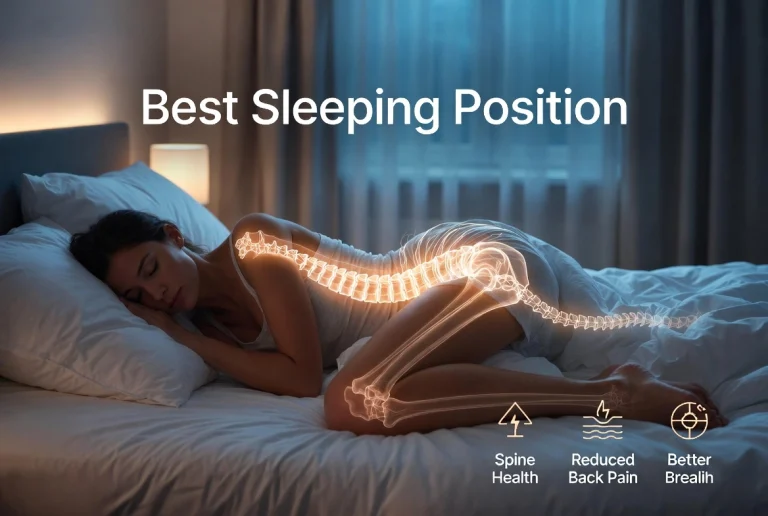
Sleep Health · Updated May 2026 Best Sleeping Position:Science-Backed Guide for Every Health Need Best sleeping positions for back pain, sleep apnea, pregnancy, and acid reflux — with 2026 research, real pictures, and US-specific guidance from Dr. Sarah Mitchell, CCSH. ✓ Evidence-Based 📅 Reviewed May 2026 ⏱ ~12 min read 🩺 Reviewed by Dr. Sarah…
Home › Sleep Science › Why Do I Feel More Tired After a Nap? Sleep Science · Nap Biology Why Do I Feel More Tired After a Nap? You napped to feel better — now you feel worse. The usual reason is sleep inertia, a measurable post-wake brain state that happens most often when a…
Circadian Biology — Nobel Prize Science Reference The Circadian RhythmComplete Science Guide Your body runs a precise 24-hour biological programme in every cell. When modern life forces it out of sync — through shift work, screens, or irregular schedules — the health consequences extend far beyond feeling tired. Here is the science, the evidence, and…
⚕ YMYL Health | Medically Reviewed The Nocturnal Loop: How Sleep Apnea and Acid Reflux Fuel Each Other Sleep apnea and acid reflux aren’t just happening at the same time — they’re actively making each other worse, every single night. Breaking one breaks the other. Here’s how the loop works, and how to stop it….