
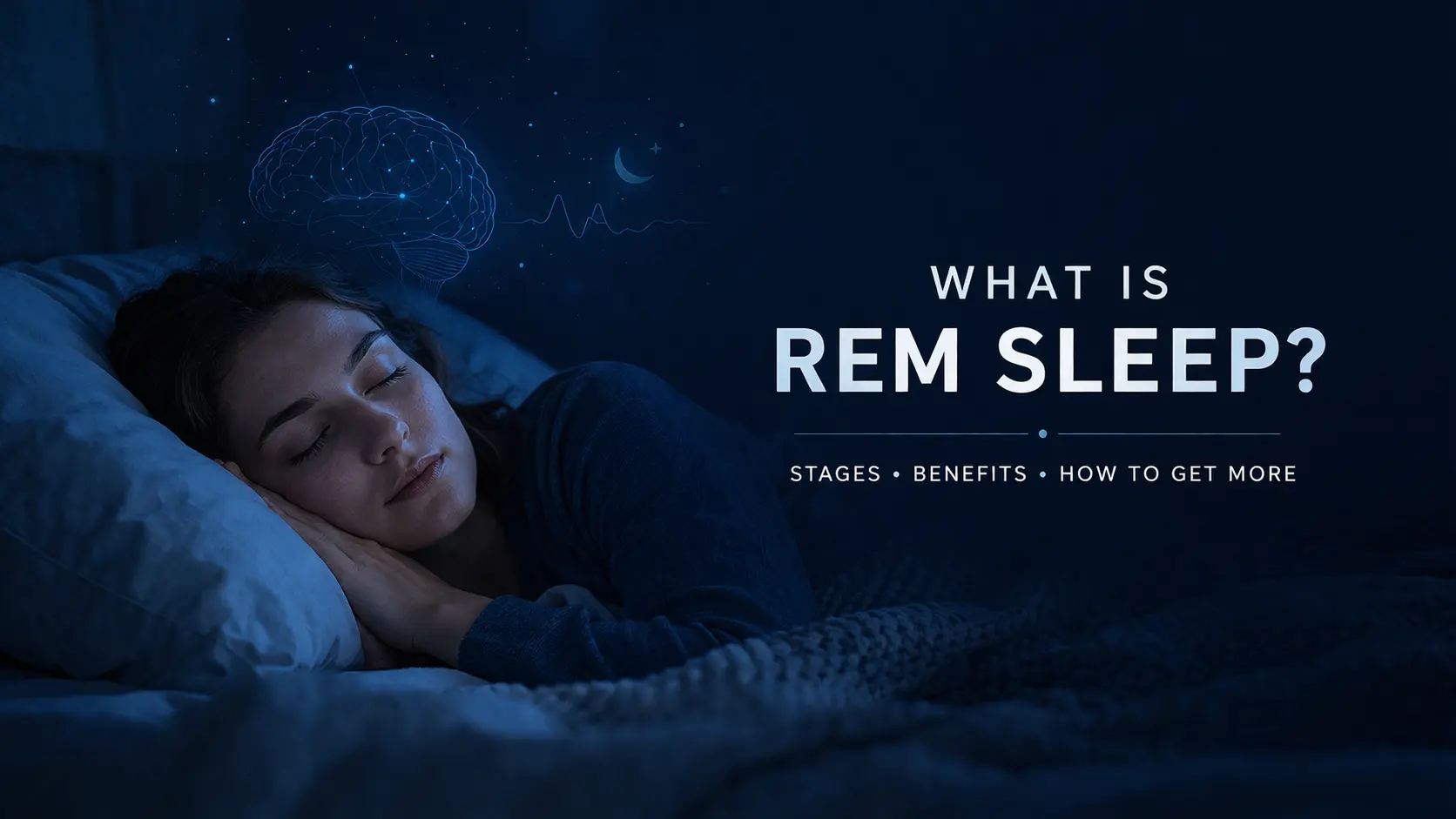
What Is REM Sleep?
Stages, Benefits & How to Get More
Your brain’s most powerful nightly repair window — and why millions of Americans accidentally destroy it every night without ever knowing.
needed/night
is REM
without REM
REM-deficient
REM (Rapid Eye Movement) sleep is the fourth stage of the sleep cycle, defined by rapid eye movements, vivid dreaming, and near-total muscle paralysis. It is your brain’s nightly maintenance window — consolidating memories, regulating emotions, and restoring cognitive function. Adults need 90–120 minutes of REM sleep per night to function at full capacity.
Most people know they need “8 hours of sleep” — but the quality and composition of those hours matters just as much as the total. REM sleep, the most neurologically active stage, is the one most frequently sacrificed by early alarms, late nights, and alcohol — often without the sleeper realizing it. Understanding what REM sleep does — and how to protect it — may be the single highest-ROI health optimization available to you starting tonight.
Sarah, a 34-year-old Chicago teacher, was logging a solid 7.5 hours every night and still felt mentally foggy by 10 AM. After using an Oura Ring for two weeks, she discovered her REM sleep averaged only 54 minutes — far below the 90–120 minute target. The culprit: two glasses of wine three to four nights per week. Wine was suppressing her first two REM cycles entirely, cutting her total in half despite adequate time in bed. Eliminating weeknight alcohol restored her REM to 98 minutes within 10 days.
The 4 Stages of Sleep
Sleep is not a single, uniform state. Every night your brain cycles through four distinct stages in roughly 90-minute intervals, each serving a different biological function. The first three are NREM (Non-Rapid Eye Movement); the fourth is REM. Most Americans mistakenly think “more hours = better sleep” — but stage composition is equally critical.

Stage 1 — NREM N1
Duration: 1–7 min. Light sleep, easily awakened. Muscle twitches common. Brain produces theta waves (4–8 Hz). Acts as the neurological on-ramp transitioning you from wakefulness into deeper restorative sleep.
Stage 2 — NREM N2
Duration: 10–25 min. Body temperature drops, heart rate slows to resting. Sleep spindles appear — brief 12–15 Hz bursts that actively block external stimuli and protect sleep continuity. Motor memory consolidation begins here.
Stage 3 — NREM N3 (Deep/SWS)
Duration: 20–40 min. Slowest brain waves (delta, 0.5–4 Hz). Hardest to wake from. Physical repair, immune system calibration, growth hormone release, and glymphatic brain waste clearance occur here. Dominates early-night cycles.
Stage 4 — REM Sleep
Duration: 10–60 min. Brain activity resembles wakefulness (beta waves). Eyes dart rapidly beneath closed lids. Body enters REM atonia — voluntary muscle paralysis that prevents acting out dreams. Memory, creativity, and emotional processing peak here.
How Many REM Cycles Do You Get Per Night?
A typical adult completes 4–6 sleep cycles per night, each lasting approximately 90 minutes. The critical detail most people miss: REM duration grows with each successive cycle. Your first REM episode is only 10 minutes. By cycle 4 or 5 — in the final hours before your natural wake time — REM stretches to 45–60 minutes of uninterrupted restorative sleep. This is why the last 90 minutes of sleep are neurologically the most valuable.
James, a 28-year-old software engineer in Austin, set his alarm for 5:15 AM to work out before his 7 AM standup. He was technically getting 6.5 hours of sleep — enough to feel functional. But his Oura Ring revealed he was averaging only 38 minutes of REM — less than half the healthy minimum. His productivity metrics at work showed a 22% decline in task completion and 3× more code errors on low-REM mornings. Shifting his alarm 75 minutes later and doing evening workouts instead brought REM to 96 minutes and reversed the cognitive decline within three weeks.
Setting your alarm even 90 minutes earlier than your natural wake time doesn’t just shorten your final cycle — it eliminates the 45–60 minute REM episode that dominates it. You lose a disproportionately large share of your total nightly REM from a seemingly small reduction in sleep time. This is the hidden cost of 5 AM alarm culture in America.
6 Key Benefits of REM Sleep
REM sleep is not merely “dream sleep” — it is a multi-system biological intervention your body performs on itself every night. Each of the following benefits is supported by peer-reviewed polysomnography and neuroscience research published between 2004–2025.
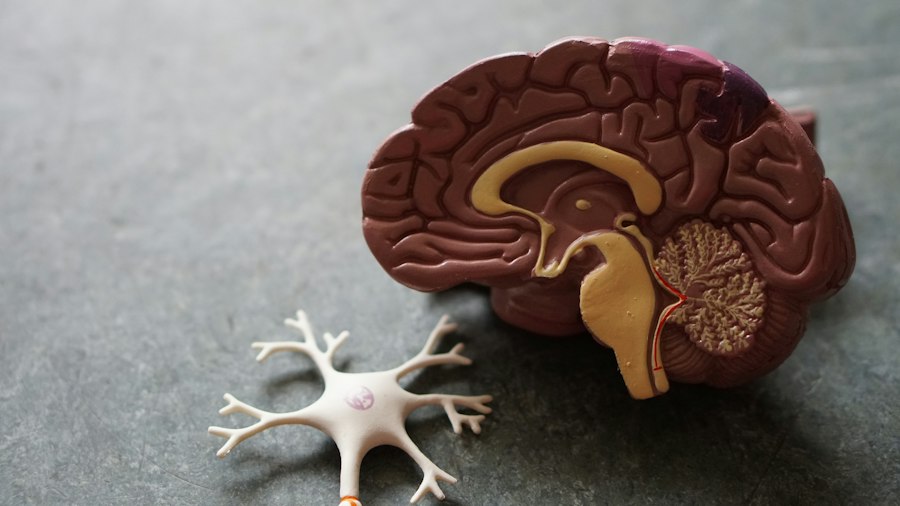
Memory Consolidation
The hippocampus replays and transfers declarative and emotional memories to long-term cortical storage. Walker et al. (2002) showed a 40% drop in new memory formation after one night of REM deprivation.
Emotional Regulation
REM “strips the emotional charge” from difficult experiences (Walker, 2017). Insufficient REM leaves the amygdala 60% more reactive to stressful stimuli, amplifying anxiety and negative mood.
Creative Problem-Solving
REM sleep enables the brain to form novel cross-domain associations — the basis of creative insight. Wagner et al. (2004, Nature) documented a 3× increase in abstract reasoning after REM-rich sleep vs. wakefulness.
Glymphatic Brain Cleansing
The glymphatic system clears amyloid-beta and tau proteins — the toxic waste implicated in Alzheimer’s disease — during deep and REM sleep. Chronic REM loss accelerates neurological plaque accumulation.
Cognitive Restoration
Sustained attention, working memory, and executive function all depend on adequate REM. After just one week of under-6-hour sleep, cognitive performance degrades to levels equivalent to two full nights of total sleep deprivation.
Immune Recalibration
During REM sleep, cytokine production and immune cell signaling are synchronized. A 2019 UCSF study found that REM-deprived subjects showed a 70% reduction in natural killer cell activity — your body’s primary anti-tumor and anti-viral defense.
Wagner et al. (2004), Nature: Subjects trained on a mathematical problem then tested after sleep rich in REM vs. quiet rest. The REM sleep group solved the problem 3× faster using a previously unseen shortcut — demonstrating that REM enables creative insight that wakefulness cannot produce. This is why your best ideas often come when you wake naturally without an alarm.
What Happens When You Don’t Get Enough REM Sleep?
REM deprivation produces a specific and measurable cascade of neurological and physiological consequences — distinct from general sleep deprivation. The effects begin after a single night of REM loss and compound rapidly with chronic deficiency.
| System | After 1 Night | After 1 Week Chronic | Risk Level |
|---|---|---|---|
| 🧠 Memory | 40% drop in new memory formation | Persistent encoding deficit; recall errors compound | High |
| 😰 Emotions | Amygdala 60% more reactive; irritability elevated | Anxiety disorder risk doubles; mood dysregulation | Critical |
| 🛡️ Immune | NK cell activity drops 70%; vaccine response weakened | Chronic inflammation; 3× increased infection risk | Severe |
| ❤️ Cardiovascular | Blood pressure elevation, heart rate variability drops | 2× coronary artery disease risk; CRP increases | Moderate–High |
| ⚖️ Metabolism | Ghrelin +24%, leptin −18%; insulin sensitivity drops | Pre-diabetic insulin resistance markers emerge | Moderate |
| 🎯 Focus | Reaction time = 0.05% BAC equivalent; task errors 3× | Executive function impaired; multi-tasking severely degraded | High |
What Causes Sleep Paralysis?
Sleep paralysis is a fascinating — and often terrifying — phenomenon that is a direct side effect of REM sleep mechanics. Understanding the neuroscience makes it immediately less frightening, and knowing its triggers empowers you to prevent it.

The Neuroscience of Sleep Paralysis
During REM sleep, your brainstem sends signals that temporarily paralyze voluntary muscles — a mechanism called REM atonia. This prevents you from physically acting out your dreams, protecting you from injury. Sleep paralysis occurs when your conscious mind wakes up while REM atonia is still active. You become aware — but can’t move. Hallucinations are common because your brain is still partially generating dream-state imagery.
The experience typically lasts 15 seconds to 3 minutes and resolves on its own. It is medically harmless despite being profoundly frightening. Approximately 7.6% of the general US population experiences at least one episode (Sharpless & Barber, 2011).
Does Alcohol Affect REM Sleep?
This is one of the most important — and most misunderstood — sleep facts in America. Alcohol is a sedative, not a sleep aid. It may accelerate sleep onset, but it profoundly disrupts sleep architecture in ways that eliminate the most valuable stages of your night.

Ebrahim et al. (2013), Alcoholism: Clinical & Experimental Research meta-analysis of 27 studies: Even low doses of alcohol (1–2 drinks) consumed within 3 hours of bedtime produce a consistent and dose-dependent suppression of REM sleep in the first half of the night, followed by REM rebound — a surge of fragmented, lower-quality REM — in the second half. The net result: total REM is reduced by up to 24%, and the REM that does occur is architecturally disrupted.
Brittany, a 39-year-old Nashville marketing director, had a nightly glass of red wine as her “wind-down ritual” and logged 8 hours in bed. She consistently felt unrefreshed and struggled with 3 PM energy crashes. After eliminating wine on weeknights for just two weeks, her Fitbit showed REM sleep jumping from 62 minutes to 104 minutes per night — a 68% increase. Her afternoon energy crashes disappeared entirely. “I didn’t realize my wind-down routine was destroying the most important part of my sleep,” she said.
Practical Rule: If you consume alcohol, finish your last drink at least 3–4 hours before bed to minimize REM disruption. A 10 PM bedtime means stopping by 6–7 PM. For full REM protection, alcohol-free evenings at least 4–5 nights per week produce the most measurable cognitive benefit.
8 Evidence-Based Ways to Get More REM Sleep
Every intervention below has direct peer-reviewed support for improving REM sleep duration, quality, or both. Implement 3–4 consistently and expect measurable changes within 7–14 days.
- Protect your last 90 minutes of sleep. Since REM is concentrated in final cycles, never set your alarm earlier than necessary. Waking 90 minutes early can eliminate your largest REM episode. Use SmartSleepCalc’s sleep cycle calculator to time your alarm to cycle completion.
- Eliminate alcohol 3–4 hours before bed. As discussed above, even 1–2 drinks suppress REM by up to 24%. This single change produces among the fastest, most measurable REM improvements available — often visible on a tracker within 3 nights.
- Lock in a consistent wake time — 7 days a week. Your circadian clock’s consistency directly governs the timing of your REM cycles. Irregular sleep schedules fragment REM architecture even when total hours are adequate. Fix your wake time first; bedtime will follow naturally.
- Keep your bedroom below 68°F (20°C). Core body temperature must drop to trigger and sustain sleep. A cool bedroom accelerates sleep onset and increases slow-wave and REM sleep duration, confirmed across multiple polysomnography studies.
- Eliminate blue light 60–90 minutes before bed. Blue light (460–480 nm wavelength) suppresses melatonin by up to 3 hours, delaying sleep onset and pushing all sleep cycles later — compressing your final, most REM-rich cycles before your alarm fires.
- Try Magnesium Glycinate (300–400 mg before bed). Magnesium activates GABA receptors, reduces cortisol, and improves sleep architecture. Multiple RCTs show it increases slow-wave sleep and REM duration. Deficiency is common — over 50% of US adults fall below the NIH recommended daily intake.
- Reduce stress with a bedtime “brain dump.” A 2018 Baylor University study found writing tomorrow’s to-do list at bedtime reduced sleep onset time by 9 minutes. Unprocessed stress elevates cortisol overnight, fragmenting REM. Even 5 minutes of pre-sleep writing significantly reduces middle-of-night awakenings.
- Avoid sleep aids that suppress REM. Benzodiazepines (Xanax, Valium), most OTC antihistamine sleep aids (Benadryl, ZzzQuil), and even cannabis actively suppress REM sleep. If you rely on these regularly, discuss CBT-I (Cognitive Behavioral Therapy for Insomnia) with your physician — the only treatment with proven long-term efficacy that preserves sleep architecture.
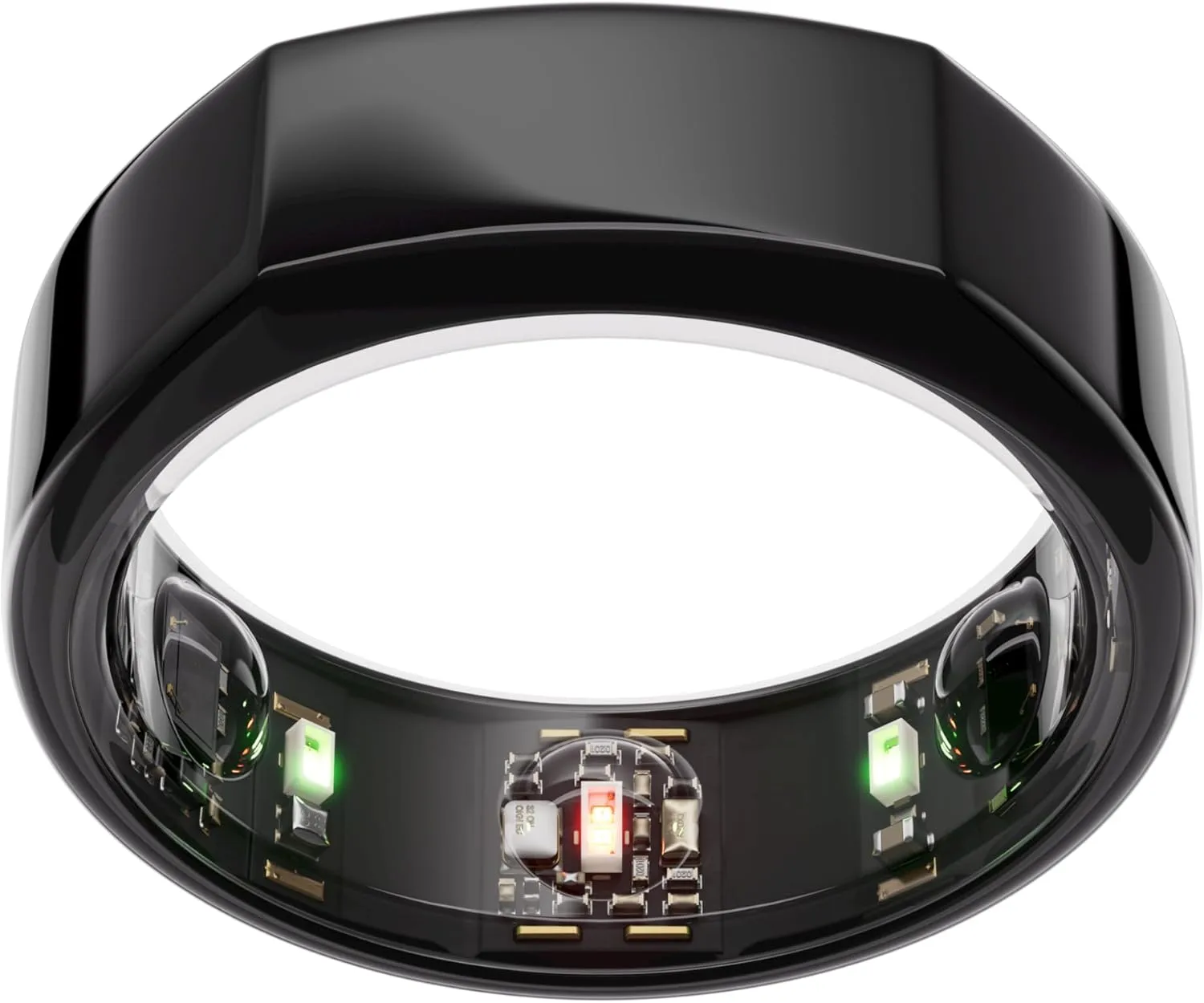
Track it to fix it. REM changes are often invisible without data. A wearable sleep tracker (Oura Ring, WHOOP, or Fitbit Sense) provides the objective feedback loop that makes all other interventions measurably more effective. Most people who start tracking report their first action is eliminating late-night alcohol — because they can finally see the damage it causes.
Know Exactly When to Wake Up to Protect Your REM Sleep
SmartSleepCalc times your alarm to complete 90-minute cycles — so you always wake at the end of a cycle, never mid-REM. Free, instant, no signup.
Calculate My Ideal Bedtime →Best Sleep Products to Maximize REM Sleep — 2026 US Picks
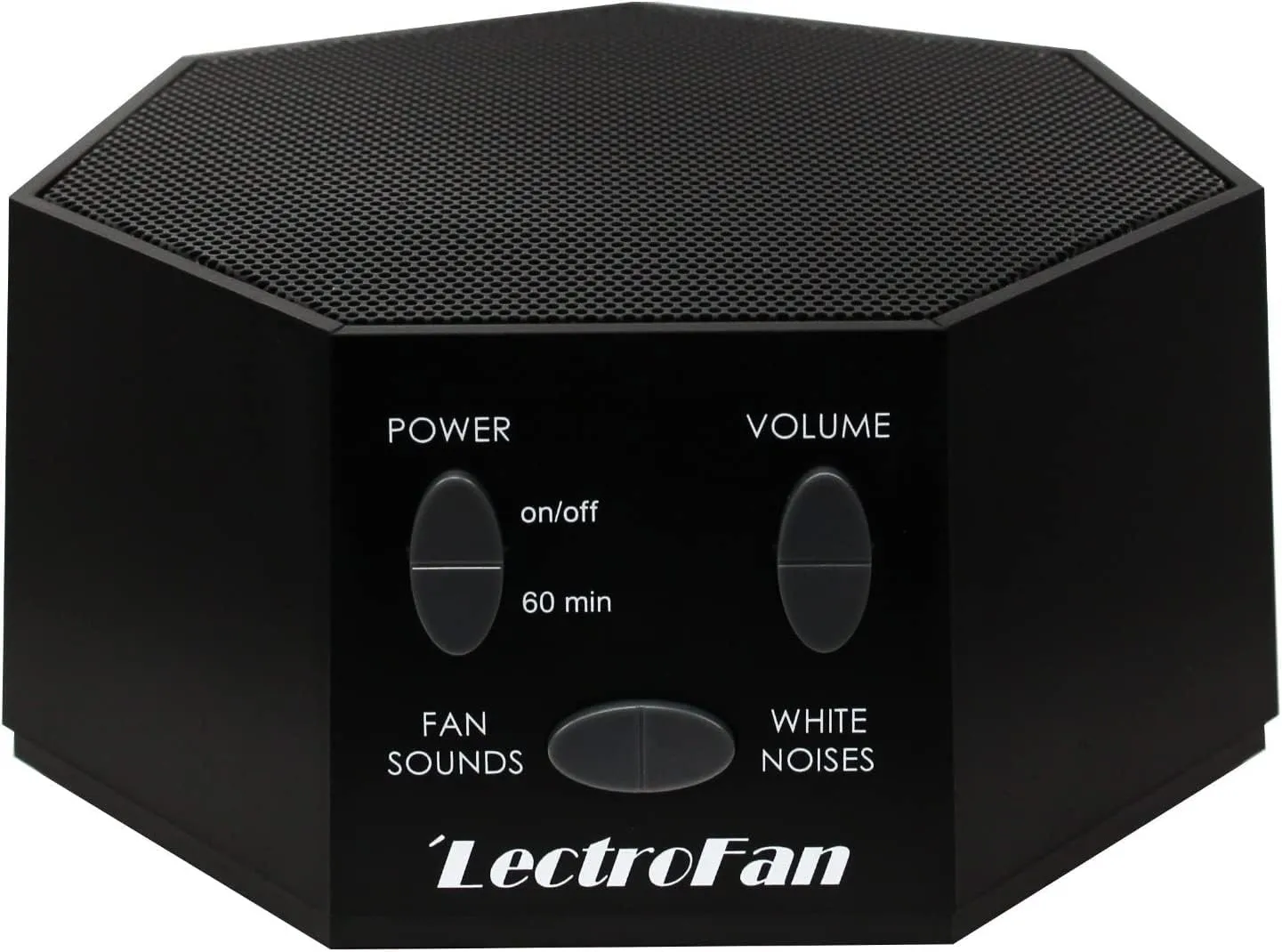
Every product below is selected by our editorial team based on clinical relevance to REM sleep quality, verified Amazon ratings, and US availability. We’ve matched each recommendation to the specific REM-improvement mechanism it targets.



Frequently Asked Questions About REM Sleep
REM (Rapid Eye Movement) sleep is the fourth and final stage of the sleep cycle, characterized by rapid eye movements, vivid dreaming, near-total muscle paralysis (REM atonia), and brain activity nearly identical to wakefulness. It is your brain’s nightly maintenance window — consolidating memories, regulating emotions, and restoring full cognitive capacity. Adults need 90–120 minutes of REM per night, distributed across 4–6 progressively longer episodes.
Adults need approximately 90–120 minutes of REM sleep per night — about 20–25% of total sleep time. The easiest way to ensure this: sleep 7.5–8 full hours with no interruption to the final cycle. Your body automatically generates the correct REM proportion when total sleep time is adequate and consistent. A sleep cycle calculator can help you time your alarm to preserve the final REM episode.
Eight hours in bed does not guarantee 90–120 minutes of REM sleep. Common REM destroyers that can collapse your REM to under 60 minutes even with 8+ hours: alcohol (even 1–2 drinks), late-night screen use, sleep apnea, high stress cortisol, certain medications (antihistamines, benzodiazepines), and irregular sleep schedules. If you consistently feel unrefreshed after 8 hours, track your REM with a wearable device and identify which factor is suppressing it.
Sleep paralysis occurs when REM atonia — the natural muscle paralysis of REM sleep — persists into wakefulness. Your conscious mind wakes up while your body is still locked in the paralytic state your brain uses to prevent you from acting out dreams. It is medically harmless, typically lasts 15 seconds to 3 minutes, and resolves on its own. Main triggers: sleep deprivation, irregular schedules, alcohol (causes REM rebound), high stress, and back sleeping. Weekly episodes warrant a sleep medicine evaluation.
Yes — dramatically and consistently. Even 1–2 drinks consumed within 3 hours of bedtime reduce first-half REM sleep by up to 24% and cause destabilizing REM rebound disruption in the second half. The effect is dose-dependent and occurs even without subjective intoxication. Alcohol suppresses REM by increasing adenosine and disrupting the REM-generating brainstem circuits. If you drink regularly and feel persistently unrefreshed, alcohol is almost certainly the primary cause.
Yes — directly. A sleep cycle calculator times your wake-up alarm to the end of a complete 90-minute cycle, so you naturally rise after completing your final — and longest — REM episode rather than cutting it short mid-cycle. Waking at the wrong point in a cycle (especially mid-REM) produces grogginess (sleep inertia) and eliminates up to 60% of your nightly REM. Try the SmartSleepCalc free tool →
Yes — especially longer afternoon naps. A 90-minute nap aligned with your natural circadian afternoon dip (1–3 PM for most people) can include a full REM episode, particularly if you are carrying sleep debt. NASA research on pilots found a 40-minute nap improved performance by 34% and alertness by 100%. For maximum REM in a nap, aim for either 20 minutes (before entering deep sleep) or a full 90 minutes (to complete a cycle). Avoid napping after 3 PM to protect overnight sleep pressure.
- Walker, M.P. & Stickgold, R. (2004). Sleep-dependent learning and memory consolidation. Neuron, 44(1), 121–133.
- Wagner, U., Gais, S., Haider, H., Verleger, R., & Born, J. (2004). Sleep inspires insight. Nature, 427(6972), 352–355.
- Walker, M. (2017). Why We Sleep: Unlocking the Power of Sleep and Dreams. Scribner. New York.
- Ebrahim, I.O., et al. (2013). Alcohol and sleep I: Effects on normal sleep. Alcoholism: Clinical and Experimental Research, 37(4), 539–549.
- Prather, A.A., et al. (2015). Behaviorally Assessed Sleep and Susceptibility to the Common Cold. Sleep, 38(9), 1353–1359.
- Irwin, M.R., et al. (2019). Sleep loss activates cellular inflammation and signal transducer and activator of transcription (STAT) family proteins in humans. Brain, Behavior, and Immunity.
- Sharpless, B.A. & Barber, J.P. (2011). Lifetime prevalence rates of sleep paralysis. Sleep Medicine Reviews, 15(5), 311–315.
- NSF Sleep in America® Poll (2025). National Sleep Foundation. Washington, D.C.