Why Am I So Tired But Can’t Sleep? Causes & Fixes Explained
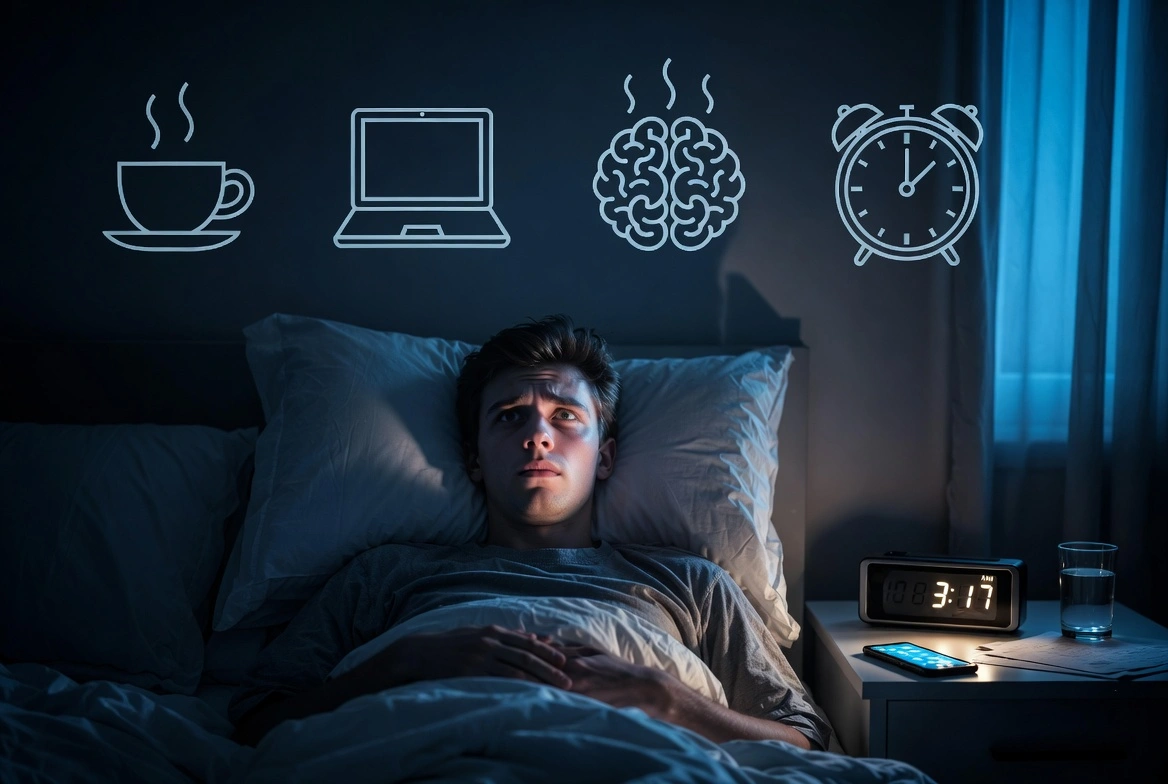
Feeling exhausted but unable to sleep is known as “tired but wired” — and it’s caused by a mismatch between your body’s physical fatigue and its neurological arousal state. The most common causes are elevated cortisol, a disrupted circadian rhythm, anxiety, caffeine, excessive screen use, and sleep disorders like insomnia or sleep apnea. Being overtired can paradoxically make it harder to fall asleep, not easier, because your brain’s stress system overrides your sleep drive.
It’s one of the most frustrating experiences in modern life: you’re exhausted — eyes heavy, body aching, brain foggy — yet the moment your head hits the pillow, your mind fires up like a search engine at midnight. Sleep refuses to come. Hours pass. The exhaustion deepens but sleep stays stubbornly out of reach.
This isn’t weakness or bad luck. It’s a specific, well-documented neurological state — and it has clear, addressable causes. Understanding why your tired body and wired brain are pulling in opposite directions is the first step to breaking the cycle.
The “Tired But Wired” Paradox
Your body has two distinct and sometimes competing systems governing sleep. The first is sleep pressure (adenosine build-up) — a chemical fatigue that accumulates the longer you stay awake, making you feel progressively more exhausted. The second is your arousal system — driven by cortisol, adrenaline, and your sympathetic nervous system, which governs alertness, vigilance, and fight-or-flight responses.
When both systems are activated simultaneously — when you are physically depleted but neurologically overactivated — you enter the “tired but wired” state. Your body screams for sleep while your brain actively prevents it. Crucially, being overtired can actually worsen this state: extreme fatigue triggers a secondary cortisol surge as the body attempts to compensate for low energy — which only deepens the arousal and makes sleep onset even harder.
⚠️ Important: “Tired but wired” is not a character flaw or a sign you don’t need sleep — it is a measurable physiological state. Trying harder to sleep actively worsens it by adding performance anxiety to the arousal loop.
The 8 Most Common Causes
| Cause | Mechanism | Key Signal |
|---|---|---|
| Circadian rhythm disruption | Body clock misaligned — tired during the day, alert at night | Night owl pattern; irregular schedule |
| Stress & elevated cortisol | Cortisol overrides melatonin, keeping arousal high at bedtime | Racing thoughts, muscle tension |
| Anxiety disorder | Hyperactivated amygdala maintains vigilance, blocking sleep onset | Worry spirals at bedtime |
| Caffeine | Adenosine receptor blockade prevents sleep pressure from converting to sleep | Coffee/tea after 2PM |
| Screen blue light | Suppresses melatonin production, delaying circadian sleep signal | Phone/laptop use after 9PM |
| Late napping | Depletes adenosine sleep pressure before bedtime | Naps after 3PM or longer than 30 min |
| Sleep apnea | Fragmented sleep creates chronic fatigue without ever allowing full rest | Snoring, gasping, morning headaches |
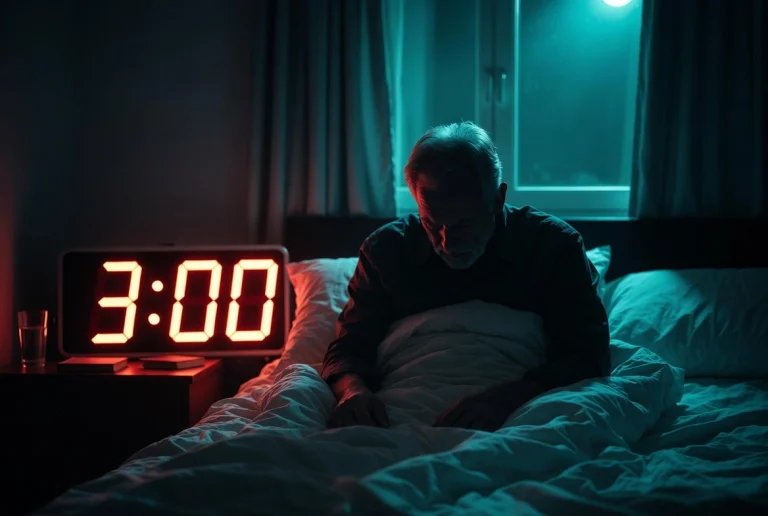
| Depression | Altered REM architecture causes early waking and unrestorative sleep | Persistent low mood; waking at 3–5AM |
Circadian Rhythm Disruption
Your circadian rhythm is a 24-hour internal clock that orchestrates the timing of every biological process — including when melatonin rises, when core body temperature drops, and when your brain transitions from alert to sleep-ready. When this clock is misaligned with your actual sleep schedule, you can feel exhausted during the day and inexplicably alert at night — the hallmark of circadian dysfunction.
The most common disruptors are: irregular sleep schedules (varying wake times by more than 1 hour), shift work, jet lag, excessive artificial light at night, and living out of sync with your natural chronotype. A confirmed night owl forced to sleep at 10PM may be physiologically as awake as a morning person at noon — exhausted from the day, but neurologically nowhere near ready for sleep.
✅ Key insight: Melatonin levels naturally peak between 2–4AM. If your schedule pushes your awake hours deep into this window (late-night screens, irregular bedtimes), your circadian signal for sleep gets confused — making tired-but-can’t-sleep a nightly experience.
Cortisol & Nervous System Overload
Cortisol and melatonin operate on opposite schedules — when one rises, the other should fall. In a healthy rhythm, cortisol peaks in the morning and declines through the day, hitting its lowest point around midnight as melatonin takes over. In people under chronic stress, this curve is flattened or inverted — cortisol remains elevated into the evening, directly suppressing melatonin and preventing the neurological transition into sleep.
The sympathetic nervous system (your “fight or flight” system) plays an equally critical role. Anxiety, unresolved worry, or even subconscious stress — like an unresolved deadline or argument — can keep sympathetic tone elevated at bedtime. Your body interprets this as a threat signal: now is not a safe time to be unconscious. The result is that classic exhausted-but-alert state where you know you need sleep but your biology refuses to comply.
“When experiencing stress, the hormone cortisol tends to surge, hindering the body’s ability to relax and fall asleep. Without any distractions while lying in bed, we often find ourselves repeatedly dwelling on anxious thoughts — keeping the arousal loop active long into the night.”— Sleep Cycle Research Team, Sleep Science Review 2024
Mental Health & Sleep: A Two-Way Problem
The relationship between mental health and sleep is bidirectional — each makes the other worse. Up to 90% of adults diagnosed with depression experience a clinically significant sleep disturbance, including insomnia, hypersomnia, or non-restorative sleep. Anxiety disorders are directly linked to hyperarousal at bedtime — the racing mind that won’t quiet despite physical fatigue.
What makes this particularly difficult is the reinforcing cycle: poor sleep worsens anxiety and depressive symptoms, which in turn worsen sleep quality, which deepens fatigue. Breaking the cycle requires addressing both the sleep and the mental health component simultaneously. CBT-I (Cognitive Behavioural Therapy for Insomnia) is the gold-standard, first-line treatment recommended by both the Mayo Clinic and the AASM — outperforming sleep medication in long-term outcomes.
Mental Health Conditions Linked to Tired-But-Can’t-Sleep
8 Science-Backed Fixes
These are the highest-evidence interventions for breaking the tired-but-can’t-sleep cycle — ordered from most impactful to most situational:
A consistent daily wake time — including weekends — is the most powerful circadian anchor in existence. It builds sleep pressure predictably, making falling asleep at a consistent bedtime progressively easier each night.
10 minutes of outdoor light immediately anchors your cortisol peak to the morning — preventing the evening cortisol spill that blocks melatonin and keeps you wired at bedtime.
Caffeine’s 5–7 hour half-life means a 3PM coffee still has 50% of its adenosine-blocking power at 9–10PM — directly undermining the sleep pressure your body has been building all day. This single change resolves tired-but-wired for a significant portion of sufferers.
Blue light from phones and laptops suppresses melatonin by up to 50% and delays its onset by 90+ minutes. Switch to warm lighting (candles, amber bulbs) and replace screen time with reading, light stretching, or journaling.
Write every pending task, worry, or unresolved thought onto paper before bed. Externalising your mental load literally reduces pre-sleep cognitive arousal — a technique validated in multiple sleep research studies. Your brain can stop holding on once it’s captured on paper.
Inhale for 4 seconds, hold for 7, exhale slowly for 8. This activates the parasympathetic nervous system — physiologically opposing the cortisol-driven sympathetic state. Three to four rounds directly lowers heart rate and shifts brain state toward sleep readiness.
Core body temperature must drop 1–2°C to initiate sleep. A warm room prevents this drop and is a common, overlooked cause of lying awake despite exhaustion. Cooler is almost always better for sleep onset.
Lying awake in bed trains your brain to associate the bed with wakefulness — the opposite of what you need. If sleep hasn’t come within 20 minutes, go to another dim, quiet room and do something calm until you feel genuinely sleepy. This is stimulus control therapy — the cornerstone of CBT-I.
One overlooked cause of tired-but-wired is sleeping at the wrong point in your 90-minute sleep cycle. Find your optimal bedtime based on your wake time — so your sleep pressure and circadian rhythm finally align.
🌙 Calculate My Optimal Bedtime → Free · No signup · Results in 3 secondsWhen to See a Doctor
Most cases of tired-but-can’t-sleep respond to the behavioural changes above within 2–3 weeks. However, some causes are medical and require professional diagnosis. Seek help if:
🚨 See a doctor if: you’ve had sleep difficulties more than 3 nights per week for 3+ months (chronic insomnia), you wake gasping or snoring (possible sleep apnea), you feel persistently low in mood with no pleasure in activities (depression), you have restless or crawling sensations in your legs at night (restless leg syndrome), or daytime fatigue is significantly impairing your ability to work, drive, or maintain relationships.
| Symptom Pattern | Likely Cause | Recommended Action |
|---|---|---|
| Exhausted all day, alert at night only | Delayed sleep phase / chronotype | Light therapy, chronotype assessment |
| Racing mind, can’t switch off | Anxiety / stress | CBT-I, worry journaling, GP referral |
| Tired but wired + low mood | Depression | GP / mental health referral urgently |
| Gasping, snoring, morning headaches | Sleep apnea | Polysomnography (sleep study) |
| Leg discomfort at bedtime | Restless leg syndrome | Neurological assessment, iron panel |
| Fatigue despite 8+ hours in bed | Sleep disorder or chronic condition | Full medical workup incl. thyroid |
- “Tired but wired” is a real physiological state — elevated cortisol and sympathetic nervous system activation override your body’s physical fatigue and prevent sleep onset.
- The most common causes are circadian rhythm disruption, stress, anxiety, caffeine after 2PM, screen blue light, and irregular sleep schedules.
- Being overtired can paradoxically make sleep harder — extreme fatigue triggers a cortisol surge that worsens wakefulness.
- A consistent daily wake time is the single highest-leverage fix — it anchors your circadian rhythm and builds predictable sleep pressure.
- If tired-but-can’t-sleep persists beyond 3 weeks despite lifestyle changes, seek evaluation for insomnia, sleep apnea, anxiety, or depression — CBT-I is the gold-standard first-line treatment.
📚 Citations & Sources
- Healthline (2025). Why Am I So Tired, but Can’t Sleep? healthline.com →
- GoodRx Health (2025). Tired But Can’t Sleep? Causes and Expert Tips. goodrx.com →
- Sleep Cycle (2024). Tired but Can’t Sleep? Causes and Remedies. sleepcycle.com →
- Mayo Clinic (2024). Insomnia — Symptoms and Causes. mayoclinic.org →
- Cleveland Clinic (2023). Insomnia: What It Is, Causes, Symptoms & Treatment. clevelandclinic.org →
- MoreGoodDays (2024). Tired But Wired — Why Am I Tired But Can’t Sleep? moregooddays.com →