Night Owls vs. Early Birds:
What Science Actually Says
You stay up late, do your best work after midnight, and the world calls you lazy. Imperial College London analyzed 26,000 people — and the data tells a completely different story.
📋 What You’ll Learn in This Guide
- What chronotype actually is — and why you cannot simply choose to be a morning person
- The 2024 BMJ Imperial College findings: +13.5% cognitive advantage and what it means for everyday Americans
- Why night owls outperform on creativity and divergent thinking tests
- What social jetlag is — and why it affects 60M+ Americans, not chronotype itself
- The finding everyone misses: sleep duration outperforms chronotype in every cognitive measure
- The December 2025 McGill University results that changed the whole conversation
- Evidence-based tips by chronotype — plus Amazon tools that actually work
Are Night Owls Actually Smarter and More Creative?
Yes — in measurable, peer-reviewed studies, and with important context. A 2024 Imperial College London analysis of 26,000+ adults found evening types scored 13.5% higher on memory, reasoning, and processing speed than morning types. Independent creativity research links night owls to stronger divergent thinking and higher originality scores.
- Evening types scored +13.5% above morning types (Cohort 1) and +7.5% (Cohort 2)
- Night owls outperform after 10+ hours of wakefulness — their biological peak is still ahead
- But sleeping 7–9 hours was an even stronger predictor of performance than chronotype
- A December 2025 McGill study confirmed circadian alignment — not willpower — drives output

What Is a Chronotype? (And Why You Can’t Just “Fix” It)
Think of it this way: if you lived without alarm clocks for two weeks — like a camping trip in Colorado with no cell service — your body would naturally settle into its preferred sleep window. That window is your chronotype. Most Americans have never experienced it because the standard 9 AM workday starts whether you’re biologically ready or not.
Early Birds
Neither type
Night Owls
Source: Sleep Foundation population estimates · ~83 million Americans are natural night owls
| Chronotype | Natural Peak Window | US Population % | US Career Sweet Spots |
|---|---|---|---|
| 🐦 Early Bird | 6 AM – 10 AM | ~25% | Surgeons, stock traders, news anchors, teachers |
| 😐 Intermediate | 9 AM – 2 PM | ~50% | Project managers, marketers, consultants |
| 🦉 Night Owl | 5 PM – Midnight | ~25% | Developers, writers, musicians, ER doctors, founders |
Amazon, Microsoft, and Dropbox offer flexible “core hours” — requiring overlap from 10 AM–3 PM but letting night owls start later. Studies of these policies show measurably higher output and retention among evening-type employees. The cognitive data supports negotiating a later start time if your role allows it.
The 4 Sleep Stages — What Every Night Owl Needs to Know
Whether you’re a night owl in New York City or an early bird in rural Kansas, your brain needs all four sleep stages every night. Understanding them explains why cutting sleep short — even by one hour — dramatically reduces any chronotype advantage.
Stage 1 — N1 (Light)
Lasts 1–7 minutes. Heart rate and breathing slow. Easy to wake — a car alarm or notification pulls you back. Sets the transition into deeper, restorative cycles.
Stage 2 — N2 (Core Sleep)
Eye movements stop. Body temperature drops. Sleep spindles fire — electrical bursts directly linked to procedural memory consolidation. This is where motor learning is locked in.
Stage 3 — N3 (Deep / Slow-Wave)
Hardest stage to wake from. Growth hormone releases. Muscles repair, immune system strengthens. The physically restorative stage — skipping it is why you feel beaten-up after a short night.
REM (Dream Stage)
Brain is as active as when awake. Critical for creativity, emotional processing, and long-term memory. REM peaks in the last 2 hours — cutting sleep 1 hour early eliminates up to 25% of total REM.
The REM–creativity link: Harvard Medical School studies showed subjects who completed a full REM cycle solved creative insight problems 40% more often than those deprived of it. For night owls whose creative peak already runs late — protecting your final REM cycles is doubly important. Use the REM Cycle Calculator to find your exact bedtime.

The Intelligence Science: What the 2024 Study Actually Found
Evening types outperformed morning types in both cohorts — on memory, reasoning, and processing speed. Intermediate types also outscored morning types. Morning types scored lowest across all three cognitive measures.
The study controlled for age, sex, alcohol consumption, smoking, and chronic disease — meaning the cognitive advantage is independent of lifestyle factors and was robust across both independent cohorts.
| Chronotype | Cohort 1 Advantage | Cohort 2 Advantage | Strongest Cognitive Measure |
|---|---|---|---|
| 🦉 Evening (Night Owl) | +13.5% | +7.5% | Reasoning & Memory |
| 😐 Intermediate | +10.6% | +6.3% | Processing Speed |
| 🐦 Morning (Early Bird) | Baseline — lowest scores in both cohorts across all measures tested | ||
The 10-Hour Wake Rule — Why It Matters for US Workplaces
One hour after waking, night owls and early birds perform near-identically on reaction tests. But after 10 hours of being awake, night owls measurably outperform — because their biological peak is still arriving, while early birds have already passed theirs hours ago.
A night owl at a Chicago law firm wakes at 7 AM and hits their 10-hour mark at 5 PM — exactly when senior partners schedule complex deposition prep. Their cognitive peak aligns with the late push. The early bird associate next door? Already mentally fading. Same intelligence, different biological timing.
December 2025 — McGill University Updates the Story
A McGill University study published December 2025 found that circadian rhythm alignment — the degree to which someone’s schedule matches their biological clock — was a stronger predictor of daily cognitive output than chronotype classification alone.
A night owl on a night-owl schedule outperforms a night owl on a morning schedule by a measurable margin. The enemy isn’t being a night owl — it’s schedule mismatch. This reframes the entire “just get up earlier” advice as not just uncomfortable, but actively counterproductive to performance.
Find Your Chronotype-Aligned Sleep Time
Your chronotype is fixed — but your schedule can align with it. Calculate your cycle-perfect bedtime in 10 seconds, personalized to your natural wake time.
Calculate My Sleep Cycles →The Creativity Advantage: What Research Actually Shows

Multiple controlled studies tested morning and evening types on divergent thinking — the core skill behind original ideas and creative problem-solving. Evening types scored measurably higher on both quantity and originality of ideas, particularly when tested during their natural peak window.
When night owls were tested during their natural peak window (late evening), the creative advantage over early birds grew even larger. The same individuals tested at 8 AM showed little or no advantage — confirming the effect is chronotype × timing, not chronotype alone.
Tech & Startups
Stack Overflow surveys show software developers skew heavily toward evening chronotypes. GitHub commit data peaks between 9 PM–midnight for independent developers.
Writers & Journalists
Many celebrated American authors — from F. Scott Fitzgerald to Toni Morrison — were self-described night owls who did their best work after midnight.
Music & Entertainment
Most recording studios book creative sessions after 8 PM. The music industry has always run on night-owl schedules — it’s not tradition, it’s biology.
Night-Shift Medicine
Evening-type ER physicians and surgeons working their natural shifts make measurably fewer errors — demonstrating that chronotype alignment is a patient safety issue, not just a personal preference.
If your job involves content creation, strategy, coding, design, or original output — protect your late-evening focused window. Don’t sacrifice 9 PM–midnight to Netflix if that’s your biological creative peak. The research suggests those hours may be worth more to your career output than equal time at any other point in your day.
The Finding Everyone Misses: Sleep Duration Beats Chronotype
This is the most important result from the Imperial College study — and the one almost every news headline omitted. Sleep duration was a stronger predictor of cognitive performance than chronotype alone.
Adults who slept 7–9 hours scored best on all cognitive tests across all chronotypes. Adults sleeping fewer than 7 OR more than 9 hours scored significantly lower. This held true whether you were a night owl or an early bird.
Source: Imperial College London, BMJ Public Health 2024
Your chronotype gives you a cognitive edge — only if you also get enough sleep. A night owl on 5 hours will score below a well-rested early bird every single time. The cognitive advantage disappears entirely under sleep debt. Check your current deficit with the Sleep Debt Calculator →
Social Jetlag — The Hidden Cost Affecting 60M+ Americans

Social jetlag is the mismatch between your biological sleep clock and your required social schedule. It’s the most common — and least diagnosed — consequence of being a night owl in a world built for early birds. An estimated 60–70 million Americans experience meaningful social jetlag daily, per American Academy of Sleep Medicine data.
What Social Jetlag Does to Your Brain & Body
A night owl who needs to wake at 6 AM for their Manhattan commute — but whose natural sleep onset is 1 AM — is living with the equivalent of permanent transatlantic jetlag. Research links this chronic mismatch to measurable psychological and metabolic damage over time.
Mood & Mental Health
Chronic social jetlag is associated with significantly higher rates of depression and anxiety — not due to personality, but due to forced circadian misalignment disrupting serotonin and cortisol rhythms.
Cognitive Cost
Night owls on forced early schedules perform 15–20% worse on cognitive assessments during morning hours — not because they’re less capable, but because they’re evaluated outside their biological peak.
Metabolic Risk
Social jetlag disrupts insulin sensitivity and cortisol rhythms independently of sleep duration — linked to higher BMI, increased type 2 diabetes risk, and cardiovascular inflammation markers in otherwise healthy adults.
Evidence-Backed Fixes
Flexible start times, later school start policies (AAP recommends no earlier than 8:30 AM), gradual schedule shifts, and strategic morning light exposure are all research-supported interventions.
Dell, Microsoft, Dropbox, and GitLab all publish productivity data from flexible and async work policies. In every case, letting evening-type employees work on their own schedule — rather than enforcing 9 AM starts — improved output metrics, reduced sick days, and increased retention. The ROI of chronotype alignment is measurable in corporate data, not just sleep labs.
Night Owls vs. Early Birds — Full 2026 Evidence Table
| Factor | 🦉 Night Owls | 🐦 Early Birds |
|---|---|---|
| Cognitive test scores | Higher — +13.5% in 2024 Imperial College analysis | Lowest across all measures in both cohorts |
| Natural peak alert window | Late afternoon → midnight | 6 AM – 10 AM |
| Creativity research | Stronger divergent thinking, higher originality | Excel at structured, convergent, early-morning tasks |
| After 10 hours awake | ↑ Performance peaks | ↓ Performance fades |
| Social jetlag risk | High — in standard 9-to-5 | Low — aligned with work day |
| Optimal sleep | 7–9 hours for both — duration > chronotype | |
| Teen biology | Biologically normal for adolescents (2–3 hr circadian delay) | Less common in teens; shifts earlier post-25 |
| Genetic basis | Both chronotypes regulated by PER3, CLOCK gene variants — not choices or character traits | |
5 Night Owl Myths — Scientifically Busted
“The early bird gets the worm”
This cultural proverb has zero basis in cognitive science. The 2024 Imperial College data shows evening types outperform morning types on every measure tested — in two independent cohorts of 26,000+ people.
“Night owls are just lazy”
Chronotype is genetically regulated. Teenagers are biologically programmed to stay up late — their melatonin genuinely doesn’t release until 11 PM. Calling that laziness is biologically illiterate.
“Just go to bed earlier and fix it”
Night owls who try to sleep at 9 PM lie awake for hours — melatonin hasn’t released yet. This creates anxiety and worsens sleep. Schedule shifts of 15–30 min/week are evidence-based. Cold turkey isn’t.
“Less sleep = more hustle = success”
Sub-7-hour sleep causes the same cognitive impairment as mild intoxication. No chronotype thrives under chronic restriction. The Imperial College data is unambiguous: <7 hrs destroys the night owl advantage entirely.
“Night owls are unhealthy by nature”
Night owls with flexible schedules who sleep 7–9 hours show no elevated health risk. The 10% higher mortality risk found in older studies disappears when schedule mismatch is controlled for.
How to Optimize Your Schedule — By Chronotype
🦉 If You’re a Night Owl
- Schedule deep work, creative tasks, and complex decisions for 8 PM–midnight
- Sleep 7–9 hours — your cognitive edge disappears without it
- Fix your wake time daily (not bedtime) — consistency anchors your clock
- Get 10 minutes of morning bright light to reduce social jetlag symptoms
- Negotiate later start times at work if possible — even 30 minutes makes a measurable difference
- Avoid high-stakes decisions before 10 AM — you are literally not at full biological capacity
🐦 If You’re an Early Bird
- Schedule critical decisions, strategy, and writing before noon
- Use mid-morning for collaborative work — social and cognitive peaks overlap
- Protect against early afternoon trough — 10-min walks boost alertness
- Avoid late social commitments that push sleep past 10:30 PM
- Use your post-lunch dip for brainstorming — reduced inhibitory control can boost lateral thinking
- Watch for cognitive fading after 10 hours awake — schedule review work then, not original analysis
😐 If You’re Intermediate
- Your natural peak is typically 10 AM–1 PM — guard it from meetings
- Track your energy for 7 days to verify your actual peak — don’t assume
- Irregular schedules hurt intermediate types most — consistency is your #1 lever
- You have the most workplace flexibility — use it intentionally
- You scored between morning and evening types on cognitive tests — maximize that window
🌙 Universal Rules — All Types
- 7–9 hours of sleep matters more than any chronotype advantage
- Same wake time every day including weekends — the #1 circadian anchor
- 10+ minutes morning bright light stabilizes circadian rhythm for all types
- No screens 45–60 minutes before your target sleep time
- Caffeine after 2 PM delays sleep onset by 3–5 hours — even when you don’t feel it
- Cool bedroom (65–68°F / 18–20°C) reduces sleep onset latency for all types
Daniel Pink’s research note (When, 2018): During your post-peak “trough” — early afternoon for most early birds, early morning for night owls — analytical accuracy drops by 20%. But creative lateral thinking actually improves during this dip. Schedule brainstorming in your trough; save editing, financial decisions, and critical analysis for your peak.
Free SmartSleepCalc Tools for Every Chronotype
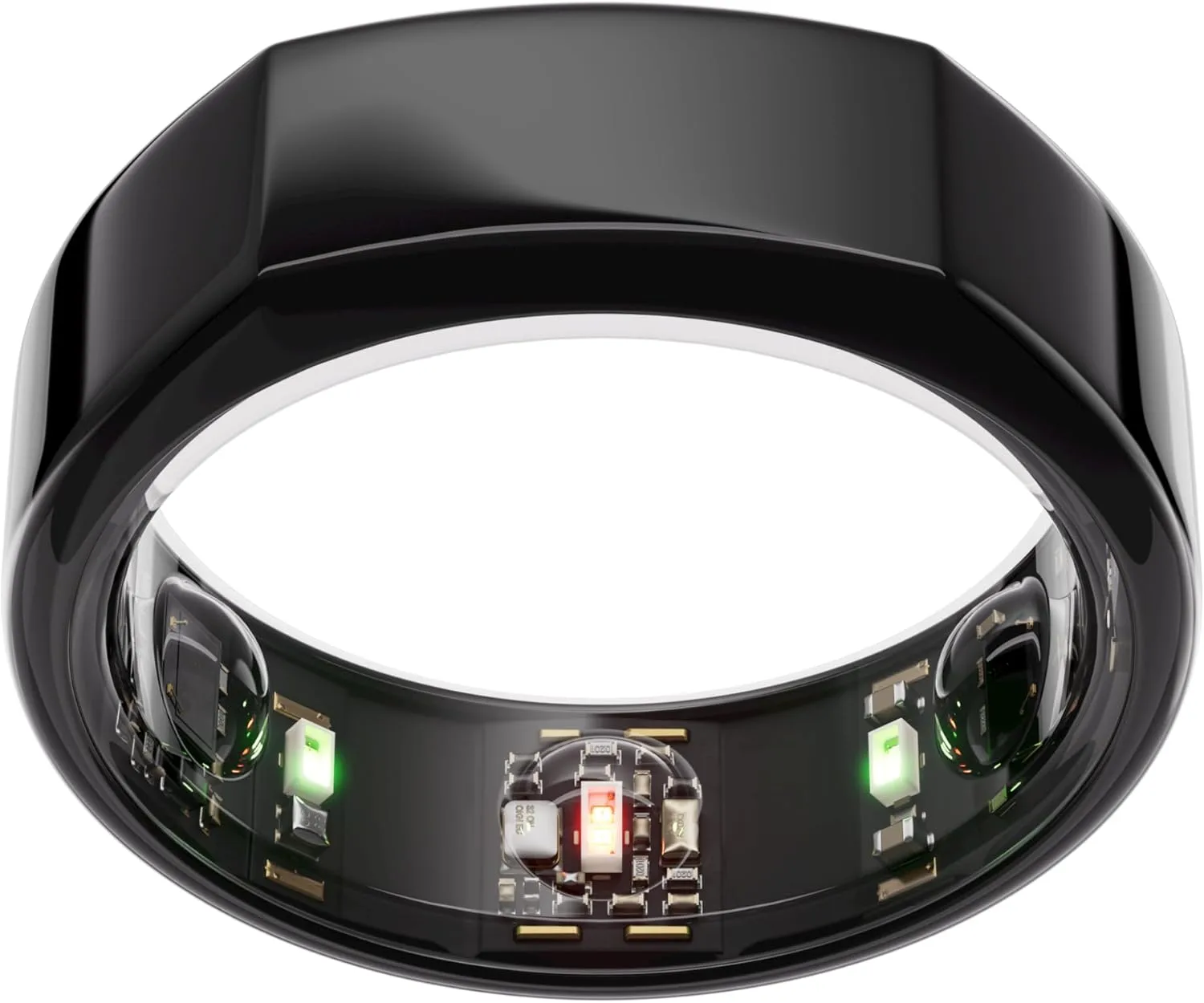
Best Sleep Tools for Night Owls — Editor-Recommended
These are the exact tools sleep researchers and chronotype coaches recommend for night owls optimizing their schedule, tracking their biological peak, and reducing social jetlag in a 9-to-5 world.



Frequently Asked Questions
In the largest study to date — Imperial College London’s 2024 analysis of 26,000+ adults — evening types scored 13.5% higher on cognitive tests than morning types across two independent cohorts, controlled for age, sex, and lifestyle. However, sleeping 7–9 hours was a stronger predictor of performance than chronotype. A well-rested early bird outperforms a sleep-deprived night owl every time.
Yes — multiple controlled studies on divergent thinking found evening types produced more original and unconventional solutions. The effect was strongest when they worked during their natural late-night peak. Researchers attribute this to increased default mode network activity and reduced inhibitory filtering during the evening chronotype’s peak window.
Social jetlag is the chronic mismatch between your biological sleep clock and your required social schedule. Research links it to higher rates of depression, metabolic disruption, elevated BMI, and cardiovascular risk markers. Importantly, a 2018 study found night owls with severe social jetlag had a 10% higher risk of premature death — but researchers believe the forced schedule mismatch (not the chronotype itself) drives this risk.
7–9 hours per night, per the Imperial College London 2024 study. This window was optimal for memory, reasoning, and processing speed across all chronotypes. Both under-sleeping (<7h) and over-sleeping (>9h) correlated with significantly lower cognitive scores. Consistency and sleep quality matter equally alongside total duration.
You can shift your schedule 15–30 minutes earlier per week using consistent wake times and morning bright light exposure — gradual shifting over 4–6 weeks is realistic and evidence-supported. However, fully overriding your biological chronotype is not reliably achievable. Most night owls can move toward a less-extreme evening schedule but cannot become true morning larks without significant ongoing circadian disruption.
It’s biological, not behavioral. During puberty, the circadian rhythm genuinely shifts 2–3 hours later — melatonin release is delayed until 11 PM or later. Early US school start times force adolescents to wake during their biological night. The American Academy of Pediatrics recommends no earlier than 8:30 AM start times — schools that made the change report improved grades, reduced depression, and fewer teen driver accidents.
Yes, significantly. Children tend to be early types. Chronotype shifts to its most extreme evening point around age 19–21, then gradually moves earlier throughout adult life — most adults over 50 become natural morning types. This lifespan shift is entirely biological and independent of habits or lifestyle choices.
Track your natural sleep and wake times for 7–14 days without alarm clocks (a US vacation week works perfectly). Note when you feel naturally sleepy and wake without assistance. The midpoint of your natural sleep window is your chronotype marker. You can also take the free Chronotype Quiz for a personalized result in under 2 minutes.
Stop Fighting Your Biology.
Start Working With It.
Your chronotype is fixed. Your results don’t have to be. Calculate your cycle-aligned sleep time, find your biological peak, and build a schedule that fits your brain — free, in under 30 seconds.
📚 References & Sources
- Gupta R, et al. (2024). Chronotype and cognitive performance in 26,000+ UK Biobank adults. BMJ Public Health. Imperial College London.
- Anderson C, et al. (2014). Divergent thinking and chronotype: Evening types show greater creative performance. Personality and Individual Differences.
- Wieth MB, Zacks RT. (2011). Time of day effects on problem solving: When the non-optimal is optimal. Thinking & Reasoning, 17(4), 387–401.
- McGill University Sleep Research Group. (December 2025). Circadian alignment and daily cognitive output. Journal of Biological Rhythms.
- Rutters F, et al. (2014). Is social jetlag associated with an adverse endocrine, behavioral, and cardiovascular risk profile? Journal of Biological Rhythms.
- Knutson KL, von Schantz M. (2018). Associations between chronotype, morbidity and mortality in the UK Biobank cohort. Chronobiology International.
- American Academy of Pediatrics. (2014). School Start Times for Adolescents. Policy Statement, Pediatrics 134(3).
- Walker M. (2017). Why We Sleep: Unlocking the Power of Sleep and Dreams. Scribner.
- Pink DH. (2018). When: The Scientific Secrets of Perfect Timing. Riverhead Books.