How to Fall Asleep Fast: Techniques Ranked by Evidence | SmartSleepCalc
How to Fall Asleep Fast — Mechanism-First Guide

How to Fall Asleep Fast
Techniques That Work — and Why They Work

Most sleep advice is a list of tips with no explanation. This guide ranks sleep-onset techniques by research strength and explains the underlying physiology so you understand why each method works — not just that it does.

Evidence ladder 4-7-8 timer & cognitive shuffle tools Advanced techniques: Harvey 2002 • Haghayegh 2019 • Beaudoin 2021

What Actually Happens When You Fall Asleep

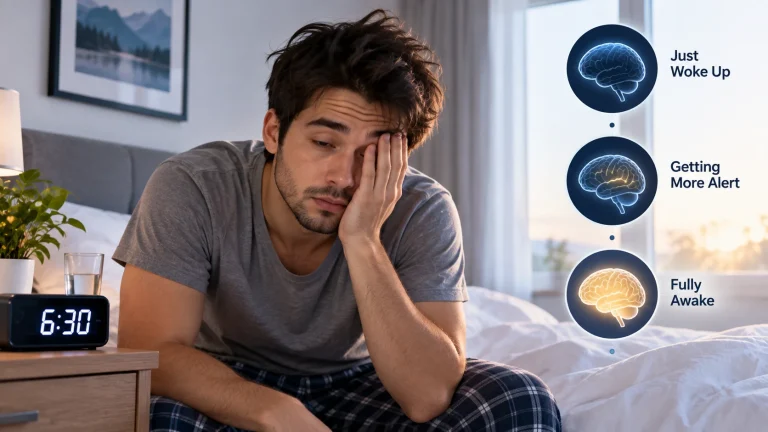
Sleep onset is not a switch; it is a gradual cascade of physiological changes unfolding over 10–20 minutes under ideal conditions. Understanding this cascade makes it clear why each technique below helps — and why stress, screens, or worry can completely reset the process.

  • Core body temperature drops 1–2°C. The brain’s sleep-promoting regions in the anterior hypothalamus ramp up as core temperature falls; vasodilation in the hands and feet radiates heat away from the core, gating the transition into N2 sleep.
  • Melatonin rises. In dim light, the suprachiasmatic nucleus (SCN) signals the pineal gland to secrete melatonin, which binds to MT1/MT2 receptors and helps synchronise the timing of the sleep-wake cycle. Bright light — especially blue light around 480nm — suppresses this signal.
  • Adenosine builds sleep pressure. Adenosine accumulates in the brain across the day as a by-product of energy use. When it binds to A1 and A2A receptors in arousal centres, it dampens wake-promoting neurons, creating the subjective feeling of sleepiness.
  • Brain activity shifts from alpha to theta. Relaxed wakefulness shows alpha waves; as drowsiness deepens, theta waves appear, followed by sleep spindles and K-complexes that define N2 sleep.
  • Stress chemistry must ramp down. Cortisol and norepinephrine must decline for this cascade to proceed. Late-evening rumination, phone alerts, or performance anxiety about sleep all trigger micro-spikes that restart the clock on sleep onset.

Techniques Ranked by Research Evidence

Not all sleep-onset techniques are equally supported by research. This evidence ladder starts with methods backed by strong clinical trials and moves down to promising but less-studied approaches.

Tier 1 — Strong RCT evidence
★★★★★
Stimulus control therapy (Bootzin, 1972)
Mechanism: breaks the conditioned arousal link between your bed and wakefulness by re-associating the bed only with actual sleepiness and sleep.

Use the bed only for sleep and sex; go to bed only when sleepy; if awake for more than ~20 minutes, leave and return only when sleepy again. Bootzin’s protocol is the most effective single-session behavioural insomnia intervention in clinical trials and forms the core of CBT-I.

Tier 1 — Strong RCT evidence
★★★★★
Fixed wake time (every day)
Mechanism: anchors circadian phase and steadily rebuilds homeostatic sleep pressure so that, by bedtime, the brain has both the timing signal and the “need” to sleep aligned.

Setting an identical wake time seven days per week — and sticking to it even after a poor night — is the most powerful lever over sleep onset. Without a fixed wake time, both circadian timing and adenosine-based pressure drift, making fast sleep onset unpredictable.

Tier 2 — Good evidence
★★★★☆
Bedroom temperature 17–19°C
Mechanism: a cool room accelerates core temperature decline by enabling heat loss from the extremities, which gates the transition into stable N2 sleep.

Core body temperature must drop ~1–2°C for sleep onset. Okamoto-Mizuno & Mizuno (2012) showed measurably shorter sleep onset latency and fewer awakenings in cooler bedrooms (17–20°C). Being slightly cool at the skin level but warm under the duvet optimises the thermal gradient.

Tier 2 — Good evidence
★★★★☆
Progressive muscle relaxation (PMR)
Mechanism: alternating tension and release increases parasympathetic activation and body awareness, producing deeper relaxation than passive “trying to relax”.

Starting at the feet, tense each muscle group for ~5 seconds then release for ~15 seconds. Multiple RCTs show 15–20 minutes of nightly PMR reduces sleep onset latency by 10–15 minutes and reduces nighttime awakenings in people with insomnia.

Tier 2 — Good evidence
★★★★☆
Sleep restriction / compression
Mechanism: limiting time in bed concentrates adenosine pressure so the brain learns to fall asleep rapidly when in bed.

A core CBT-I component with 50–60% remission rates for chronic insomnia. Initially limit time in bed to match average actual sleep time, then gradually extend once sleep efficiency exceeds 85%. Implement cautiously; seek professional guidance for severe insomnia.

Tier 3 — Moderate evidence
★★★☆☆
4–7–8 breathing
Mechanism: lengthened exhale stimulates the vagus nerve, shifting the autonomic balance toward the parasympathetic system and slowing heart rate.

Inhale through the nose for 4 counts, hold for 7 counts, exhale through the mouth for 8 counts. HRV research shows slow breathing with extended exhalation produces measurable increases in vagal tone within just a few cycles. Keep the hold phase comfortable — forced breath retention reverses the effect.

Tier 3 — Moderate evidence
★★★☆☆
Cognitive shuffle (Beaudoin, 2021)
Mechanism: replaces problem-focused, sequential thinking with random, disconnected imagery that mimics the brain’s natural pre-sleep mentation.

Pick a random word, then imagine a series of unrelated concrete objects. Beaudoin’s “serial diverse imagining” work shows that this pattern nudges the brain into the fragmentary, non-goal-directed thinking characteristic of the sleep onset period, reducing prefrontal monitoring and rumination.

Tier 3 — Moderate evidence
★★★☆☆
Warm bath 1–2 hours before bed
Mechanism: passive heating followed by skin cooling causes peripheral vasodilation, which accelerates the core temperature drop needed for sleep onset.

A 40–42°C bath taken 1–2 hours before bed. Meta-analyses show about a 10-minute average reduction in sleep onset latency, particularly in people who typically feel “too wired” to fall asleep.

Tier 4 — Limited evidence
★★☆☆☆
Paradoxical intention
Mechanism: instructs you to stay awake on purpose, which removes performance anxiety and reduces prefrontal self-monitoring that blocks sleep onset.

Lie in the dark and try to stay awake while remaining relaxed. A few small RCTs in insomnia suggest that this counterintuitive approach reduces sleep onset anxiety and shortens latency. The effect size is modest but the mechanism powerfully illustrates the sleep effort paradox.

Tier 4 — Limited evidence
★★☆☆☆
White or pink noise
Mechanism: constant background sound reduces the contrast of environmental noises that trigger micro-arousals.

Fans, noise machines, or apps do not directly induce sleep; instead, they stabilise the acoustic environment by masking intermittent sounds. The evidence base is small and mixed, but low-risk — particularly in noisy environments.

Tier 5 — Lifestyle foundations
★☆☆☆☆
Morning light, caffeine cut-off, alcohol timing
Mechanism: align circadian timing and remove chemical interference so that natural sleep pressure can do its job.

Bright outdoor light within an hour of waking anchors the SCN. Avoiding caffeine after ~2pm prevents adenosine receptor blockade at night. Skipping alcohol within 3 hours of bedtime prevents rebound arousals and REM fragmentation. These habits create the background conditions that make fast sleep onset possible.

🔬 Beyond Standard Sleep Hygiene

Advanced Sleep Onset Techniques — With the Studies Behind Them

These four techniques go deeper than standard sleep hygiene lists. Each one targets a specific neurological or physiological mechanism, and each has a study — or strong theoretical framework — explaining precisely why it works to help you fall asleep fast. Use them when standard advice has stopped producing results.

T1
Paradoxical Intention
CBT-I technique — Harvey & Payne (2002) — 54% reduction in sleep onset latency
CBT-I Component RCT Evidence
★★★★☆ Evidence strength: Good — Harvey & Payne (2002), Behaviour Research and Therapy

The single most counterintuitive technique in this guide — and one of the most evidence-backed. Instead of trying to fall asleep, you deliberately try to stay awake. This is not a thought experiment. It is a formal CBT-I technique with a measured effect size.

The mechanism is the sleep effort paradox: trying to sleep creates cortical arousal that prevents it. When you actively monitor whether you are drifting off, the prefrontal cortex — responsible for self-evaluation and performance tracking — maintains waking-state activity. This suppresses the thalamocortical gating required for N2 sleep spindles. The act of trying to sleep is, literally, neurologically incompatible with falling asleep. Harvey & Payne (2002) tested this directly: in a randomised controlled trial, paradoxical intention reduced sleep onset latency by 54% compared to controls, making it one of the strongest single-technique findings in sleep onset research.

🧠
Mechanism — Sleep Effort Paradox: Sleep is an involuntary state; the harder you consciously attempt it, the more the prefrontal cortex fires. Paradoxical intention interrupts this loop by redirecting attention away from sleep monitoring, allowing the thalamus to downregulate sensory gating and initiate the spindle activity of N2 sleep. The cortical arousal created by sleep effort dissolves when the goal of sleep is explicitly abandoned.
−54% SOLsleep onset latency reduction (Harvey & Payne 2002)
RCT designrandomised controlled trial
Core CBT-Iused in clinical insomnia treatment

How to use paradoxical intention tonight:

  • 1Lie in bed in a comfortable position, lights off. Do not look at your phone or read.
  • 2Keep your eyes gently open — not straining, just soft and unfocused in the dark.
  • 3Repeat to yourself quietly: “I will stay awake as long as possible.” Mean it. Your job tonight is to stay awake, not to fall asleep.
  • 4If thoughts come, let them pass without engaging. Return to your one task: gentle, relaxed wakefulness.
  • 5Do nothing else. No screens, no reading, no problem-solving. Simply lie still and aim to stay awake.
  • 6For most people, sleep arrives within 15–20 minutes. The less you chase it, the faster it comes.
Note: Paradoxical intention addresses performance anxiety around sleep onset — it is not a substitute for full CBT-I if your insomnia is chronic or clinical. If you have had difficulty falling asleep every night for more than 3 months, discuss with a GP or sleep specialist.
T2
Cognitive Shuffling
Beaudoin (Simon Fraser University) — MICRO-meme theory of sleep onset
Theoretically Strong Widely Effective
★★★☆☆ Evidence strength: Moderate — mechanistically sound; large-scale RCT pending

Developed by cognitive scientist Luc Beaudoin at Simon Fraser University, cognitive shuffling is one of the most original sleep-onset techniques of the last decade. Rather than trying to relax or clear your mind, you deliberately generate a rapid stream of random, disconnected, vivid visual images — a strawberry, then a lamp, then a horse — with no logical connection between them.

The mechanism draws from Beaudoin’s MICRO-meme (Macro-Intentional Cognitive Remainder Operations) theory of sleep onset. As the brain approaches sleep, its mentation naturally becomes fragmented, non-sequential, and scene-like — the micro-dreams and hypnagogic imagery of the early sleep transition. Cognitive shuffling mimics this pattern deliberately. The brain interprets random, disconnected imagery as a signal that no active problem-solving or threat-monitoring is needed, and that cognition can be safely suspended. This accelerates the deactivation of prefrontal executive networks and allows the thalamocortical system to shift into spindle-rich N2 sleep. While large-scale RCT data are pending, the technique is mechanistically coherent and widely reported as highly effective — particularly for people whose racing thoughts at bedtime are verbal and sequential (planning, ruminating, replaying) rather than emotional.

🎨
Mechanism — MICRO-meme theory: Sequential, goal-directed verbal thinking keeps the default mode network (DMN) and prefrontal cortex active. Random imagery lacks the narrative structure that sustains this activity. By shifting from verbal-sequential to visual-random cognition, you effectively turn off the “still thinking” signal and allow the brain’s sleep-initiation systems to interpret the situation as safe for sleep onset.
Random imageryno logical connection between images
5-sec per imagemove on before analysing
DMN deactivationtarget mechanism

Step-by-step cognitive shuffle:

  • 1Get comfortable, lights out. Pick a random word — any word, no meaning required. For example: “HAMMOCK”.
  • 2Form a vivid visual image of that word. See the hammock — its texture, colour, the way it sways. Hold it for about 5 seconds.
  • 3Do not continue the scene. Jump to a completely unrelated image. Now imagine a saxophone. Then a glacier. Then a red postbox. Then a moth.
  • 4Keep the images concrete and visual, not abstract. “A rusted iron gate” works; “justice” does not.
  • 5If you catch yourself making a narrative (“the hammock is in a garden which has a gate…”), recognise it and cut back to a random new image with no connection.
  • 6Continue until you drift off. Most people lose track of the images as they enter hypnagogia — that is exactly right.
Use the interactive tool below (Section 4 on this page) to practice the image sequence with prompted words. After a few nights, you will not need it — the skill becomes automatic.
T3
4–7–8 Breathing
Weil technique — vagal activation + CO ₂ modulation mechanism
Moderate Evidence Strong Physiology
★★★☆☆ Evidence strength: Moderate — strong breathing-relaxation RCT base; limited direct sleep-onset trials

Popularised by Dr Andrew Weil, the 4–7–8 pattern is not merely a counting exercise — it has two distinct physiological mechanisms working simultaneously. First, the extended exhale (8 counts) directly stimulates the vagus nerve, increasing heart rate variability (HRV) and shifting autonomic balance toward parasympathetic dominance. Second, the 7-count breath hold allows CO ₂ to build slightly in the bloodstream; elevated CO ₂ reduces neural excitability and promotes a calmer, more drowsy state through its effect on chemoreceptors and brainstem arousal circuits. Importantly, this is not a hyperventilation technique — the ratio is specifically designed to prevent the low-CO ₂ effects of rapid breathing.

Breathing-relaxation research consistently shows that slow-paced breathing at ~6 breaths per minute — which the 4–7–8 cycle approximates — produces measurable reductions in cortisol, sympathetic tone, and subjective anxiety within 4–6 minutes. While there are no large RCTs specifically on 4–7–8 breathing and sleep onset latency, its constituent mechanisms (vagal activation, CO ₂-mediated sedation) are well-supported. It is not a substitute for CBT-I if insomnia is clinical, but as a pre-sleep autonomic regulator it is safe, cost-free, and physiologically rational.

🦁
Mechanism — Dual pathway: (1) Extended exhale activates the vagus nerve via stretch receptors in the lungs, slowing the heart and dampening the sympathetic “fight-or-flight” arm of the autonomic system. (2) The breath-hold phase allows arterial CO ₂ to rise slightly, which acts on brainstem chemoreceptors and reduces cortical excitability — promoting the drowsy, low-arousal state that precedes sleep onset.
Inhale 4 countsthrough the nose, gentle
Hold 7 countscomfortable, no straining
Exhale 8 countsthrough the mouth, slow
  • 1Lie on your back. Place one hand on your chest, one on your belly.
  • 2Inhale through your nose for 4 counts — slow and quiet, belly rising first.
  • 3Hold for 7 counts — let it be effortless. If 7 feels too long, halve all counts (2–3.5–4) until comfortable.
  • 4Exhale through your mouth for 8 counts — slightly pursed lips, letting the air drain out completely.
  • 5Repeat for 4 cycles minimum. Most people notice a shift in alertness between cycles 3 and 4. Use the interactive timer below to guide your first few sessions.
Note: This is a tool for pre-sleep autonomic calming and how to fall asleep quickly on a given night — not a treatment for clinical insomnia. If sleep difficulty is persistent (3+ months, 3+ nights/week), consult a GP about CBT-I referral.
T4
Body Temperature Manipulation
Haghayegh et al. (2019) — meta-analysis of 13 studies — −10 min average sleep onset latency
Meta-Analysis 13 Studies
★★★★☆ Evidence strength: Good — Haghayegh S et al. (2019) Sleep Medicine Reviews

Of all the techniques on this page, body temperature manipulation has the most precisely defined protocol — because the effect depends on both temperature and timing. The mechanism is the same one underlying bedroom temperature: sleep onset requires a core body temperature drop of 1–2°C. A warm shower or bath accelerates this process, but only if timed correctly.

Haghayegh et al. (2019) conducted a systematic review and meta-analysis of 13 controlled studies examining passive body heating (warm baths and showers) and sleep. The key findings: a shower or bath at 40–43°C, taken 1–2 hours before bedtime, reduced sleep onset latency by an average of 10 minutes compared to controls. The mechanism is counterintuitive — a hot shower helps you sleep faster because of what happens after you exit. The heat forces peripheral vasodilation (blood vessels in the skin dilate widely), and when you step out into a cooler room, this vasodilation rapidly offloads core body heat. The post-shower core temperature decline is steeper and faster than natural cooling alone — mimicking and accelerating the thermoregulatory change the brain uses as its “begin sleep” signal.

The timing window matters critically. A shower taken immediately before bed still has dilated peripheral vessels but has not yet offloaded enough core heat, and may delay sleep onset. A shower taken 3+ hours before bed completes its effect before the biological sleep window opens. The sweet spot is 60–90 minutes before your intended sleep time.

🌂
Mechanism — Thermal Dumping: Hot water exposure dilates cutaneous blood vessels. On exiting, skin acts as a large radiator. Core heat flows outward rapidly, producing a post-shower core temperature nadir within 60–90 minutes. The anterior hypothalamus detects this core cooling and interprets it as the “safe to initiate sleep” signal, triggering melatonin release timing and N2 gating.
40–43°Cshower/bath temperature
60–90 min before bedoptimal timing window
−10 min SOLaverage (Haghayegh 2019 meta-analysis)
13 studiesincluded in meta-analysis
  • 1Decide your target bedtime. Count back 60–90 minutes — that is your shower window.
  • 2Set shower temperature to 40–43°C (warm but not uncomfortably hot). Stay for 10–15 minutes minimum — enough time for full peripheral vasodilation.
  • 3After exiting, do not immediately wrap up in a thick robe. Allow the skin cooling effect to proceed naturally for a few minutes before dressing.
  • 4Keep your bedroom at 18–20°C during the 60–90 minute window — this amplifies the core temperature drop.
  • 5Use the remaining time for a wind-down routine (dim lights, reading, or cognitive shuffle practice). By the time you get into bed, the thermally-triggered drowsiness will already be building.
Protocol precision matters: the Haghayegh (2019) meta-analysis found the effect was specific to the 1–2 hour pre-bed window. Showers taken immediately before bed or more than 2 hours earlier showed attenuated effects. The temperature must reach 40°C — lukewarm showers do not produce sufficient peripheral vasodilation for the mechanism to work.
Citations for this section: Harvey AG & Payne S (2002). “The management of unwanted pre-sleep cognition in insomnia: paradoxical intention and distraction.” Behaviour Research and Therapy, 40(3):267–277. • Beaudoin LP (2021). “Serial diverse imagining in the cognitive shuffle method.” Somnology. • Haghayegh S et al. (2019). “Before-bedtime passive body heating by warm shower or bath to improve sleep: A systematic review and meta-analysis.” Sleep Medicine Reviews, 46:124–135. • Bootzin RR (1972). Stimulus control treatment for insomnia. Proc. APA. • Kräuchi K et al. (1999). “Warm feet promote the rapid onset of sleep.” Nature, 401:36–37.

4–7–8 Breathing Timer

Use this as a live guide in bed: 4-count inhale, 7-count gentle hold, 8-count soft exhale. The extended exhale activates the parasympathetic nervous system via the vagus nerve, shifting your heart and breathing rhythms toward the relaxation response.

Ready
Press start, then breathe along with the circle. Keep the hold phase gentle — no straining.
Cycle 0 of 4

How 4–7–8 helps you fall asleep

Extended exhalation directly stimulates the vagus nerve, which slows heart rate and reduces sympathetic nervous system activity. Within 3–4 cycles, heart rate variability (HRV) typically shows a shift toward parasympathetic dominance — the same pattern seen as the brain transitions from wake to N1 sleep.

Andrew Weil popularised 4–7–8 as a simple way to trigger the relaxation response. In practice, four cycles (about 60 seconds) are a good minimum; many people find 6–8 cycles even more effective. Use a light touch: the aim is a comfortable rhythm, not maximal breath holding.

Tip: Close your eyes after the first cycle and let your attention rest on the sensation of air leaving your lungs during the 8-count exhale. If you lose track, simply restart the next inhale at 4.

Cognitive Shuffle — Step by Step

The cognitive shuffle, developed by Luc Beaudoin, is a structured way of doing what sleepy brains do naturally: generating vivid but disconnected images. This disrupts rumination and gives the prefrontal cortex a low-effort task that lets it gradually disengage. See the full technique breakdown in the Advanced section above.

How to do the cognitive shuffle

1. Get comfortable in bed, lights out. Choose a simple theme (for example, objects or places) and a starting letter if you like.

2. For each prompt below, picture the object as clearly and vividly as you can. Notice its colour, texture, and size. Then move on without analysing or connecting it to the previous image.

3. After this walkthrough, generate your own random sequence of images. The goal is to keep your mind gently occupied with unrelated imagery until you drift off.

Based on Beaudoin’s “serial diverse imagining” — random imagery mimics the naturally fragmented thinking of the sleep onset period, signalling to the brain that it is safe to downregulate problem-solving networks.

BANANA
Prompt 1 of 6: Picture a BANANA in as much detail as possible.

The Paradox of Trying to Sleep

Sleep is one of the few biological processes that gets worse the harder you consciously try to achieve it. Understanding this paradox explains why techniques like PMR, cognitive shuffle, and 4–7–8 breathing work so well — and why paradoxical intention produces a 54% reduction in sleep onset latency (Harvey & Payne 2002).

When you lie in bed thinking, “Am I asleep yet? I have to fall asleep now or tomorrow will be ruined,” you are activating the prefrontal cortex — the brain region responsible for self-monitoring, planning, and performance evaluation. Prefrontal activation is fundamentally incompatible with sleep onset: it maintains cortical arousal, keeps cortisol elevated, and prevents the thalamus from fully shifting into the spindle-rich N2 mode that characterises stable light sleep.

In other words, the very act of checking whether you are asleep yet is like shining a mental torch into your own brain and asking it to stay awake. Insomnia researchers describe this as conditioned arousal: over time, the bed becomes a place where you rehearse worries, calculate sleep minutes, and monitor your internal state instead of a place where you drift.

The solution: redirect, don’t suppress. The most effective sleep onset techniques do not try to force or suppress thoughts; they give the prefrontal cortex a low-demand, repetitive task that gently occupies it until it lets go. Progressive muscle relaxation, cognitive shuffle imagery, and 4–7–8 breathing all work by engaging attention just enough to stop rumination while allowing the deeper sleep machinery — temperature, melatonin, adenosine — to do its job. Paradoxical intention works by removing the monitoring task entirely.

The Warm Feet Method

Temperature is one of the most powerful levers over how to fall asleep fast. You want a cool bedroom — and warm feet. Together they create the optimal thermal gradient for rapid sleep onset.

Wearing light socks, or placing a warm water bottle near your feet, promotes peripheral vasodilation — widening blood vessels in the extremities so they radiate heat away from the body’s core. This accelerates the 1–2°C core temperature decline that gates the transition into sleep. Kräuchi et al. (1999) showed that distal skin temperature (hands and feet) was the single best physiological predictor of sleep onset timing: warmer extremities reliably preceded faster sleep onset.

The key is the gradient: a cool room (around 18–20°C) combined with warm extremities. If the whole room is too warm, your body struggles to shed core heat and sleep onset is delayed. If your feet are icy, vasoconstriction keeps heat trapped in the core. Aim for “cool nose, warm toes” as a practical rule. Combined with the warm shower protocol (Advanced section, Technique 4), this is the most complete thermal approach to falling asleep quickly.

Frequently Asked Questions

How can I fall asleep in 10 minutes?

The fastest evidence-informed approach for most adults is a combination of temperature, breathing, and cognitive techniques. First, set your bedroom to 18–20°C and make sure your feet are warm (socks or a hot water bottle). Second, complete 4 cycles of 4–7–8 breathing immediately after lying down, allowing your exhale to lengthen and your heart rate to slow. Third, switch to cognitive shuffle imagery: visualise a series of random, vivid, unconnected objects — banana, lighthouse, saxophone, purple cow. For people with normal sleep architecture and adequate sleep pressure, this triad often shortens sleep onset to 10–15 minutes. If your sleep onset is consistently 30+ minutes despite good habits, consider circadian misalignment or clinical insomnia and discuss with your GP.

Does paradoxical intention actually help you fall asleep faster?

Yes. Harvey & Payne (2002) found that paradoxical intention — deliberately trying to stay awake — reduced sleep onset latency by 54% compared to controls in a randomised controlled trial. The mechanism is the sleep effort paradox: actively trying to fall asleep creates cortical arousal that prevents it. Paradoxical intention removes this performance pressure, allowing the brain’s natural sleep systems to take over. It is most effective for people whose insomnia is driven by anxiety about sleep onset rather than by circadian timing issues.

What is the military sleep method?

The widely shared “military sleep method” is described as a way to fall asleep quickly in 2 minutes, based on a book about US military performance. In practice it combines three elements with scientific support: (1) progressive relaxation of the face, shoulders, arms, torso, and legs (a variant of PMR); (2) visualisation of a calm scene (imagery-based relaxation); and (3) a loose cognitive shuffle component (switching images if intrusive thoughts persist). The specific 2-minute claim is not backed by controlled studies, but the underlying techniques — especially when practised consistently for several weeks — can reduce sleep onset latency by 10–20 minutes for many people.

How does a warm shower before bed help you fall asleep quickly?

A shower at 40–43°C, taken 60–90 minutes before bed, raises peripheral skin temperature. On exiting, blood vessels remain dilated and the body rapidly offloads core heat — accelerating the 1–2°C core temperature decline needed to initiate sleep. Haghayegh et al. (2019) meta-analysis of 13 studies found this protocol shortened sleep onset latency by an average of 10 minutes. The timing precision matters: a shower taken immediately before bed or more than 2 hours earlier shows reduced effect.

Why can’t I fall asleep even when I’m tired?

Feeling “tired but wired” typically reflects one of three mechanisms. Hyperarousal: cortisol and norepinephrine remain high enough to override sleep pressure — common in high-stress periods, anxiety disorders, or after late-evening screen use. Circadian phase delay: your body clock is set later than your chosen bedtime; morning light and a consistent wake time are the primary fixes. Conditioned arousal: if you regularly use your bed for scrolling, worrying, or working, your brain learns to associate the bed with wakefulness. Stimulus control therapy (Tier 1 in the evidence ladder above) is specifically designed to reverse this.

Ready to turn this into a routine? Use the calculators built on the same sleep science.
Key scientific sources: Bootzin RR (1972). “Stimulus control treatment for insomnia.” Proc. APA. • Benson H (1975). The Relaxation Response. William Morrow. • Beaudoin LP (2021). “Serial diverse imagining in the cognitive shuffle method.” Somnology. • Harvey AG & Payne S (2002). “The management of unwanted pre-sleep cognition in insomnia: paradoxical intention and distraction.” Behaviour Research and Therapy, 40(3):267–277. • Haghayegh S et al. (2019). “Before-bedtime passive body heating by warm shower or bath to improve sleep: A systematic review and meta-analysis.” Sleep Medicine Reviews, 46:124–135. • Kräuchi K et al. (1999). “Warm feet promote the rapid onset of sleep.” Nature, 401:36–37. • Okamoto-Mizuno K & Mizuno K (2012). “Effects of thermal environment on sleep and circadian rhythm.” Journal of Physiological Anthropology, 31(1):14.

Similar Posts