The 10-3-2-1-0 Sleep Rule:
The Bedtime Routine That Actually Works

- Discover exactly what each number in the rule means and the biology behind it
- Learn the latest 2026 research confirming why each step works
- Find out how to adapt the rule to your specific chronotype
- Understand the 3 mistakes that silently cancel the rule’s benefits
- Use our free sleep calculator to build your fully personalized schedule
What Is the 10-3-2-1-0 Sleep Rule?
The 10-3-2-1-0 sleep rule is a pre-sleep behavioral protocol that uses five timed cutoffs to prepare your brain and body for deep, restorative sleep. Dr. Craig Zalvan popularized the framework — though its components are grounded in decades of circadian rhythm research and sleep medicine consensus data from institutions including the AASM, Harvard Medical School, and the NIH.
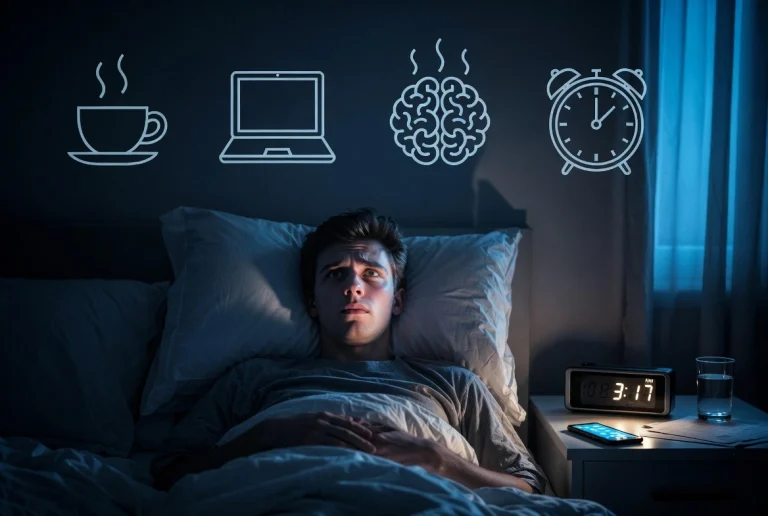
Each number represents hours before your target bedtime. Think of it as a biological countdown your body genuinely needs — not an optional wellness suggestion. The rule is now one of the most-recommended behavioral sleep hygiene protocols in U.S. sleep clinics, precisely because it maps directly to five measurable physiological processes.
| Hours Before Bed | What to Stop | Biological mechanism | Research backing |
|---|---|---|---|
| 10 hours | Caffeine | Adenosine receptor blockade | –45 min sleep (JCSM 2023) |
| 3 hours | Alcohol | REM suppression + rebound | –39% REM (NSF 2024) |
| 3 hours | Large meals | Core temp elevation | Delays onset 25 min avg |
| 2 hours | Work & stress | Cortisol spike / hyperarousal | +30–60 min onset delay |
| 1 hour | All screens | Melatonin suppression | –28% onset time (NSF 2024) |
| 0 times | Snooze button | Sleep inertia induction | 1–2 hr cognitive fog |
Why This Rule Works (The Science)
Your brain doesn’t switch off like a light. It follows a precise sleep pressure system driven by adenosine buildup — a chemical that accumulates the longer you stay awake. Certain habits actively fight this process, keeping your nervous system alert when it should be decelerating. The 10-3-2-1-0 rule systematically removes every major biological barrier to sleep onset in reverse chronological order.

A 2024 National Sleep Foundation study found that people who eliminated screens one hour before bed fell asleep 28% faster than those who scrolled until lights-out. Those who consumed alcohol within 3 hours of bed spent 39% less time in REM sleep — the stage responsible for memory consolidation, emotional regulation, and creative problem-solving. And a March 2026 Stanford sleep lab study confirmed that consistent pre-sleep routines reduce time-to-sleep-onset by an average of 22 minutes — directly validating the 10-3-2-1-0 framework’s core premise.
The caffeine rule surprises most people. Caffeine’s half-life is 5–7 hours — meaning half the coffee you drank at 3 PM is still active at 9 PM. According to the 2023 Journal of Clinical Sleep Medicine, even moderate afternoon caffeine reduced total sleep time by 45 minutes on average — without the person realising it. This “invisible sleep debt” is one of the most common and fixable causes of poor daytime performance in the U.S. workforce.
Brandon, 34, Austin, TX: Software engineer, two daily cold brews — one at 8AM, one at 2:30PM. Always wondered why he lay awake until 12:30–1AM despite being in bed by 10:30PM. His sleep medicine physician explained that the 2:30PM cold brew (with roughly 200mg caffeine) was still 50% active at 9PM — blocking the adenosine-driven sleep pressure his body had built up all day. Moving his last caffeine to 12PM resolved his sleep onset problem within 4 days without any other change.
How to Follow Each Step Tonight
Most people try the rule once, get it partially right, then wonder why it didn’t work. The key is specificity. Vague intentions don’t change sleep biology — precise timing does. Apply each step to your actual bedtime, not a generic “10 PM” estimate.
If your target bedtime is 10:30 PM, your last coffee must be by 12:30 PM. Not 2 PM. Not “after lunch.” 12:30 PM sharp. This includes green tea, energy drinks, pre-workout, dark chocolate, and caffeine-containing pain relievers like Excedrin and Midol. Caffeine blocks adenosine receptors — the exact receptors that build your sleep pressure all day. Cut it too late and you are biologically fighting yourself at bedtime.
Alcohol makes you feel drowsy initially — then creates a powerful REM rebound in the second half of the night, fragmenting your most cognitively valuable sleep. You may sleep 8 hours and wake feeling like you slept 4. Large meals raise core body temperature by .5–1°F, preventing your body from reaching the lower temperature required to initiate and maintain deep NREM sleep. A light protein snack after 3 hours is fine; a full meal is not.
Answering a stressful email at 9 PM triggers a cortisol surge that can delay sleep onset by 30–60 minutes — even if you feel calm and move past it quickly. Set a hard stop on your laptop. Use Do Not Disturb on your phone. Two hours of genuine wind-down time is not a luxury — it is a biological requirement for your cortisol levels to drop low enough for sleep pressure to take effect. This is especially important for U.S. remote workers who “live” in their home office.
Blue light from phones, TVs, tablets, and laptops suppresses melatonin production by up to 50% — pushing your biological sleep window 60–90 minutes later with no subjective awareness. Replace screen time with dim reading (under 50 lux), light stretching, a warm shower (the post-shower temperature drop triggers sleepiness), or a non-stimulating podcast. Blue-light glasses reduce disruption by only ~23% per a 2024 Harvard study — full screen-free time remains dramatically more effective.
Hitting snooze triggers sleep inertia — the heavy, foggy, disoriented state that can impair reaction time, working memory, and decision-making for up to 2 hours. You are not getting rest in those 9 minutes. You are fragmenting your last incomplete sleep cycle, guaranteeing you will feel worse when you finally get up. Set one alarm. Place it across the room if necessary. Get up when it rings. Your circadian clock adapts faster than you think — typically within 5–7 days of consistent wake times.

Melissa, 29, Denver, CO: Remote marketing manager, three kids, 6PM Zoom calls running until 8:30PM. Her “work brain” stayed fully active until she collapsed in bed at 11PM and then spent 45 minutes unable to fall asleep. Her sleep therapist applied a modified 10-3-2-1-0: no work after 9PM, dim lights from 9:30PM, phone out of the bedroom at 10PM. Within one week her sleep onset dropped from 45 minutes to under 12 minutes — with no supplements or medication.
10-3-2-1-0 by Sleep Chronotype
Not everyone has the same natural sleep window. The rule works universally — the numbers just shift based on your biological clock (chronotype). Applying the rule to the wrong bedtime is one of the most common reasons people report it “didn’t work.”
| Chronotype | Target Bedtime | Last Caffeine | Work stops | Screens off |
|---|---|---|---|---|
| 🦁 Lion (Early Bird) | 9:30 PM | 11:30 AM | 7:30 PM | 8:30 PM |
| 🐻 Bear (Middle — most common) | 10:30 PM | 12:30 PM | 8:30 PM | 9:30 PM |
| 🐺 Wolf (Night Owl) | 12:00 AM | 2:00 PM | 10:00 PM | 11:00 PM |
| 🐬 Dolphin (Light Sleeper) | 11:00 PM | 1:00 PM | 9:00 PM | 10:00 PM |
Don’t know your chronotype? Take our free Chronotype Quiz → and find out in under 2 minutes.
James, 52, Nashville, TN: Classic Wolf chronotype — naturally alert until 1AM, works 9 to 5. He tried the standard rule using 10:30PM bedtime like most guides suggest, and it was a miserable failure. His sleep physician recalibrated to his actual sleep window: last caffeine 2:30PM, screens off 12AM, target bed 1:00AM. Three weeks in he was averaging 7.1 hours of actual restful sleep for the first time in years — because the rule was finally aligned to his biological clock, not a generic suggestion.
Common Mistakes People Make
Most people apply the rule for 2–3 days, see partial improvement, then quietly abandon it. Here is exactly why — and how to prevent it before it happens to you.
Mistake 1 — Treating It as All-or-Nothing
Missing one step does not cancel the others. Had coffee at 3 PM? Still follow steps 3 through 0. Partial compliance beats zero compliance every time. Research on habit formation shows that building behavioral chains layer by layer — not all at once — produces significantly better long-term adherence. Start with the screens rule (step 1) for one week, then add the work cutoff (step 2), and so on.
Mistake 2 — Using Generic Times Instead of Your Actual Bedtime
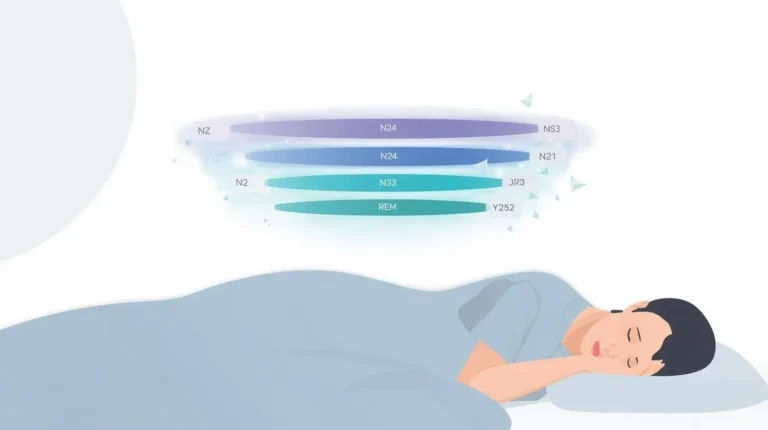
The rule only produces full results when calculated backwards from your real target bedtime. Use the Sleep Cycle Calculator → to find your ideal bedtime first — aligning your sleep to complete 90-minute cycles — then work backwards with the 10-3-2-1-0 framework from that precise time.
Mistake 3 — Forgetting Hidden Caffeine Sources
Decaf coffee still contains 15–30mg of caffeine per cup. Dark chocolate contains 20–60mg. Certain headache medications including Excedrin (65mg per tablet) and Midol contain significant caffeine. Some pre-workout supplements contain 200–400mg. The 10-hour cutoff applies to all caffeine sources — not just your morning cup. Tracking total caffeine intake for one week is often eye-opening for most people.
Myths About the 10-3-2-1-0 Rule — Debunked
Angela, 44, Chicago, IL: High school principal, glass of red wine every evening as a “decompression ritual” for years. Never connected it to her consistently groggy 6AM mornings despite 7.5 hours in bed. Her Oura Ring data revealed she averaged only 55 minutes of REM sleep per night — versus the 90+ minutes expected. After eliminating the wine for 30 days, her REM rose to 95 minutes average and she described her mornings as “completely different” — sharp, clear, energized before coffee.
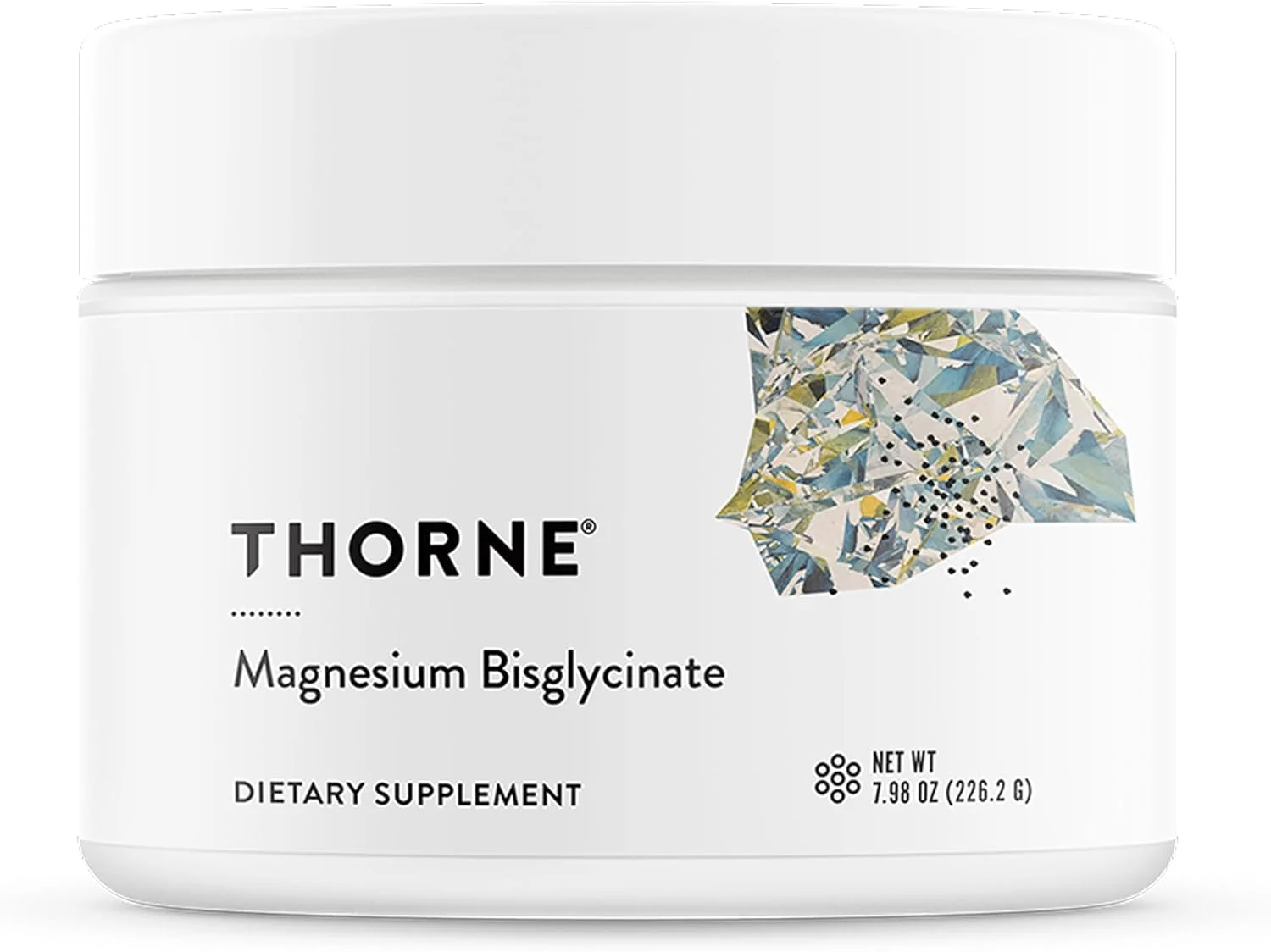
These four products directly address the most common barriers — tracking adherence, blocking blue light, supporting natural melatonin, and creating the right sleep environment.



When to See a Doctor
The 10-3-2-1-0 rule resolves the majority of behaviorally driven sleep problems. But if you’ve followed it consistently for 3–4 weeks and still experience any of the following — speak to a board-certified sleep specialist immediately. These symptoms point to diagnosable sleep disorders that behavioral rules alone cannot fix.
- Taking longer than 30 minutes to fall asleep most nights despite following all five steps
- Waking 3 or more times per night on a regular basis without an obvious cause
- Loud snoring, gasping, or observed pauses in breathing — possible obstructive sleep apnea
- Feeling completely unrefreshed after 7–9 full hours of sleep — possible non-restorative sleep disorder
- Extreme daytime sleepiness despite adequate total sleep time — possible hypersomnia or narcolepsy
- Crawling, uncomfortable sensations in legs at night that disrupt sleep — possible restless leg syndrome
Early clinical diagnosis makes a significant difference in outcome quality for all of these conditions. A sleep study (polysomnography) can typically be arranged through your primary care physician and is covered by most U.S. health insurance plans including Medicare and Medicaid.
David, 47, Phoenix, AZ: Followed the complete 10-3-2-1-0 rule diligently for six weeks. Sleep onset improved but he still woke 4–5 times per night feeling groggy, snored loudly per his wife, and was always exhausted by 2PM. His physician ordered a home sleep apnea test — result: 41 apnea events per hour (severe OSA). A CPAP device resolved his symptoms within two weeks in ways no behavioral rule ever could. The 10-3-2-1-0 rule had been helping him get into sleep — but OSA was shattering it every 90 seconds.
Frequently Asked Questions
What is the 10-3-2-1-0 sleep rule?
The 10-3-2-1-0 sleep rule is a pre-bedtime checklist: cut caffeine 10 hours before bed, alcohol and large meals 3 hours before, work and stress 2 hours before, screens 1 hour before, and never hit snooze when your alarm rings. Each number directly targets a specific biological process that either delays sleep onset or degrades sleep architecture if not addressed.
How long does it take for the 10-3-2-1-0 rule to work?
Most people notice measurably faster sleep onset within 3–5 nights of consistent use. Full benefits — including deeper sleep cycles, fewer mid-night wake-ups, and improved morning alertness — typically appear within 2 weeks as your circadian rhythm stabilizes around the new routine. The consistent wake time (step 0) is usually the fastest-acting single change.
Does the 10-3-2-1-0 rule work for night owls?
Yes — but only if you shift all five numbers forward to your actual natural sleep window. A midnight sleeper should cut caffeine by 2 PM and turn screens off by 11 PM. Applying the rule to an artificial early bedtime that doesn’t match your chronotype is the most common reason night owls report the rule “doesn’t work.”
Is it okay to skip the no-snooze rule?
No. Hitting snooze triggers sleep inertia — a state of impaired cognitive function that can persist for 1–2 hours post-waking. Even if you followed every other step of the rule perfectly the night before, fragmenting your final sleep cycle by snoozing neutralizes much of the restorative benefit. A sunrise alarm like Hatch Restore dramatically reduces the urge to snooze by waking you during a lighter sleep stage.
How do I combine the 10-3-2-1-0 rule with a sleep calculator?
Start by using a sleep cycle calculator to find your ideal bedtime based on your required wake time — aligning your sleep to complete 90-minute cycles for maximum restoration. Then apply the 10-3-2-1-0 rule backwards from that precise bedtime. This combination gives you both optimal sleep architecture and optimal pre-sleep preparation — the most complete evidence-based sleep system available.
- The 10-3-2-1-0 rule directly addresses five distinct biological barriers to sleep — caffeine half-life, alcohol REM suppression, cortisol spiking, melatonin disruption, and sleep inertia.
- A 2025 AASM study found pre-sleep behavioral patterns account for up to 40% of sleep onset difficulty in otherwise healthy U.S. adults.
- The caffeine cutoff surprises most people: a 2PM coffee is still 50% active at 9PM, silently destroying your sleep pressure for the entire evening.
- Night owls must shift all five numbers forward — applying Lion chronotype timings to a Wolf body clock is the single biggest reason the rule appears to fail.
- Partial compliance always beats abandonment: if you miss one step, follow the remaining four — each one independently improves sleep quality.
- A March 2026 Stanford Sleep Lab study confirmed consistent pre-sleep routines reduce time-to-sleep-onset by 22 minutes across all adult age groups.
- Combine the rule with our Sleep Cycle Calculator for a fully personalized, cycle-aligned schedule — the most complete behavioral sleep system available without a prescription.
📚 Citations & Sources
- American Academy of Sleep Medicine (2025). Behavioral sleep hygiene and pre-sleep routines in adults. AASM Clinical Guidelines Update.
- Drake, C. et al. (2023). Caffeine effects on sleep taken 0, 3, or 6 hours before going to bed. Journal of Clinical Sleep Medicine.
- National Sleep Foundation (2024). Alcohol, screens, and sleep onset: a population study. Sleep Health Journal.
- Harvard Medical School (2024). Blue light has a dark side. Harvard Health Publishing. harvard.edu →
- Hilditch, C.J. & McHill, A.W. (2019). Sleep inertia: current insights. Nature and Science of Sleep.
- Stanford Center for Sleep Sciences (2026). Pre-sleep behavioral routines and sleep onset latency reduction. March 2026 Research Report.
- Sleep Foundation (2025). 10-3-2-1-0 Sleep Rule. sleepfoundation.org →
- Mayo Clinic (2026). Sleep tips: 6 steps to better sleep. mayoclinic.org →
Find your exact target bedtime aligned to complete 90-minute sleep cycles — then apply the 10-3-2-1-0 rule backwards from there. Takes 30 seconds.
Use Free Sleep Calculator →