Nap Calculator — Find the Right
Nap Length for Your Goal
The wrong nap length can leave you groggier than before you lay down. This calculator gives you the exact alarm time for a nap that matches your goal, how fast you fall asleep, and your schedule — no guesswork, no waking up feeling worse.
The best nap length for most people is 20 minutes. For full recovery, use 90 minutes. Skip the 30–60 minute range — that’s the zone most likely to leave you groggy. This calculator adds your sleep latency, then shows the exact time to set your alarm.
What to do next
Make the most of your nap
Your result is ready. Use these simple steps to improve nap quality and reduce grogginess.
How to Use the Nap Calculator
Five taps and you have an alarm time backed by sleep-stage science. The whole thing takes under a minute.
Which Sleep Stage Do You Reach?
Every nap length lands you in a different sleep stage. That’s the whole reason length matters more than most people think.
Here’s the short version. A 20-minute nap keeps you in light sleep, where you get the brain benefits without the heavy fog. Push past 30 minutes and you start dipping into deep N3 sleep — wake up there and you’ll feel worse than when you started. The only safe way to go long is to go all the way: a full 90-minute cycle lets you finish in light sleep and REM, so you wake up clear-headed.
What New Sleep Studies Changed
Most nap advice online is recycled from studies that are 20 to 30 years old. Three newer findings sharpen the picture — and a couple of them push against the usual “just nap 20 minutes” line.
The 9-minute micro-nap. A 2025 study in Nature’s Scientific Reports tested an automatic system that woke 81 adults exactly nine minutes after they hit N2 sleep. That precisely-timed wake-up improved alertness and cut fatigue more than a fixed-clock nap or simple rest. The takeaway for you: it isn’t the minutes on the clock that matter — it’s getting woken at the right point after you actually fall asleep, which is exactly what adding your sleep latency does.
Naps reset your brain for learning. A 2025 University of Geneva study (published in NeuroImage) found that a short afternoon nap triggers a “synaptic reset” — it dials down overloaded brain connections and clears space to absorb new information. Researchers had thought this only happened during a full night’s sleep. For students and anyone learning on the job, an afternoon nap isn’t lazy; it’s prep.
Longer naps can backfire for your whole body, not just your morning fog. A 2024 meta-analysis pooling 44 studies and 1.86 million people found that naps of 30 minutes or longer were linked to higher rates of heart disease, metabolic problems, and all-cause mortality. Naps under 30 minutes showed no such risk. So the case for keeping it short isn’t just about avoiding grogginess — there’s a real “30-minute cliff” worth respecting.
The R.E.S.T. Nap Method
A simple checklist we built so a nap actually leaves you better, not worse. Run through it every time.
Pick 20 or 90 minutes. Avoid the 30–60 minute deep-sleep trap unless you’re committing to a full cycle.
Aim for the 1–3 PM circadian dip. Napping after 4 PM can steal from tonight’s sleep.
Use the time this calculator gives you and set it before you lie down. No mental math, no oversleeping anxiety.
Dark, cool (around 65–68°F), and quiet. These three things cut the time it takes to fall asleep.
What a Well-Timed Nap Actually Does
These are the benefits backed by real research — not wishful thinking.
NASA pilots showed 34% better performance after a structured nap. Reaction time gets noticeably sharper.
Sleep spindles in N2 lock in what you just learned. A 20-minute nap refreshes your ability to form new memories.
Napping takes the edge off irritability. Even 10 minutes can make a frustrating afternoon feel manageable.
A nap clears adenosine, the chemical that makes you drowsy. A short one restores energy for 2–3 hours.
A 90-minute cycle nap reaches deep sleep, where growth hormone supports muscle repair after a workout.
Per the 2025 Geneva study, a nap resets overloaded brain circuits so you’re ready to absorb new material.
The Best Time of Day to Nap
When you nap matters as much as how long. Your body has a built-in afternoon dip — ride it instead of fighting it.
You’re still wired from the morning. Falling asleep fast is harder.
The post-lunch dip. Easiest to fall asleep, least likely to wreck tonight’s sleep.
Can push your bedtime back 30–60 minutes. Keep it under 20 minutes if you must.
Research note: Newer meta-analysis pins the ideal nap window between 12:30 and 4:50 PM, with about 2 PM being the sweet spot. Rosekind and colleagues (NASA, 1995) found scheduled naps during this dip improved pilot performance by 34% and alertness by 100% versus no nap.
Nap Window by Chronotype
Your chronotype shifts when that afternoon dip hits. Early birds get it sooner, night owls later.
Your dip comes early. Nap before 2 PM for the best shot at falling asleep fast.
The standard window. This is where most Americans land.
Your dip arrives later. Keep the nap short so you don’t push back bedtime.
The Caffeine Nap — Why It Works
A caffeine nap isn’t a gimmick. Caffeine works by blocking adenosine — the chemical that builds up while you’re awake and makes you sleepy. When you drink coffee, caffeine competes with adenosine for the same receptor slots in your brain.
The trick is timing. Caffeine takes about 20–25 minutes to kick in. Drink a cup right before a 20-minute nap and you wake up just as the caffeine hits. Your nap has already cleared out adenosine, and now the caffeine blocks new adenosine from binding. You get a double hit of alertness.
Horne and Reyner (1997) tested this in a driving simulator. The caffeine nap beat caffeine alone, a nap alone, and a placebo at cutting driving errors. It’s still the go-to evidence for the protocol.
Drink the coffee in under five minutes, then lie down immediately. Set the alarm this calculator gives you. Don’t sip slowly and don’t wait — the timing is the whole point.
Real-World Nap Examples
Here’s how the calculator plays out for a few everyday American schedules.
Lies down at 1:15 PM, goal “Quick alertness,” latency 5 min. Alarm: 1:40 PM (20-min nap + 5 min to fall asleep). Wakes up sharp for the call.
Power nap ⚡Goal “Memory,” latency 7 min. Alarm: 2:37 PM (30-min nap + 7 min). Wakes up and the morning’s notes feel stickier.
Memory nap 🧠Goal “Full recovery,” latency 10 min. Alarm: 9:40 PM (90-min full cycle + 10 min). Heads into a 12-hour shift rested.
Recovery nap 🌙Caffeine nap on. Slams a coffee, reclines the seat. Alarm: 3:25 PM (20 min + 5 min). Back on the road alert and safe.
Caffeine nap ☕Common Quick Questions
How long should a power nap be?
A power nap should be 10 to 20 minutes long. That window keeps you in light sleep, so you get a real boost in alertness and mood without dipping into deep sleep, which is what causes that heavy, groggy feeling when you wake up too late.
What is the best time to take a nap?
The best time to take a nap is between 1 and 3 in the afternoon. That’s when your body hits a natural dip in alertness, so you fall asleep faster and you’re far less likely to disturb your nighttime sleep than if you nap later in the day.
Why Most Nap Advice Gets the Timing Wrong
Most tips just say “nap for 20 minutes” and stop there. The problem? That ignores how long it takes you to actually fall asleep. If you need 10 minutes to drift off and you set a 20-minute alarm from the moment you lie down, you only get 10 minutes of real sleep — not enough to reach the N2 spindle activity you were after.
This calculator fixes that gap by adding your personal sleep latency to your target nap length. Want 20 minutes of actual sleep and you take 7 minutes to fall asleep? Your alarm lands at 27 minutes. That’s why the time it gives you is usually a little longer than the nap length you picked — and why it works when generic advice doesn’t.
The difference between a nap that refreshes you and one that wrecks your afternoon is often just 5 to 10 minutes of duration. A 20-minute nap works. A 30-minute one can backfire. This calculator keeps you on the right side of that line by default.
Gear That Makes Naps Easier
A few well-reviewed tools that help you fall asleep faster and wake up cleaner. We only list products our team would actually use.
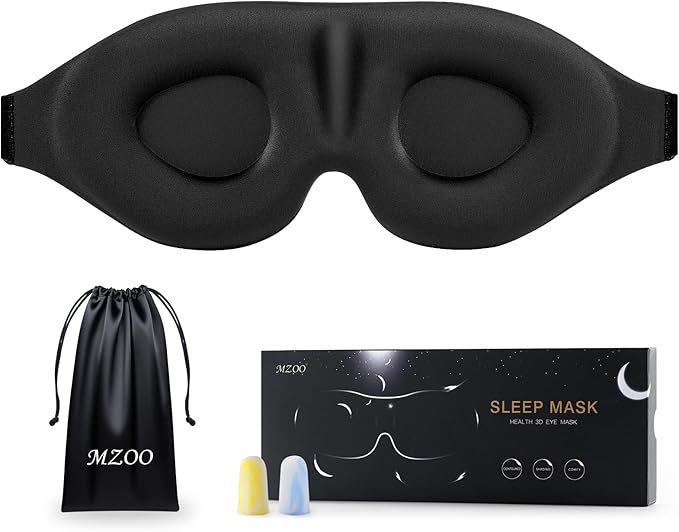
Total blackout even in a bright office, and the contoured cups mean nothing touches your eyelashes. The fastest way to trick your brain into “it’s nighttime.”
View on Amazon →
Steady, non-looping sound masks sudden noises that yank you out of light sleep. A #1 best seller for a reason — runs on USB so it travels.
View on Amazon →
A drop in body temperature is one of the strongest sleep-onset triggers. This Arc-Chill blanket pulls heat away — great for warm afternoons and desk naps.
View on Amazon →
Absorbs faster than coffee, so you can chew it and lie down in under two minutes — perfect timing for the caffeine nap, with no hot drink to fuss with.
View on Amazon →Disclosure: The links above are affiliate links. If you buy through them we may earn a small commission at no extra cost to you. It never affects which products we recommend.
Frequently Asked Questions
What is a nap calculator and how does it work?
A nap calculator takes your planned start time and your goal — alertness, memory, or full recovery — and gives you the exact alarm time to wake at the best moment in your sleep cycle. It adds your sleep latency so the result reflects real sleep, not just clock time. It’s built on Kleitman’s 90-minute cycle work, Mednick (2003), and NASA (1995).
How long is the ideal nap?
It depends on your goal. Quick alertness: 10–20 minutes. Memory: 20–30 minutes. Full recovery: 90 minutes. The most recommended length is 20 minutes — it reaches N2 sleep spindles while staying clear of the deep-sleep grogginess zone (Mednick, 2003).
What is a caffeine nap and does it work?
A caffeine nap means drinking coffee right before a 15–20 minute nap. Caffeine takes 20–25 minutes to kick in, so you wake up just as it starts working — and you get both the nap’s adenosine clearance and the caffeine’s receptor blockade at once. Horne and Reyner (1997) found it beat caffeine alone, a nap alone, and a placebo at reducing driving errors.
Why does a 30-minute nap sometimes make me feel worse?
A 30-minute nap often dips into N3 deep sleep. Wake up from N3 and you get sleep inertia — that heavy fog that can last 20–30 minutes. Either shorten to 20 minutes or stretch to a full 90-minute cycle, where you wake at a natural low-grogginess point.
Can napping at the wrong time hurt my night sleep?
Yes. Napping after 4 PM lowers your sleep pressure — the built-up drive to sleep — which can delay your bedtime by 30–60 minutes. The safe window is 1–3 PM. If you have to nap later, keep it under 20 minutes.
What sleep stage do you reach in a 20-minute nap?
Most people reach N1 and early N2. N2 is where sleep spindles fire — short bursts of brain activity that help lock in memory. Most adults hit N2 about 10–12 minutes after falling asleep, which is what makes 20 minutes the sweet spot between benefit and grogginess.
How do I stop feeling groggy after a nap?
Grogginess almost always means you woke from deep N3 sleep — fix it by capping the nap at 20 minutes or going a full 90. Other culprits: a warm room (cool it to about 65–68°F), lying still after waking (get up, stretch, walk right away), and no light (open a window or step outside to clear the fog faster).
Is napping bad for you?
For most healthy adults, no — short naps under 30 minutes are safe and helpful. A 2024 meta-analysis of 1.86 million people found extra health risk mostly tied to naps of 30 minutes or longer, so keeping it short matters. People with diagnosed insomnia are usually told to skip daytime naps to build up nighttime sleep pressure.
More Sleep Calculators
Sources & References
- Rosekind MR et al. (1995). Alertness management: strategic naps in operational settings. Journal of Sleep Research, 4(S2), 62–66. NASA Ames Research Center.
- Mednick SC, Nakayama K, Stickgold R. (2003). Sleep-dependent learning: a nap is as good as a night. Nature Neuroscience, 6(7), 697–698. doi.org/10.1038/nn1078
- Horne JA, Reyner LA. (1997). Counteracting driver sleepiness: effects of napping, caffeine, and placebo. Psychophysiology, 34(6), 721–725. doi.org/10.1111/j.1469-8986.1997.tb02148.x
- Kawana F et al. (2025). Effects of optimal timed automatic awakening from a short daytime nap on cognitive performance, alertness, and fatigue. Scientific Reports, 15. doi.org/10.1038/s41598-025-21008-3
- Cross-cohort meta-analysis (2024). To nap or not? Evidence from a meta-analysis of cohort studies (44 studies, 1.86M participants). Sleep Medicine Reviews. doi.org/10.1016/j.smrv.2024.101953
- Tassi P, Muzet A. (2000). Sleep inertia. Sleep Medicine Reviews, 4(4), 341–353.