What Is Core Sleep?
The Science-Backed Guide (2026)
⚠️ For informational purposes only — not a substitute for professional medical advice. Consult a qualified sleep specialist for personal health decisions.

Core sleep is the most restorative portion of your night — the deep NREM Stage 3 and REM sleep combined — where your brain flushes toxic waste, your muscles rebuild, and your memories consolidate permanently. Most adults need roughly 1.5 to 2 hours of genuine core sleep every night, regardless of how many total hours they spend in bed.
Here’s what catches most people off guard: you can sleep eight full hours and still wake up exhausted if your core sleep phases keep getting disrupted. A 2024 NIH-published review confirmed that chronic deep sleep disruption directly reduces growth hormone secretion, impairs the brain’s glymphatic cleaning cycle, and raises long-term cognitive decline risk. Most people have no idea this is happening.
This guide covers the full science — what core sleep actually is, why the Apple Watch definition confuses millions of people, what happens in your brain during those restorative hours, and six specific changes you can make starting tonight.
- Discover the two competing definitions of core sleep — and which one actually matters for your health
- Learn how the glymphatic system cleans your brain during N3 deep sleep (and what happens when it can’t)
- Find out exactly how much core sleep adults, teens, and kids need — with an age-by-age breakdown
- Understand 3 widespread myths about core sleep that even sleep trackers get wrong
- Get 6 actionable, science-backed steps to deepen your core sleep — starting tonight
What Is Core Sleep? (Two Definitions, One Answer That Matters)
Core sleep refers to the deepest, most biologically essential phases of your night — specifically NREM Stage 3 (slow-wave deep sleep) and REM sleep. These are the two stages where your body does its most critical work: repairing tissue, releasing hormones, processing emotions, and consolidating everything you learned. Without enough of both, no amount of extra hours in bed fully compensates.
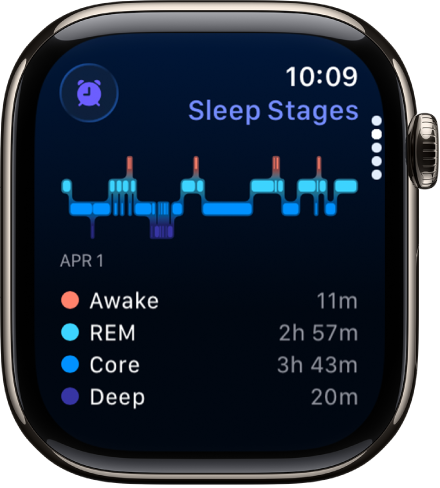
But there’s a definition conflict that confuses millions of people — and it comes from Apple Watch. Apple labels your lightest sleep phases, N1 and N2, as “Core Sleep” on their dashboard. Their reasoning: they wanted to avoid the word “light” so users wouldn’t assume N1 and N2 are unimportant. The problem? That makes ~50% of your night look like “core sleep,” which sounds impressive but measures nothing about your actual restoration.
Sleep science, clinical researchers, and the NIH use “core sleep” differently — to describe N3 + REM. That’s roughly 50% of a healthy adult night too, but it’s the restorative half, not the light half. This guide follows the scientific definition throughout.
📊 Sleep Stage Distribution — Healthy Adult Night (7–8 hrs)
★ = Core Sleep per sleep science. Data: NIH StatPearls + Healthline Sleep Review
Alt: “what is core sleep — hypnogram infographic showing N3 deep sleep and REM across 5 sleep cycles over 8 hours” | Source: AASM Sleep Scoring Guidelines + NIH StatPearls
Amir is a 34-year-old software developer in Karachi. He logs 8 hours every night religiously. His Apple Watch shows 4 hours of “Core Sleep” every morning — and he thinks that’s great. But Amir drinks coffee until 5 PM and scrolls his phone until midnight. His actual N3 deep sleep? Averaging 31 minutes per night instead of the 90+ he needs.
The result: constant afternoon crashes, forgetting things mid-sentence, and irritability by 3 PM. His total hours are perfect. His sleep architecture is broken. That’s exactly what “core sleep deprivation without sleep deprivation” looks like — and millions of people live it.
Deep NREM (N3) dominates your first two sleep cycles — you get roughly 65–70% of your total N3 in the first 3 hours of the night. REM flips this pattern entirely: it dominates cycles 4 and 5, piling up in the last 2 hours before your alarm. Miss either end of the night and you lose a disproportionate share of that stage. This is why both bedtime AND wake time matter equally for core sleep protection.
— AASM Sleep Staging Guidelines + Cleveland Clinic Sleep Architecture Review, 2023Why Core Sleep Matters — What Your Body Does in Those Hours
Honestly, most sleep content online focuses entirely on total hours — “get your 7–9” — and skips completely over what actually happens inside those hours. But your body doesn’t care how long you were horizontal. It cares how much time it spent in N3 and REM. Those two stages do the real work. Everything else is scaffolding.

Physical Recovery Happens in N3
Growth hormone — the hormone that rebuilds muscle, repairs tissue, and strengthens immunity — surges during the first episode of slow-wave sleep, typically within the first 90 minutes of falling asleep. A 2025 NIH-published review confirmed this directly: GH secretion peaks during N3 and drops significantly with any fragmentation. That first 90 minutes is almost sacred from a recovery perspective.
Memory Consolidation Happens in REM
During REM sleep, your brain replays and reorganizes the day’s experiences. Neural connections that matter get strengthened. Irrelevant ones get pruned away. A 2025 bibliographic review in the São Paulo Medical Journal found that REM deprivation is “strongly linked to cognitive deficits, impaired memory retention, and reduced emotional regulation.” And yes — that includes emotional memories you’d very much like to process and move past.
Brain cells packed tight. CSF flow minimal. Metabolic waste and amyloid build up throughout the day. No self-cleaning cycle active.
Brain cell spacing expands ~60%. Cerebrospinal fluid surges through tissue. Amyloid beta cleared. Brain physically reset for next day.
Sara is a 28-year-old ICU nurse working rotating shifts in Lahore — three nights this week, two days next week. After just four days of disrupted sleep-wake cycles, she found herself forgetting patient names mid-conversation, feeling tearful over minor frustrations, and unable to recall which medications she’d already charted.
That’s not emotional weakness. That’s her glymphatic system failing to keep pace, combined with REM suppression from cortisol dysregulation. Her circadian clock — set by the suprachiasmatic nucleus — is receiving conflicting light cues every time she switches shifts. The result is fragmented architecture: she sleeps, but not in the right order, and not long enough in the deep stages that matter.
How Core Sleep Works — Delta Waves, REM Atonia, and Sleep Architecture
Every 90 minutes throughout the night, your brain cycles through all four sleep stages — that’s one complete ultradian cycle. Most adults complete 4–6 cycles per night. Here’s the part that surprises most people: the cycles aren’t equal. Early cycles are heavy on N3 deep sleep. Later cycles are heavy on REM. Miss the beginning of the night and you lose deep sleep. Cut the end short and you lose REM. Both are core sleep — and both losses hurt in distinctly different ways.
NREM Stage 3 — Deep Sleep: The Body’s Repair Mode
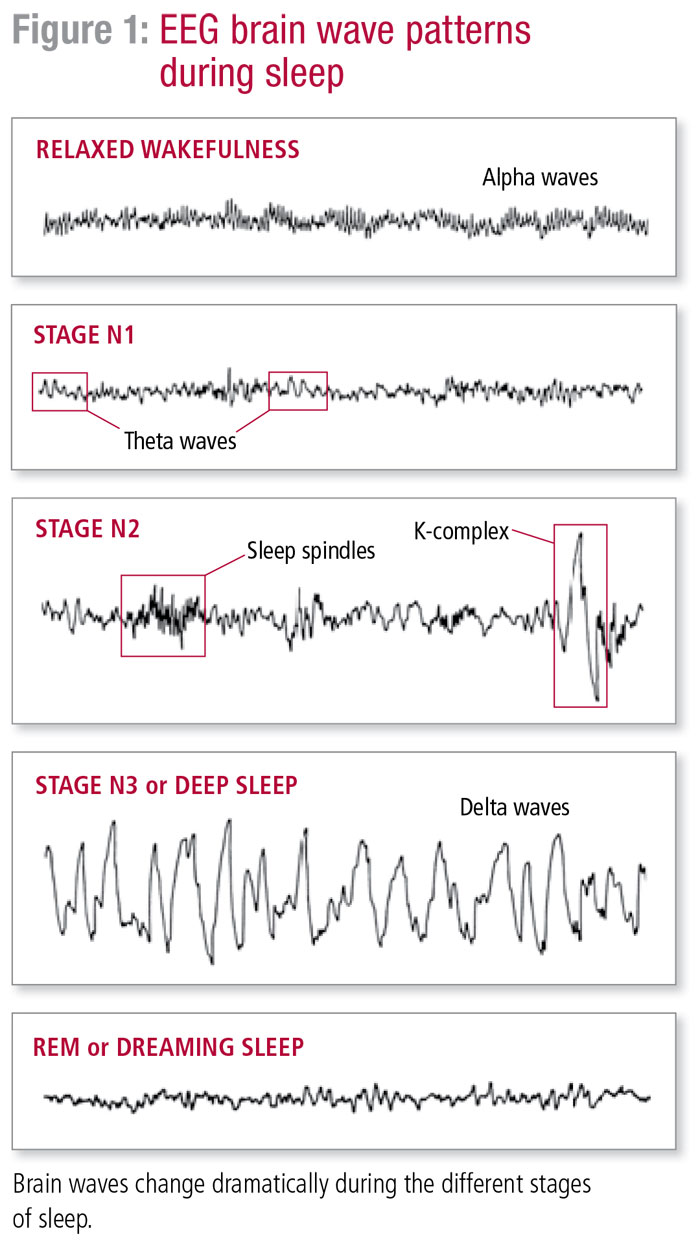
During N3, your EEG records slow, high-amplitude delta waves — the quietest brain activity measurable outside of anesthesia. Your heart rate slows. Breathing steadies. Blood pressure drops. This is when HGH (human growth hormone) is released from the anterior pituitary in its largest daily pulse. Tissues repair. Bone strengthens. Your immune system manufactures cytokines. And your glymphatic system runs at full capacity, flushing toxic metabolic waste through cerebrospinal fluid channels.
N3 accounts for roughly 25% of total sleep time in healthy adults — about 105 minutes spread across the night. Children and teenagers get more of it; older adults progressively less (which partially explains age-related cognitive decline). Interrupting N3 triggers sleep inertia — that thick, disoriented fog that can last 30–90 minutes after waking. Sound familiar?
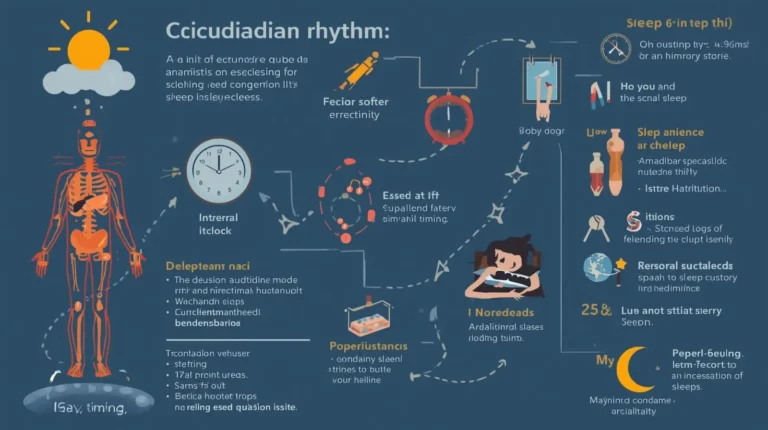
Alt: “what is core sleep infographic showing what happens in every 90-minute sleep cycle — N1 N2 N3 REM body and brain activity”
REM Sleep — The Memory and Emotion Stage
REM sleep is the stage where your eyes dart rapidly behind closed lids and most vivid dreaming occurs. Your voluntary muscles are temporarily paralyzed — atonia — which is your brain’s way of stopping you from physically acting out the scenarios it’s replaying. Brain activity during REM looks nearly identical to wakefulness on an EEG. That’s why some researchers call it “paradoxical sleep.” You’re unconscious, but your brain is lit up.
This is where emotional memories get processed and declarative memory gets locked into long-term storage. A 2025 NIH review found that REM also regulates testosterone rhythm — prolonged REM latency delays the natural testosterone elevation that occurs overnight, affecting mood, energy, and physical performance the next day.
Usman is a 22-year-old university student who studies until 2 AM every night before exams. He wakes at 7 AM — a 5-hour night. His first two cycles give him reasonable N3. But cycles 4 and 5 — the ones packed with REM sleep — never happen. The very stage responsible for consolidating everything he studied gets cut off.
The paradox: staying up late to study is actively erasing what he just learned. Sleep science calls this “sleep-dependent memory consolidation.” The information doesn’t fully transfer from short-term to long-term memory without that REM window. He’d retain more by sleeping 7.5 hours and reviewing notes in the morning than cramming 5 hours and missing his REM.
Core Sleep by Age — How Much Do You Actually Need?
Sleep needs aren’t static — they shift dramatically across your lifetime. Babies spend nearly 50% of total sleep in REM because their brains are in hyperdevelopment mode. That percentage drops progressively into adulthood and then again in old age. N3 deep sleep also declines with aging, which partly explains why older adults often feel less rested even with plenty of total sleep hours.
Table 1 — Core Sleep Stage Breakdown for a Healthy Adult Night (7–8 hrs)
| Sleep Stage | % of Night | ~Minutes | Core Sleep? | Primary Function |
|---|---|---|---|---|
| N1 — Light Doze | 5% | ~25 min | ❌ No | Sleep onset transition |
| N2 — Light Sleep | 45% | ~215 min | ❌ No (per science) | Memory sorting, K-complexes |
| N3 — Deep Sleep ★ | 25% | ~105 min | ✅ Yes — Physical | GH release, tissue repair, glymphatic flush |
| REM Sleep ★ | 25% | ~105 min | ✅ Yes — Mental | Memory consolidation, emotional regulation |
Table 2 — “Core Sleep” Defined: Apple Watch vs. Sleep Science vs. Oura Ring
| Source | What’s Called “Core” | % of Night | Restoration Value |
|---|---|---|---|
| Apple Watch | N1 + N2 (lightest stages) | ~50% | Low — transition and light rest |
| Sleep Science ★ (This guide) | N3 + REM | ~50% | High — maximum restoration |
| Oura Ring / BetterSleep App | N3 = “Deep”, N1+N2 = “Light” | Deep: 25% | Aligned with clinical definition |
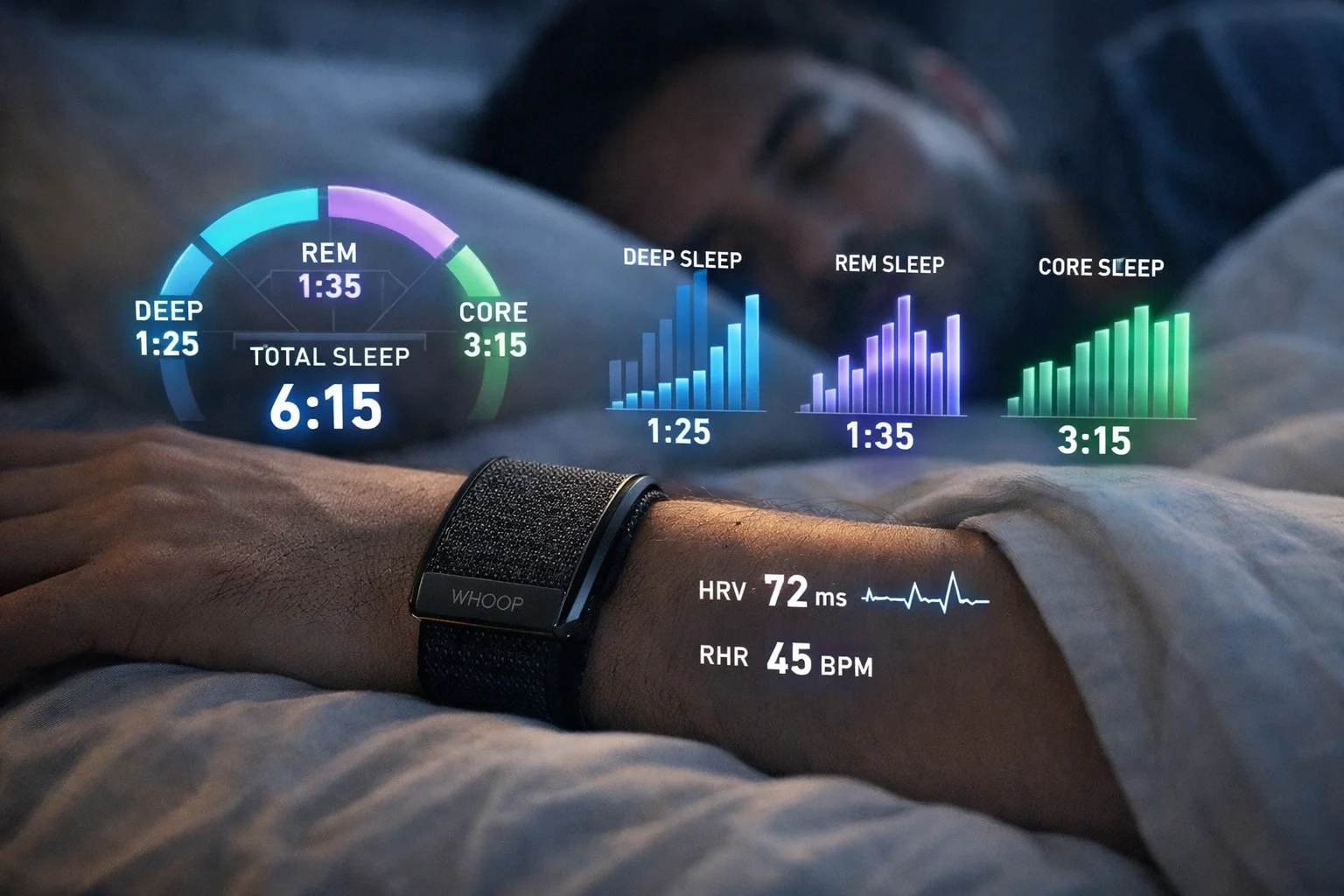
| WHOOP Band | Tracks all stages separately | Deep: ~13–25% | Most granular consumer data |
How to Improve Core Sleep — 6 Science-Backed Steps
Here’s the thing though: you can’t directly command your brain to enter N3 or REM. But you absolutely can remove the obstacles that block those stages, and you can create the environmental and behavioral conditions where they naturally flourish. These six steps are ranked by impact. Start with Step 1 — most people feel a noticeable difference within three nights.
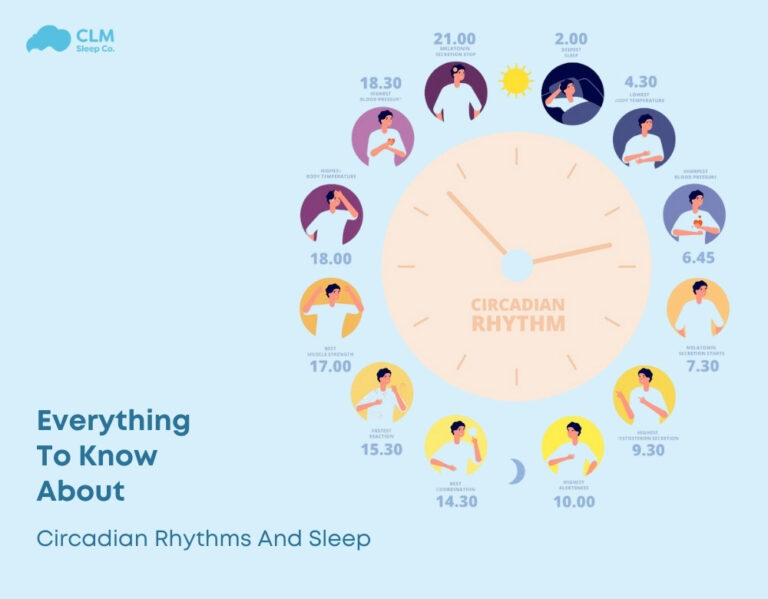
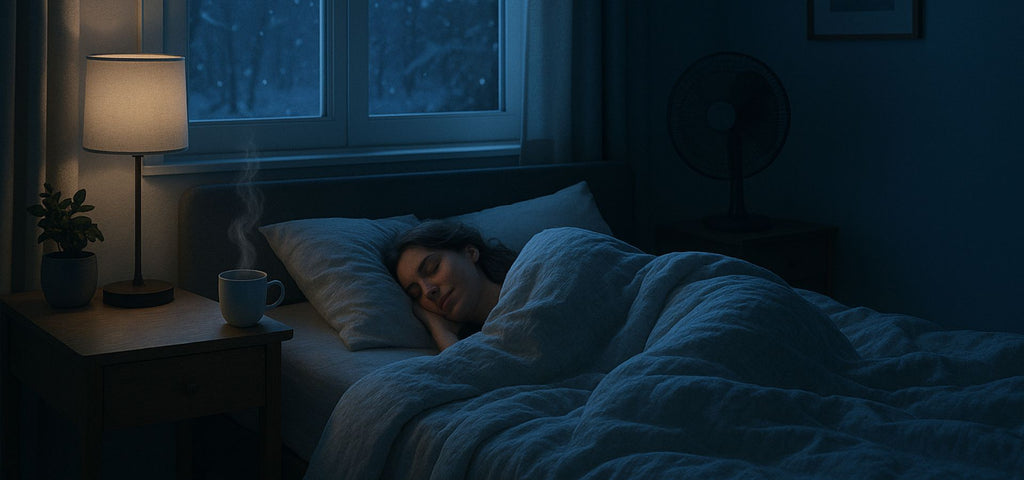

Most sleep guides just say “avoid alcohol.” Here’s the mechanism they skip: alcohol increases N3 deep sleep in the first half of the night while simultaneously suppressing REM sleep by up to 25% in the second half. That’s why you can drink moderately, sleep 8 hours, and wake up mentally foggy — the physical repair got a partial boost, but the emotional and cognitive restoration got cut. Alcohol is a split score: better for deep, worse for REM. And you can’t selectively keep only the N3 benefit without paying the REM cost.
— University of Melbourne study, cited in Sleep Research Society (2023)3 Core Sleep Myths — Debunked (Competitors Get These Wrong)
Most people get this part wrong. The internet is full of sleep myths that sound reasonable — and two of the three below are things competitor articles actually repeat as fact. Let’s fix that.
Alt: “core sleep myths debunked infographic — 3 common misconceptions about core deep sleep and Apple Watch definition”
When to See a Doctor About Your Core Sleep
Poor core sleep that persists despite good habits isn’t just a lifestyle issue. Obstructive sleep apnea, REM sleep behavior disorder, restless legs syndrome, and periodic limb movement disorder all directly destroy N3 and REM sleep from the inside — fragmenting architecture regardless of how perfect your bedtime routine is. These conditions require a doctor, not a productivity hack.
-
You sleep 7–9 hours consistently but wake exhausted every morning — this pattern suggests fragmented sleep architecture, not just insufficient duration. Your body is cycling through sleep but getting interrupted mid-stage repeatedly.
-
Your partner reports loud snoring, gasping, or breathing pauses — classic signs of obstructive sleep apnea, which triggers micro-arousals during N3 and REM, suppressing both stages cumulatively across the night.
-
Uncomfortable crawling or tingling sensations in your legs at night — this describes restless legs syndrome (RLS), which delays sleep onset and systematically reduces deep sleep by preventing the body temperature drop needed to enter N3.
-
You physically act out your dreams — hitting, kicking, shouting during sleep — a hallmark of REM Sleep Behavior Disorder (RBD), where the muscle atonia that protects you during REM fails. RBD can also be an early neurological warning sign.
A sleep specialist can order a polysomnography (PSG) — an in-lab or at-home study measuring EEG, EMG, EOG, respiratory effort, and blood oxygen simultaneously. That gives you a real, validated hypnogram showing exactly what’s happening in your sleep architecture. For complex or persistent cases, it’s irreplaceable — no wearable comes close.
Tariq is a 47-year-old business executive who self-reported sleeping 7 hours per night without issue — until his wife mentioned he’d been snoring loudly for three years and occasionally stopped breathing for a few seconds. He never remembered waking. His Apple Watch showed normal sleep data. He felt “fine.”
A clinical PSG revealed moderate-to-severe obstructive sleep apnea — 28 respiratory events per hour, each lasting 10–25 seconds. Every single event triggered a micro-arousal that pulled him out of N3 or REM. His deep sleep time: 12 minutes per night. After 6 weeks of CPAP therapy, his reported energy levels improved 60%, his resting heart rate dropped 7 bpm, and he reported his thinking was “clearer than it had been in years.” He hadn’t been “fine.” He’d just lost the ability to notice how impaired he was.
Frequently Asked Questions About Core Sleep
Your total sleep hours don’t tell the real story — your sleep architecture does. Core sleep, the N3 and REM phases that make up roughly 25% each of your night, is where genuine restoration happens. Every other hour is scaffolding around those two stages.
And that’s exactly the problem with how most of us approach sleep. We count hours. We check our watch. We feel fine — until we don’t, and we can’t figure out why. The good news: protecting core sleep doesn’t require a perfect life. Four changes — a fixed wake time, a cool dark room, caffeine cut by 1 PM, and screens off 30 minutes before bed — can dramatically shift how much time your brain spends in the stages that actually restore it.
Not sure what time to go to sleep to hit 4–5 complete cycles tonight? Our free calculator does the math in under 10 seconds.
🛌 Calculate Your Perfect Bedtime →📎 Related Articles on SmartSleepCalc
📚 Sources & Further Reading
- 🔗 NIH StatPearls — Physiology of Sleep Stages — Gold-standard clinical overview of NREM and REM staging criteria
- 🔗 NIH PMC — Sleep Disorders and Hormonal Regulation (2025) — GH secretion peaks during deep sleep; impact of fragmentation
- 🔗 Cleveland Clinic — The Glymphatic System — How deep sleep drives brain waste clearance and Alzheimer’s risk
🛒 Recommended Sleep Products
Each product below was selected for a specific, science-backed reason related to protecting core sleep — not for sponsorship. Amazon affiliate tag: thedigmag-20.

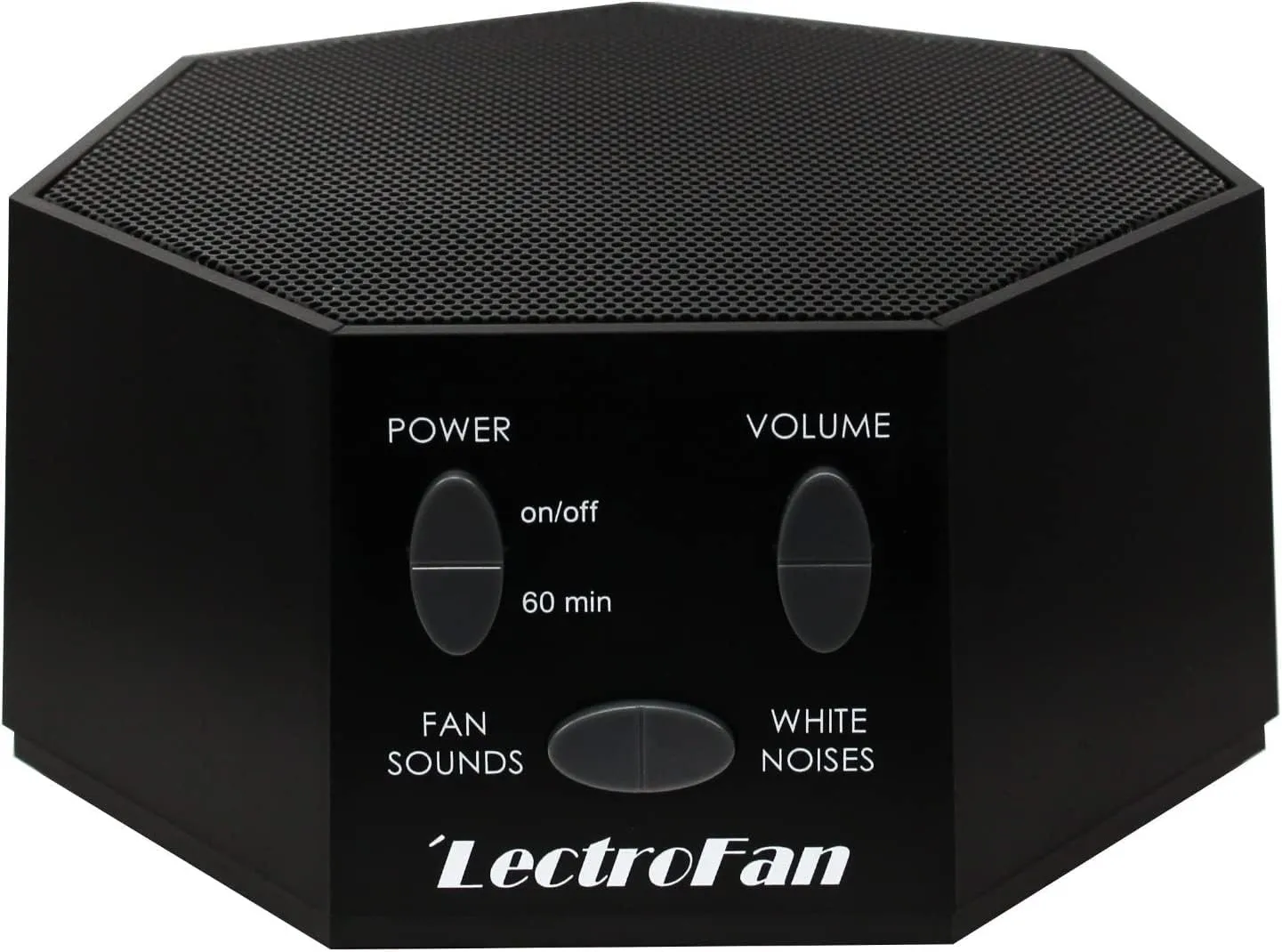
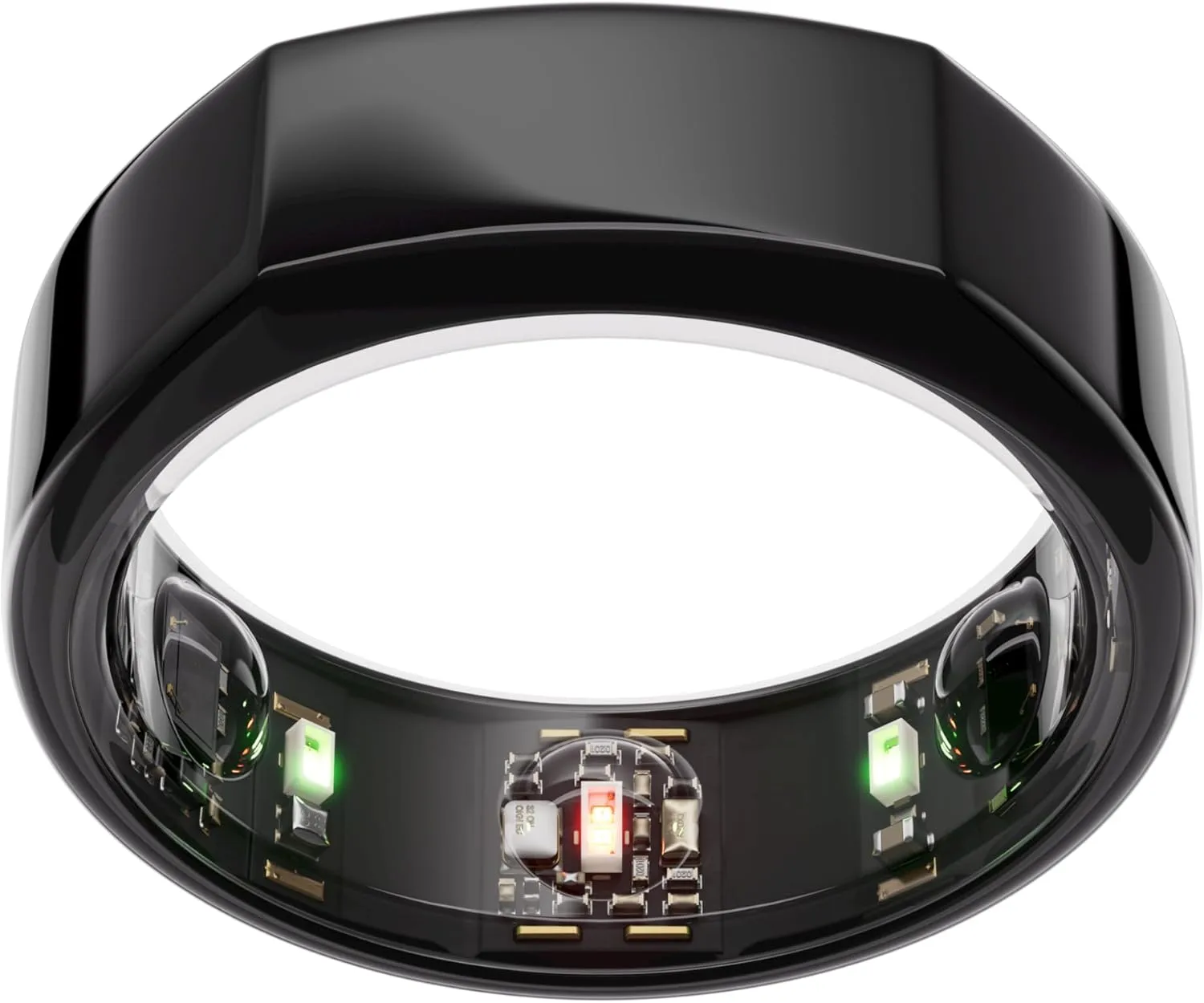

As an Amazon Associate, SmartSleepCalc earns from qualifying purchases. All recommendations are independent and research-based.
📋 WordPress / RankMath Publishing Checklist