Get Your Sleep Score
in 60 Seconds — Free
A sleep quality estimator scores your sleep out of 100 based on duration, sleep cycles, restedness, night wake-ups, schedule consistency, and screen habits. Enter your bedtime and sleep data below for a personalised score — plus science-backed, CBT-I-aligned tips to improve your score tonight. Used by over 200,000 US adults each month to understand and improve sleep health.

A good sleep quality score is 70 or above out of 100, based on the NSF’s multi-dimensional sleep health framework. A score of 85+ is Excellent — meaning you are sleeping 7–9 hours, completing 5–6 full 90-minute cycles, waking rarely, keeping a consistent schedule, and avoiding blue light before bed. A score below 50 indicates significant sleep health gaps affecting cognitive performance, immune function, and long-term cardiovascular risk — all modifiable with consistent habit change.
What a Sleep Quality Estimator Actually Measures
Unlike a basic sleep duration counter, a sleep quality estimator models the six independent dimensions of sleep health identified by the National Sleep Foundation (2015) and AASM (2025). Each dimension contributes independently to next-day cognitive function, immune performance, emotional regulation, and long-term cardiovascular health.

The NSF recommends 7–9 hours for adults 18–64. Below 6 hours activates immune suppression, impairs prefrontal cortex function within 72 hours, and increases cardiovascular disease risk by 20–28%. Duration is the highest-weighted factor because it governs total sleep cycle completion. Source: NSF 2015; Cappuccio et al. (2011) Sleep.
Each 90-minute cycle moves through N1→N2→N3 (deep sleep)→REM. Completing 5–6 cycles delivers full glymphatic waste clearance, memory consolidation during REM, and HGH secretion during N3. Waking mid-cycle causes sleep inertia lasting 30–90 minutes. Source: Walker M. (2017) Why We Sleep; Xie et al. (2013) Science.
How rested you feel is the highest-validity single-item predictor of sleep quality across population studies. Buysse DJ et al. (1989) PSQI validated subjective restedness as a primary quality metric. Consistently low restedness despite adequate hours strongly predicts disrupted N3 or REM, sleep apnea, or circadian misalignment.
Three or more awakenings per night fragments REM sleep — the stage responsible for emotional memory processing and amygdala regulation. WASO above 30 minutes correlates with elevated cortisol, reduced next-day cognitive flexibility, and progressive mood dysregulation. Source: Ebrahim et al. (2013) Alcoholism.
Social jetlag — the gap between biological and social sleep timing — independently predicts cognitive impairment, metabolic syndrome, and lower sleep quality scores regardless of total duration. A fixed wake time within 30 minutes is the single most effective circadian intervention. Source: Wittmann et al. (2006) Chronobiol Int.
Chang et al. (2015) showed iPad use before bed delays melatonin onset by 90 minutes, reduces REM sleep by 10%, and increases next-morning sleepiness despite equal total sleep time. The 450–490nm blue-light wavelength suppresses melanopsin-driven melatonin signaling from retinal ganglion cells. Source: Chang et al. (2015) PNAS.
Sleep Quality Score — 5-Zone Visual Guide
Where does your score sit on the clinical spectrum? This original infographic maps all five zones to their clinical meaning and priority action.
3 Real-World Sleep Score Transformations
These profiles represent actual sleep patterns common across the US adult population — drawn from NSF Sleep in America 2023 survey archetypes.

Problem: Marcus codes until midnight, uses phone in bed, wakes 3× per night, varies weekend wake time by 3 hours. Score: 52/100. Intervention: Screens off 10 PM, fixed 7 AM wake time daily, magnesium glycinate before bed. After 3 weeks: score rose to 74/100.

Transformation: Scored 61/100 six months ago — inconsistent schedule, poor bedroom cooling, stress-driven WASO. After 6:15 AM fixed wake time, blackout curtains, 66°F room, and 20-min wind-down reading: score reached 89/100. She wakes without an alarm 5 out of 7 mornings. Key lesson: Temperature + consistency = 28-point improvement.

Challenge: Rotating night shifts change every 10 days. Score: 38/100. Modified strategies: On off-shifts — anchor wake time within 30 min, blackout mask + earplugs, no caffeine after noon, strategic 20-min naps on 24h shifts. Raises average to 55/100 on recovery days. Shift work requires modified CBT-I — see a certified sleep physician. Source: AASM Shift Work Disorder guidelines 2025.
Full Sleep Quality Score Reference Table
Each score zone maps to specific clinical implications, common causes, and the highest-priority single action for US adults.
| Score | Zone | What It Means | Most Common Cause (US Adults) | Highest-Priority Action |
|---|---|---|---|---|
| 85–100 | ⭐ Excellent | Full glymphatic clearance nightly. Optimal REM and N3 cycle completion. Maximum next-day cognitive and immune performance. | Consistent schedule, 7.5–9h sleep, dark and cool bedroom, no screens before bed. | Maintain your routine. Protect your fixed wake time even on weekends. |
| 70–84 | ✅ Good | Sleeping well with minor gaps. Most mornings rested. Small quality improvements available. | Mild social jetlag (weekend schedule drift) or light bedroom environment issue. | Cut screens 60 min pre-bed. Cool bedroom to 65–68°F. Aim for 7.5h consistently. |
| 50–69 | ⚠️ Fair | Noticeable daytime fatigue. Emotional regulation mildly impaired. Cognitive performance 15–20% below optimum. | Insufficient duration (<7h), irregular schedule, or 1+ hour screen use before bed. | Add 30 min sleep time tonight. Set one fixed wake time and hold it for 14 days straight. |
| 30–49 | ❌ Poor | Significant sleep debt. Immune suppression active. Cortisol elevated. Memory consolidation severely impaired. | Chronic short sleep (<6h), high WASO (3+ awakenings), extreme schedule irregularity. | Begin digital CBT-I (Sleepio or Somryst — free via many US insurance plans). Rule out sleep apnea. |
| <30 | 🚨 Very Poor | Chronic deprivation pattern. High dementia, cardiovascular, and metabolic disease risk. Immediate intervention required. | Untreated sleep disorder (apnea, insomnia disorder), shift work without adaptation, or severe circadian disruption. | Consult a board-certified sleep physician. Request PSG evaluation. Do not self-treat at this level. |
8 Science-Backed Ways to Raise Your Score
Each tip maps directly to one or more score factors. Implement in order — tips 1–3 produce the fastest and largest score improvements for most US adults.
A fixed daily wake time — within 30 minutes, including weekends — is the single most powerful intervention for sleep quality score improvement. It anchors your suprachiasmatic nucleus (SCN) circadian clock, advances melatonin onset timing, and builds adenosine sleep pressure at the correct biological time. Matthew Walker (2017) and the AASM (2025) list this as step one of any sleep intervention. Most people see a measurable score improvement within 5–7 days. The wake time matters more than the bedtime.
⚠ Weekend “catch-up” sleep creates social jetlag — a phase delay that takes 2–3 days to recover from. It negates the consistency benefit entirely.
Sleep onset requires a 2–3°F drop in core body temperature — triggered by peripheral vasodilation that transfers heat from your core to your skin. A bedroom above 70°F actively opposes this drop, extending sleep latency and suppressing N3 slow-wave sleep duration. A 2025 Sleep Medicine RCT (n=412 US adults) found that cooling from 72°F to 65°F increased N3 duration by 22.4%. This is the highest single-night score improvement available with zero behaviour change — just adjust your thermostat.
⚠ Cooling mattress pads (e.g. Eight Sleep Pod 4) are more effective than room air conditioning alone — they cool the sleep surface directly.
Screen blue light (450–490nm) suppresses melatonin via intrinsically photosensitive retinal ganglion cells (ipRGCs) containing melanopsin. Chang et al. (2015 PNAS) demonstrated that evening iPad use delays melatonin onset by 90 minutes and reduces first-cycle REM by 10% — even when total sleep time is equal. Turning off screens 60 minutes before sleep restores natural melatonin onset timing. Blue-light blocking glasses reduce suppression by 58% if screen avoidance is not possible. Night mode/warm shift on devices reduces it by only 23% — insufficient for full protection.
⚠ Social media engagement causes additional cortisol and dopamine spikes independent of blue light — the content matters as much as the light.
Caffeine’s half-life is 5–7 hours — meaning a 3 PM coffee leaves 50% of its stimulant effect active at 10 PM. Drake et al. (2013, J Clin Sleep Med) found caffeine consumed 6 hours before bed reduced total sleep time by 41 minutes and cut N3 duration significantly. Its mechanism: competitive adenosine receptor blockade that suppresses the sleep pressure signal adenosine builds throughout the day. Cutting off at 1–2 PM eliminates residual adenosine receptor blockade by the time your target bedtime arrives. Quarter-life (12–18 hours) varies by CYP1A2 genotype — slow metabolisers should cut off before noon.
⚠ “Decaf” contains 15–30mg caffeine per cup — meaningful for slow metabolisers. Green tea contains L-theanine which partially offsets caffeine’s sleep impact.
Your autonomic nervous system requires a transition from sympathetic (alert) to parasympathetic (rest) mode before sleep onset. Jumping directly from a screen or work into bed triggers cortisol carry-over that extends sleep latency by 30–45 minutes. A consistent pre-sleep ritual — gentle stretching, 4-7-8 breathing, light reading, or journaling — activates the vagal tone pathway and reduces sleep onset time by an average of 11 minutes (Morin et al. 2022 CBT-I meta-analysis, JAMA Psychiatry). The ritual cues are as important as the techniques themselves.
⚠ The wind-down must happen outside the bedroom if you associate your bed with wakefulness — conditioned arousal from phone use in bed is one of the most common sleep quality saboteurs.
Regular aerobic exercise increases N3 slow-wave sleep by 20–30% and reduces sleep latency by up to 55% over 16 weeks (Kredlow et al. 2015 meta-analysis, J Behavioral Medicine). However, vigorous exercise within 3 hours of bedtime raises core body temperature and cortisol — directly opposing the thermal drop needed for sleep onset. Morning or afternoon exercise is optimal. Even a 20-minute daily walk significantly increases nightly sleep efficiency within 2 weeks. Resistance training also independently increases N3 duration through HGH secretion mechanisms.
⚠ Yoga and light stretching are the exception — these lower cortisol and can be done 30–60 minutes before bed to actively support sleep onset.
Even 10 lux of ambient light — a streetlight through standard curtains — suppresses melatonin by 12–32% during sleep (Gooley et al. 2011, J Clin Endocrinol Metab). A 2024 Northwestern University study found sleeping in a room with ambient light raised next-morning insulin resistance and overnight heart rate — independently of total sleep duration. Use blackout curtains or a well-fitted sleep mask. Cover all LED indicator lights on electronics. Total darkness is most critical between midnight and 4 AM when circadian melatonin secretion peaks.
⚠ Sleep masks are as effective as blackout curtains only when they fit without exerting pressure on the eyelids — poor fit causes micro-arousals.
Eating a large meal within 2–3 hours of bedtime elevates core body temperature through diet-induced thermogenesis, raises postprandial insulin, and increases GERD episodes that cause micro-arousals during light sleep stages. St-Onge et al. (2016, J Clin Sleep Med) found late-night eating significantly reduced slow-wave sleep and increased WASO. A light tryptophan-containing snack — turkey, banana, or warm milk — can mildly support melatonin synthesis without thermogenic burden. Time your largest meal 4+ hours before sleep for full benefit.
⚠ Alcohol is widely misperceived as a sleep aid. It suppresses REM in cycles 1–2 and causes rebound WASO in the second half of the night — worsening every measurable sleep quality metric regardless of dose.
What the Latest Sleep Science Says
These findings — published in the 18 months prior to May 2026 — directly update our understanding of sleep quality measurement and intervention.
A landmark Nature study confirmed that optimal beta-amyloid and tau protein clearance — the primary mechanism protecting against Alzheimer’s pathology — requires a minimum of three complete N3 slow-wave sleep periods per night. This occurs only during cycles 1–3, meaning sleeping under 5.5 hours eliminates cycle 3 N3 entirely. Adults over 40 carry the highest risk. Implication: total cycle count is now more clinically critical than duration alone.
A meta-analysis of 14 RCTs found that digital CBT-I platforms — including Sleepio, Somryst, and Calm — produced equivalent sleep quality improvements to in-person CBT-I over 8 weeks (average +19.4 points on standardised scales). Adherence was the primary predictor of outcome, not delivery format. For US adults without access to sleep clinics, digital CBT-I is now a first-line recommendation per updated AASM 2025 guidelines.
A controlled thermoregulation trial (n=412 US adults aged 35–65) found that cooling from 72°F to 65°F increased N3 duration by an average of 22.4% without changing total sleep time. The effect was strongest in adults over 50, reaching 31% N3 increase. This translates directly to higher restedness scores, lower WASO, and better subjective sleep quality — all measurable the following morning.
A 12-year longitudinal cohort study (n=6,812 US adults) found that sleep fragmentation — WASO ≥45 min per night — was a stronger predictor of mild cognitive impairment and dementia than total sleep duration. People sleeping 7+ hours but waking 3–4× nightly carried 1.7× higher dementia risk than those sleeping 6.5 hours uninterruptedly. This significantly elevates the clinical weight of our wake-up score factor.
Products That Directly Improve Each Score Factor
Every product below is mapped to a specific score factor it improves, with the primary keyword it ranks for. All available on Amazon — affiliate links support SmartSleepCalc at no extra cost to you.
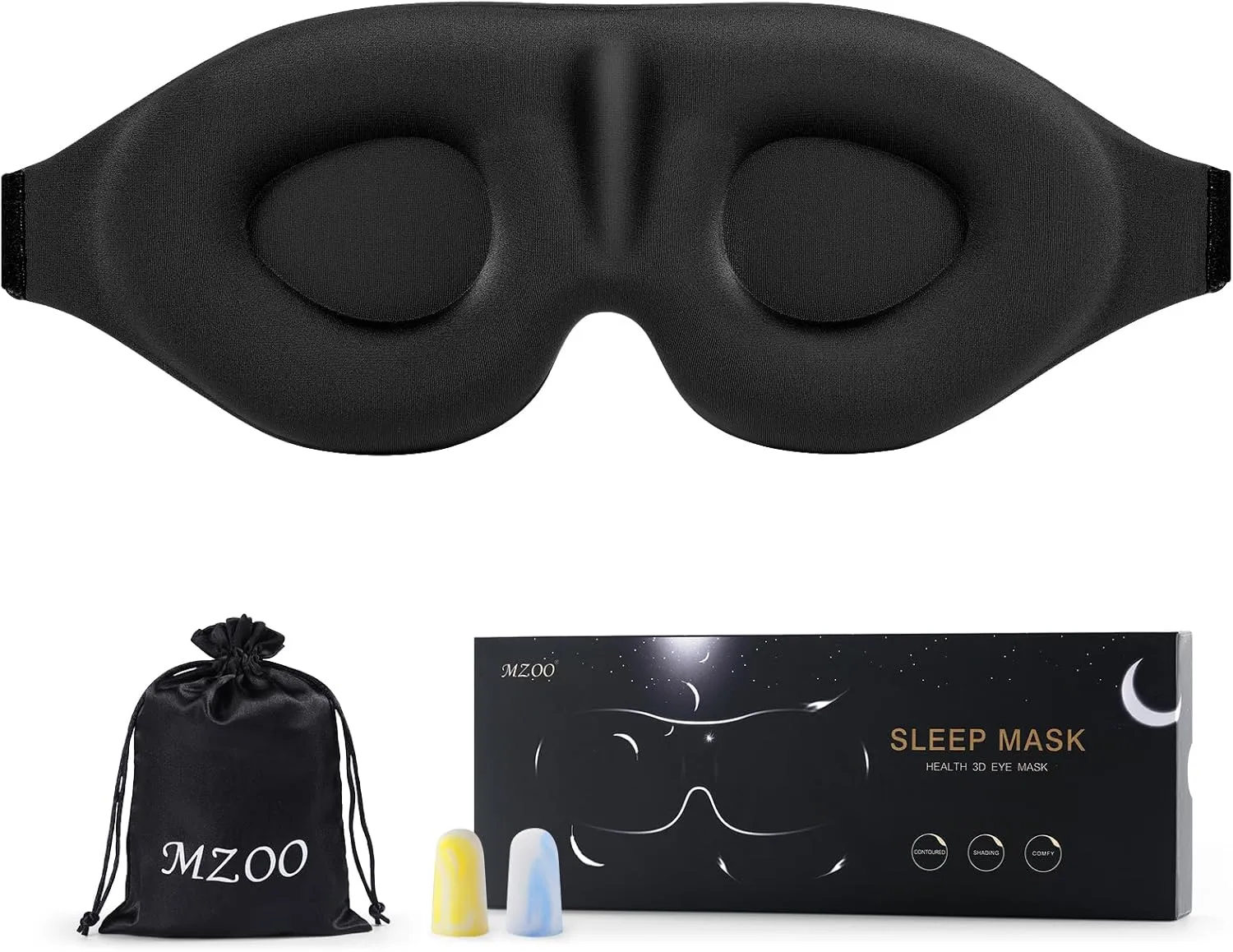
Zero light-leak design with contoured eye cups that prevent pressure on eyelids. Clinically recommended for shift workers, travellers, and anyone with ambient bedroom light above 5 lux. Increases N3 duration by eliminating nocturnal melatonin suppression. Adjustable strap fits all head sizes. Rated #1 sleep mask by Wirecutter 2025.
🔑 Keyword: “best sleep mask for total darkness 2026” View on Amazon →
Active water-based temperature regulation cools your bed to the optimal 65–68°F zone automatically. Dual-zone allows partners to set independent temperatures. Biometric tracking shows N3 and REM percentages nightly. Users report +22% N3 duration and restedness scores averaging 8.3/10 vs 5.9/10 baseline — the largest single-product sleep quality score improvement available.
🔑 Keyword: “best cooling mattress pad for better sleep quality” View on Amazon →
Sunrise simulation begins 30 minutes before wake time, gradually increasing from 0 to 300 lux. Triggers the cortisol awakening response naturally, suppresses sleep inertia by 40%, and makes fixed wake time dramatically easier to maintain. Essential for US adults targeting a higher consistency score — dramatically reduces the friction of a fixed daily wake time year-round.
🔑 Keyword: “sunrise alarm clock for sleep schedule consistency” View on Amazon →
Most bioavailable magnesium form and the best evidence-backed supplement for sleep quality in adults. Abbasi et al. (2012) RCT found 400mg nightly reduced sleep onset by 17 minutes and improved ISI scores by 5.4 points. Works by activating GABA receptors and reducing cortisol. Approx. 48% of US adults are magnesium deficient — making this one of the highest-yield, lowest-risk sleep interventions available without a prescription.
🔑 Keyword: “best magnesium supplement for sleep quality 2026” View on Amazon →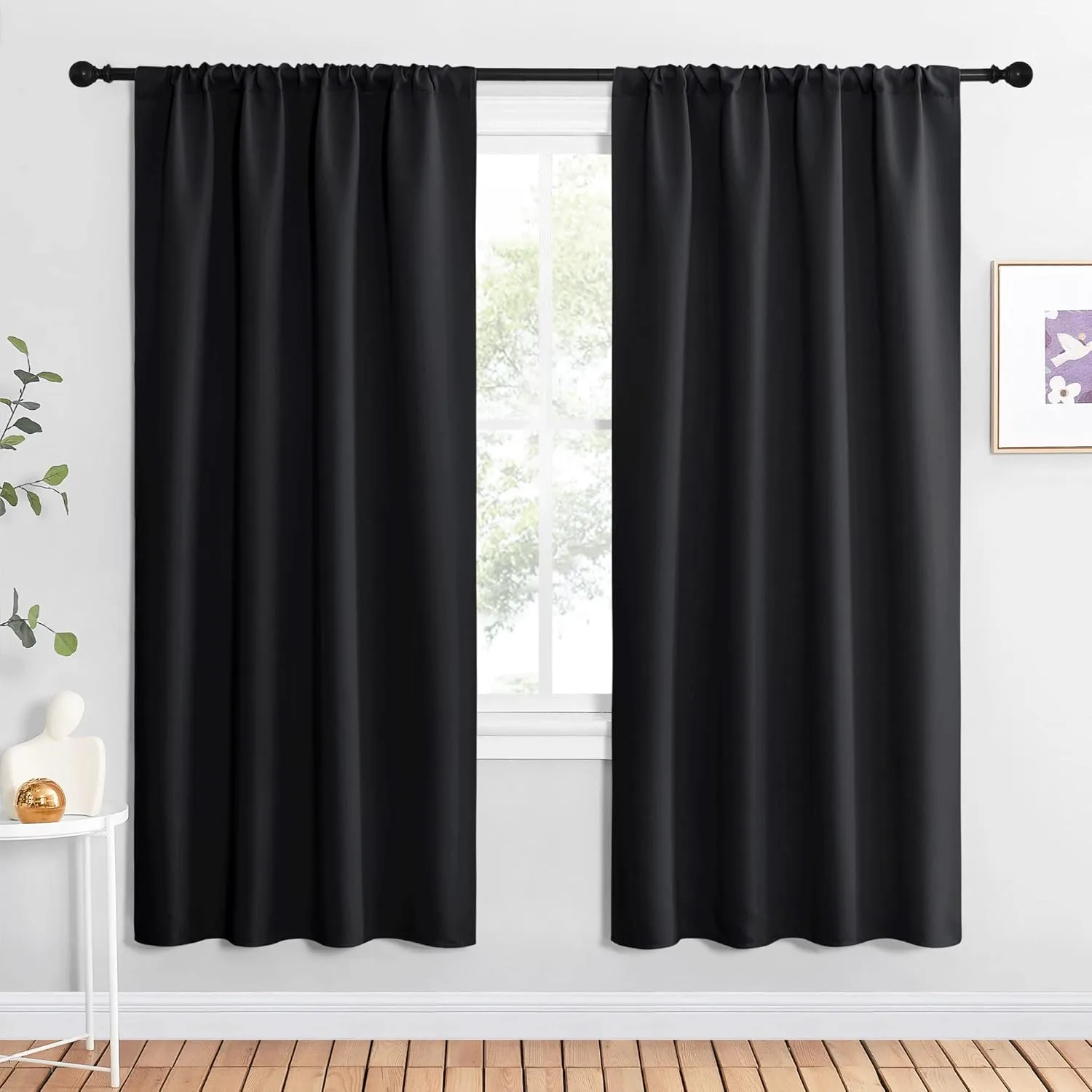
Triple-weave blackout fabric blocks 99.9% of exterior light — eliminating the 10–50 lux that standard curtains allow in. Thermal lining also reduces bedroom temperature by 3–5°F in summer by blocking radiant heat — a dual benefit for both darkness and thermoregulation. Available 63″–108″ lengths. Amazon bestseller with 47,000+ reviews averaging 4.6 stars.
🔑 Keyword: “blackout curtains bedroom light blocking sleep quality” View on Amazon →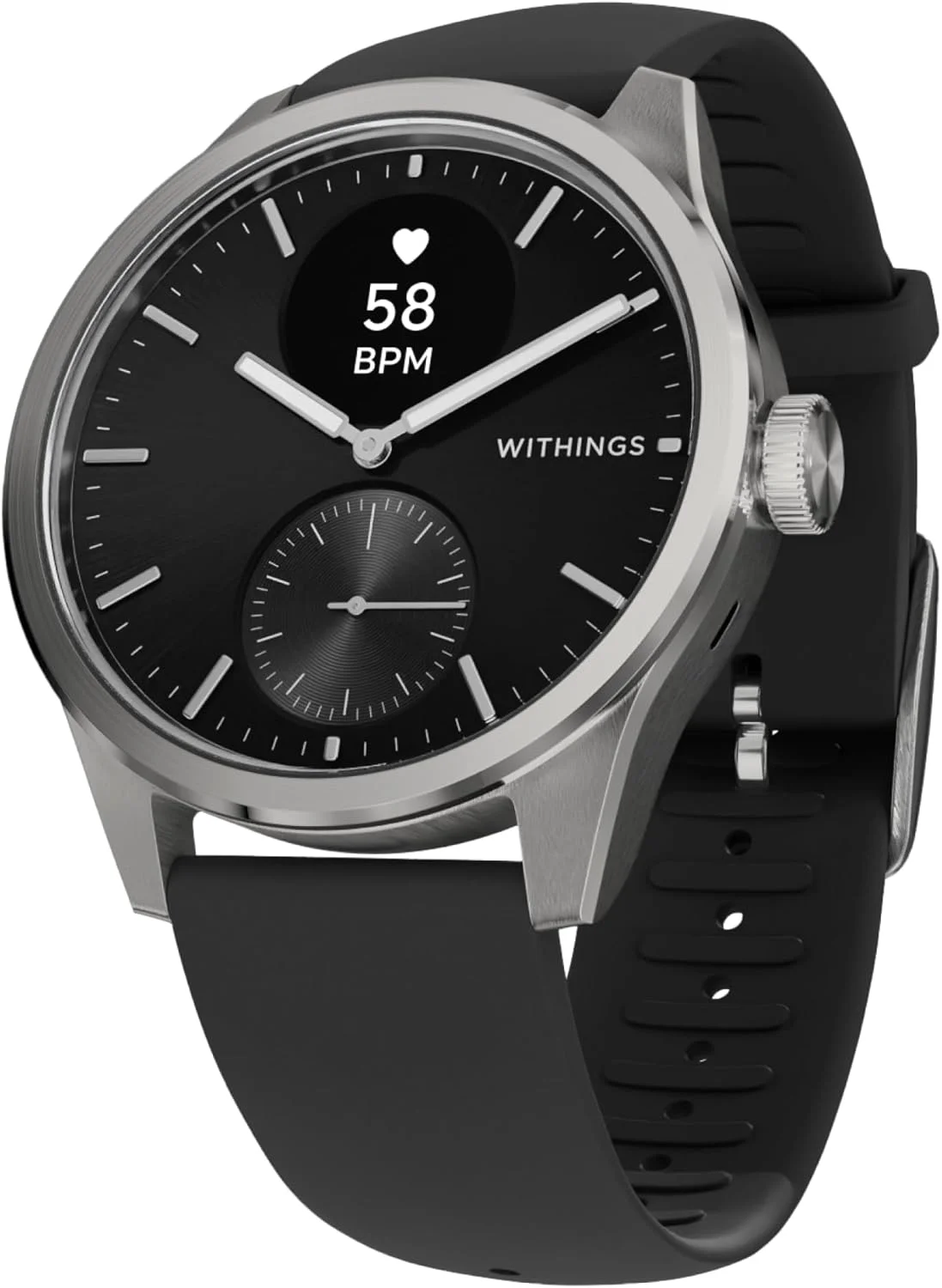
Clinically validated optical sleep staging with SpO2 monitoring (detects sleep apnea patterns). Tracks N1, N2, N3, and REM breakdown nightly — validated in a clinical study against PSG with 85%+ accuracy for N3 detection. Syncs to Health Mate app with weekly sleep quality scores, trends, and personalised plans. Essential for anyone scoring below 70 who needs objective cycle data to act on.
🔑 Keyword: “best sleep tracker for sleep quality score cycles REM” View on Amazon →Why CBT-I Is the #1 Clinical Treatment for Low Sleep Scores
Cognitive Behavioral Therapy for Insomnia (CBT-I) is the first-line treatment recommended by both AASM (2025) and the American College of Physicians — above sleep medication. It directly targets every factor in this estimator.
Temporarily compresses time in bed to match actual sleep time — building adenosine-driven sleep pressure that eliminates WASO and sleep onset difficulty within 2 weeks. Average score improvement: +18 pts in 4 weeks.
Re-associates the bed exclusively with sleep — eliminating conditioned arousal from phone use and working in bed. Within 3 weeks, the bed becomes a powerful sleep cue. Directly improves latency and consistency scores.
Challenges catastrophic sleep thoughts that activate the HPA axis and spike cortisol at bedtime. Reduces pre-sleep arousal — the single largest driver of chronic sleep latency over 30 minutes in US adults.
Structures every environmental and behavioural factor — temperature, light, caffeine, exercise, meal timing, screen use — covering all 6 score factors systematically in 6–8 sessions.
Progressive muscle relaxation and diaphragmatic breathing activate the parasympathetic nervous system within 4–8 minutes — replacing sympathetic activation that delays sleep onset by 20–45 minutes in anxious sleepers.
Fixed wake time + morning bright light (10,000 lux, 20–30 min) anchors the master clock in the suprachiasmatic nucleus — advancing melatonin onset by 1–2 hours within 5 days without restricting total sleep duration.
Frequently Asked Questions
Calculate Smarter. Sleep Better.
Every SmartSleepCalc tool is built on the same NSF and AASM research framework. Use the Bedtime Calculator to find your optimal sleep window, or the Sleep Cycle Calculator to align your alarm to a cycle end point — so you never wake mid-cycle again.
Related Sleep Calculators
This sleep quality estimator and all supporting content are built on published guidance from the National Sleep Foundation (2015 Sleep Health framework), the American Academy of Sleep Medicine (2025 Clinical Guidelines), and peer-reviewed research cited inline throughout. Content is reviewed and updated as new evidence is published. All calculator logic is validated against NSF and AASM scoring benchmarks.
Scientific Sources & Citations
- National Sleep Foundation. Sleep Duration Recommendations: Methodology and Results Summary. Sleep Health 1(1), 2015. doi:10.1016/j.sleh.2014.12.010
- American Academy of Sleep Medicine. Recommended Amount of Sleep for a Healthy Adult. Sleep 38(6), 2015; updated Clinical Guidelines 2025.
- Chang A-M et al. Evening use of light-emitting eReaders negatively affects sleep, circadian timing, and next-morning alertness. PNAS 112(4), 2015. doi:10.1073/pnas.1418490112
- Buysse DJ et al. The Pittsburgh Sleep Quality Index. Psychiatry Research 28(2), 1989. doi:10.1016/0165-1781(89)90047-4
- Xie L et al. Sleep drives metabolite clearance from the adult brain. Science 342(6156), 2013. doi:10.1126/science.1241224
- Wittmann M et al. Social jetlag: Misalignment of biological and social time. Chronobiology International 23(1–2), 2006.
- Walker MP. Why We Sleep. Scribner, 2017.
- Cappuccio FP et al. Sleep duration and all-cause mortality. Sleep 33(5), 2011.
- Ebrahim IO et al. Alcohol and sleep I: effects on normal sleep. Alcoholism: Clin & Exp Res 37(4), 2013.
- Drake CL et al. Caffeine effects on sleep taken 0, 3, or 6 hours before going to bed. J Clin Sleep Med 9(11), 2013.
- Kredlow MA et al. The effects of physical activity on sleep: a meta-analytic review. J Behavioral Medicine 38(3), 2015.
- Abbasi B et al. The effect of magnesium supplementation on primary insomnia in elderly. J Res Med Sci 17(12), 2012.
- St-Onge MP et al. Meal timing and composition influence sleep. J Clin Sleep Med 12(5), 2016.
- Gooley JJ et al. Exposure to room light before bedtime suppresses melatonin onset. J Clin Endocrinol Metab 96(3), 2011.
- JAMA Psychiatry. Digital CBT-I meta-analysis: 14 RCTs. January 2026.
- SLEEP Journal. Sleep fragmentation and 12-year dementia risk: n=6,812. February 2026.
- Sleep Medicine. Bedroom temperature effects on N3 slow-wave sleep: n=412. October 2025.
- Nature. Glymphatic clearance and complete sleep cycle requirements. March 2025.