Signs of Sleep Debt: 10 Clues You May Need More Sleep
Sleep debt is the shortfall that builds when you repeatedly get less sleep than you need. It can affect alertness, attention, mood and safety—but there is no validated consumer checklist where “five signs” proves you have a specific amount of debt.
Common clues of insufficient sleep include daytime sleepiness, difficulty concentrating, forgetfulness, irritability, slowed reaction time, trouble staying awake during quiet activities, and—when sleep loss is severe—microsleeps. Sleeping longer on days off can also suggest that your weekday schedule is not meeting your sleep need. But symptoms such as fatigue or waking unrefreshed can also come from poor sleep quality, insomnia, sleep apnea, medications, mood conditions or other medical problems.
10 Signs That Can Point to Repeatedly Getting Too Little Sleep
No single sign proves sleep debt. Look for a pattern that tracks with shorter nights and improves when you consistently get enough sleep.
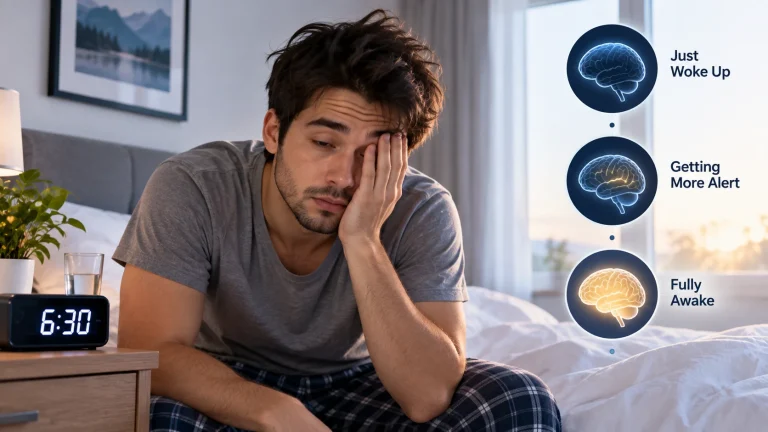
Daytime sleepiness
You feel a strong urge to sleep during the day, especially during quiet or repetitive activities.
More specific to sleepiness than general “low energy,” which has many possible causes.Difficulty focusing
Attention drifts, reading takes longer, or you make more small mistakes than usual.
Repeated sleep restriction has been shown to produce cumulative vigilance deficits.Forgetfulness or slower thinking
Working memory, processing speed, and decision-making can feel less reliable after repeated short sleep.
Do not attribute new or severe cognitive symptoms to sleep alone without medical evaluation.Irritability or mood change
You notice less patience, more emotional reactivity, or lower motivation after a run of short nights.
Mood symptoms can also have causes unrelated to sleep debt.Slower reaction time
Tasks that need quick responses, coordination, or sustained attention feel harder.
This matters most for driving, machinery, sports, and safety-sensitive work.You doze when you did not mean to
Nodding off while reading, watching TV, riding as a passenger, or sitting quietly suggests high sleep pressure.
Unexpected dozing deserves attention even if you think you “function fine.”Microsleeps
Very brief involuntary sleep episodes can occur with severe sleepiness and are especially dangerous while driving.
If you are fighting sleep behind the wheel, stop driving and get to a safe place. Do not “push through.”You sleep much longer when given the chance
Regularly extending sleep on weekends or days off can be a clue that workday sleep opportunity is too short.
Catch-up sleep can help some outcomes, but it is not a reliable one-for-one reset.You fall asleep unusually fast
Very short sleep latency can occur when sleep pressure is high, but it is not a stand-alone diagnostic test.
Normal sleep latency varies, and medications, disorders, schedule and environment also matter.You feel unrefreshed despite enough time in bed
This can happen after prior sleep loss, but it can also point to fragmented sleep, sleep apnea, insomnia, pain, alcohol, medications or another condition.
If you regularly get adequate opportunity yet remain very sleepy, look beyond “debt” alone.Want the arithmetic, not a symptom score?
Use the dedicated calculator to compare your recent sleep with a target you choose. It keeps shortfall and recovery separate and does not claim to diagnose impairment.
Open Sleep Debt CalculatorRepeated Short Sleep Can Accumulate Faster Than You Notice
In the 2003 Van Dongen study, healthy adults assigned to repeated 4-hour or 6-hour sleep opportunities for 14 days developed cumulative, dose-dependent deficits on cognitive performance tests. Subjective sleepiness did not rise in parallel with the objective impairment.
The key lesson is not that every person who sleeps six hours becomes exactly equivalent to “two all-nighters.” The study shows that repeated restriction can progressively impair performance while people may underestimate how much their functioning has changed.
Use a 7-Day Pattern Audit Before You Blame One Bad Night
Sleep debt is about repeated shortfall. A simple week view is more useful than judging yourself from one morning.
Record your sleep opportunity each night, including unusually late nights and early alarms.
Use your best estimate. Time in bed and time asleep are not always the same.
Note dozing, concentration problems, driving sleepiness, caffeine use, and whether longer sleep improves the pattern.
Sleep Debt, Insomnia, and Poor-Quality Sleep Are Not the Same Thing
| Pattern | Typical question | What it may mean | Best next step |
|---|---|---|---|
| Too little sleep opportunity | “I could sleep longer, but work/life cuts it short.” | Repeated insufficient sleep / sleep debt is plausible. | Protect more regular sleep opportunity and track the pattern. |
| Adequate opportunity, cannot sleep | “I have time, but I cannot fall or stay asleep.” | Insomnia symptoms may be present. | Persistent insomnia is better addressed with evidence-based insomnia care such as CBT-I. |
| Adequate hours, still unrefreshed | “I sleep long enough but remain sleepy.” | Sleep fragmentation, apnea, medication effects, mood or medical causes may need consideration. | Look at sleep quality and discuss persistent symptoms with a healthcare professional. |
Falling asleep quickly does not prove you have sleep debt, and taking longer to fall asleep does not by itself diagnose insomnia. Diagnosis depends on the broader pattern, duration, opportunity for sleep, daytime effects, and clinical context.
How to Recover From Sleep Debt
Recovery is not simple bookkeeping. A recent review found that different functions—sleepiness, mood and cognitive performance—can recover at different rates, and the process depends on how severe and how long the restriction lasted.
Stop adding new shortfall
Give yourself enough sleep opportunity on most nights. For healthy adults, AASM/SRS recommend at least 7 hours of sleep per night regularly, while individual need varies.
Use a schedule you can repeat
Consistency helps protect sleep opportunity. You do not need a rigid “±30 minutes or failure” rule, but large repeated workday/free-day swings can make regular sleep harder.
Allow extra sleep when your body asks for it
Longer recovery sleep may be useful after restriction. Do not force an exact 7.5-hour target or assume every extra hour erases one hour of prior physiological impact.
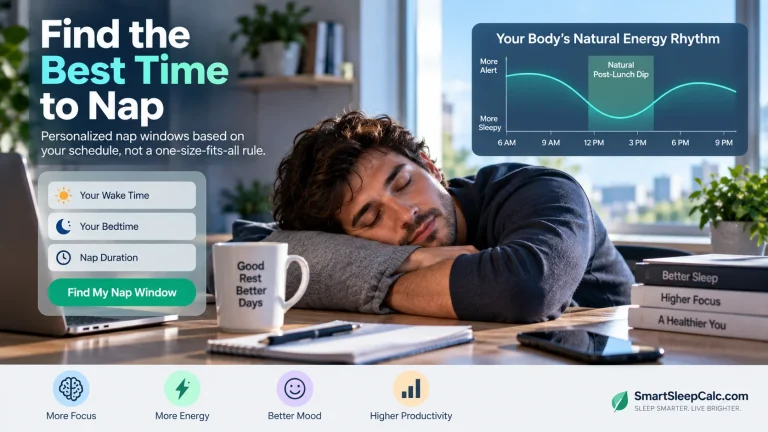
Use naps for alertness, not as a full replacement
A short nap can improve alertness for some people, but it does not prove accumulated effects are fully recovered. Avoid napping so late or long that it makes nighttime sleep harder.
Move caffeine earlier if it is delaying sleep
Caffeine sensitivity and bedtime vary. Instead of a universal 1 p.m. cutoff, look at whether afternoon/evening caffeine is making it harder to protect your sleep opportunity.
Fix the reason sleep keeps getting cut
Work hours, caregiving, insomnia, pain, apnea, restless legs, medication effects and shift work need different solutions. More arithmetic does not solve the underlying cause.
Can You Catch Up on Sleep Over the Weekend?
Extra sleep on days off can provide some relief, but it should not be treated as a guaranteed reset. In one NIH-described experimental study, weekend recovery sleep did not prevent metabolic disruption when participants returned to repeated short sleep. A broader 2023 review concluded that chronic restriction is not reliably reversed by only one or two recovery nights. citeturn701773search11turn701773search3
The practical takeaway is not “never sleep in.” If you are sleep deprived, extra sleep can be reasonable. The stronger goal is to reduce the repeated weekday shortfall that keeps recreating the problem.
When Sleepiness Needs More Than a Recovery Plan
Talk with a healthcare professional if you remain very sleepy despite allowing adequate sleep, or if you have loud snoring, gasping, witnessed breathing pauses, persistent insomnia, restless legs symptoms, unusual nighttime behaviors, new cognitive changes, or major daytime impairment. Sleep deprivation can also be caused or worsened by medical conditions, medications, shift work and caregiving responsibilities.
Snoring, gasping, or breathing pauses?
Use the Sleep Apnea Risk Calculator only as a screening aid. A questionnaire cannot diagnose obstructive sleep apnea.
Check Sleep Apnea Risk FactorsSleep Debt Questions
What is sleep debt?
How do I know if I have sleep debt?
Is falling asleep in under 5 minutes proof of sleep deprivation?
Can caffeine pay back sleep debt?
How long does sleep-debt recovery take?
Does sleeping in on weekends help?
What if I sleep 8 hours but still feel exhausted?
Sources Used for This Update
- Van Dongen HPA, et al. The cumulative cost of additional wakefulness. Used for cumulative performance effects of chronic sleep restriction and limited subjective awareness.
- Banks S, et al. Dynamics of recovery sleep from chronic sleep restriction. Used for recovery complexity and limitations of one/two-night recovery.
- NIH Research Matters. Weekend catch-up can’t counter chronic sleep deprivation. Used for the experimental weekend-recovery context.
- Cleveland Clinic. Sleep Deprivation. Used for common symptoms, severe sleepiness/microsleep context, and recovery framing.
- AASM / Sleep Research Society. Adult sleep-duration recommendation. Used for the general adult sleep-duration floor.