Best Bedroom Temperature for Sleep: What Helps Most
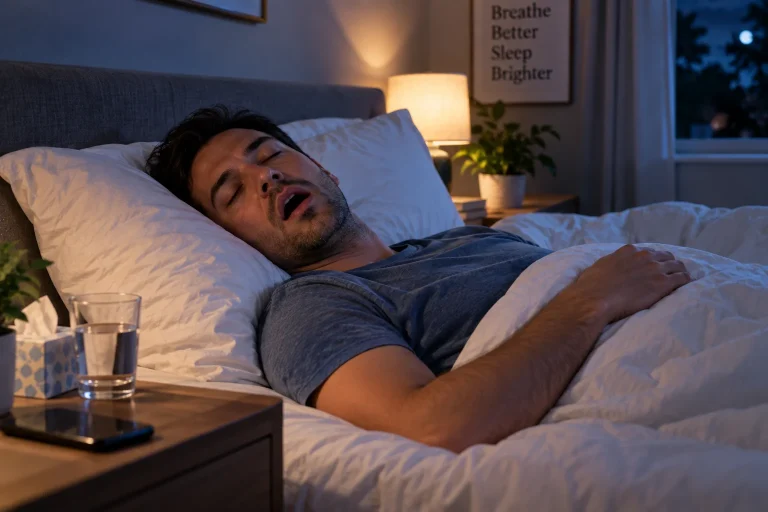
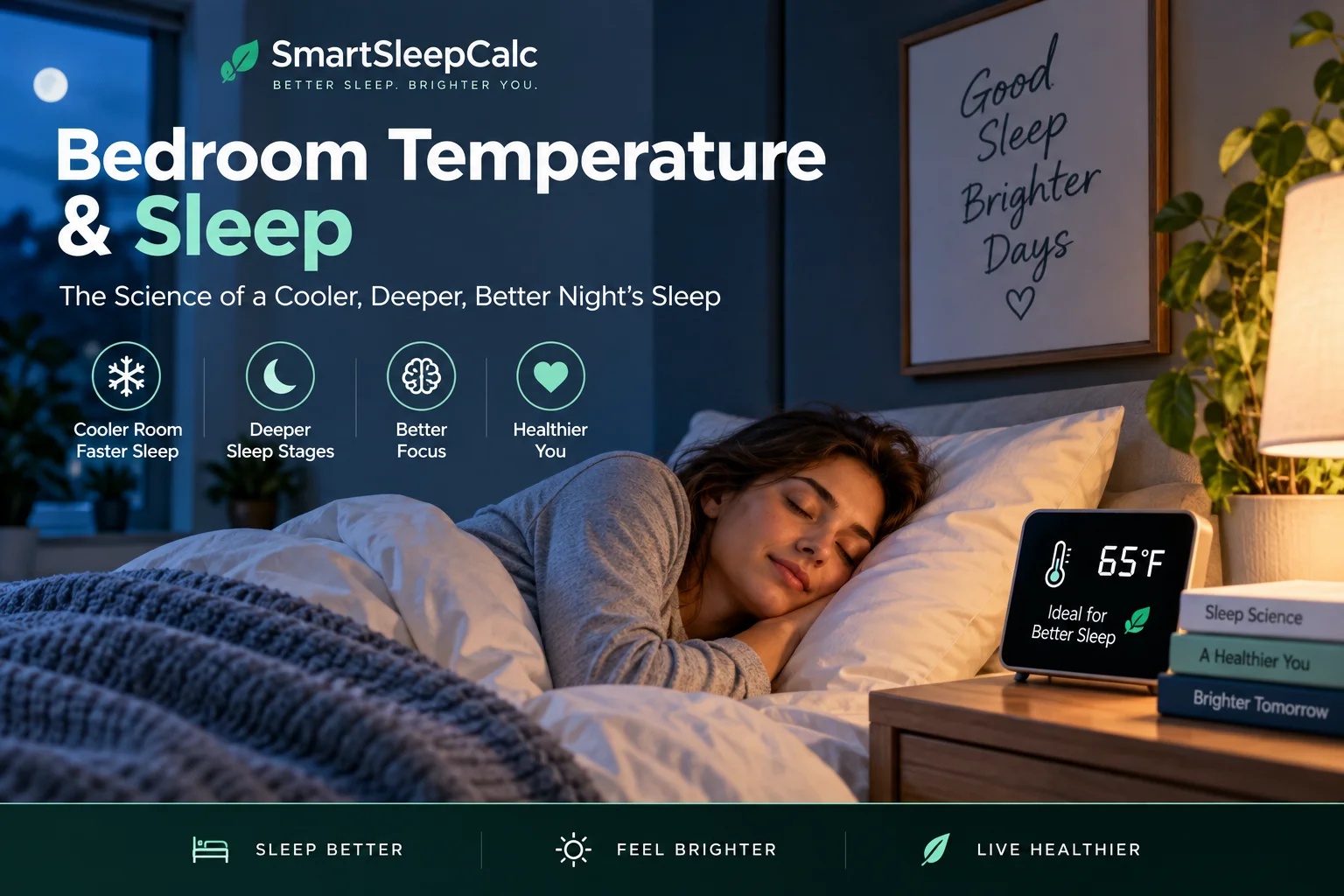
Most adults sleep better in a comfortably cool room, but there is no single thermostat number that works for everyone. Use the mid-60s °F as a starting point, then adjust for your bedding, humidity, age, health, climate, and whether you wake hot or cold.
A commonly recommended starting point for adult bedrooms is roughly the mid-60s °F. Current sleep guidance commonly places the range somewhere around 60–68°F (about 16–20°C), while broader expert guidance can extend a little warmer. The useful target is not the coldest number you can tolerate—it is a room that feels comfortably cool without making you shiver, sweat, or wake repeatedly.
Different reputable sources use slightly different ranges, which is a good reminder that temperature advice is a starting point, not a prescription. Cleveland Clinic commonly cites 60–67°F, CDC/NIOSH has cited about 65–68°F for many adults, and Sleep Foundation currently centers around the mid-60s. Your own sleep comfort still matters. citeturn150611search2turn150611search9turn728746search0
Why Temperature Can Make Sleep Easier—or Harder
Sleep and thermoregulation influence each other. Your body normally changes how it moves and conserves heat across the evening and night, while a very warm or very cold environment can disturb sleep.
As your circadian system prepares for sleep, core body temperature trends downward. A comfortable environment makes it easier for the body to lose heat without fighting excessive room heat or cold stress.
Before sleep, increased blood flow to distal skin can help transfer heat away from the core. This is why warm skin at the hands/feet can coexist with a falling core temperature.
Warm conditions can increase discomfort and awakenings and can alter sleep architecture. The effect depends on bedding, humidity, clothing, age and acclimatization—not room temperature alone.
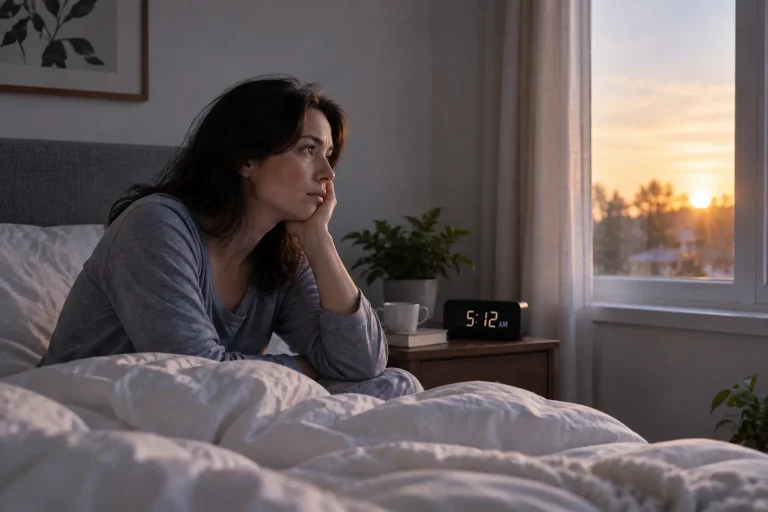
Being cold enough to shiver, tense up, or wake repeatedly is not “better” simply because cooler rooms are often recommended. Comfort remains part of the target.
Are You Too Hot, Too Cold, or Comfortable?
Your symptoms overnight are often more useful than chasing an exact thermostat number.
You sweat, kick off covers, or wake warm
Try lighter bedding or sleepwear, more airflow, reduced daytime heat buildup, and a slightly cooler thermostat if available. High humidity can make heat feel worse by reducing evaporative cooling.
You fall asleep and stay asleep without thermal discomfort
You do not need to chase a colder number just because an article says “65°F.” If your room feels comfortable and sleep is stable, your setup may already be working.
You shiver, tense up, or wake because you feel cold
Add breathable layers, socks, or bedding before dropping the thermostat further. Cold stress can also disrupt sleep, especially in people who are more temperature-sensitive.
Want an interactive temperature estimate?
Use SmartSleepCalc’s dedicated Bedroom Temperature Calculator. Keeping the calculator separate from this guide prevents the article from competing with its own tool page.
Open Bedroom Temperature CalculatorWhy a Warm Shower or Bath Before Bed Can Help
This is one of the more interesting temperature findings because the helpful strategy is warming the skin before sleep—not simply making everything colder.
A 2019 systematic review/meta-analysis found that warm water bathing around 40–42.5°C (104–108.5°F), when scheduled roughly 1–2 hours before bed, was associated with improved self-rated sleep quality and sleep efficiency and a shorter sleep-onset latency in the included studies. The proposed mechanism is increased blood flow to the hands/feet that supports later heat dissipation. The authors also noted that the evidence base was limited and that optimal timing, duration and exact mechanisms still need more study. citeturn150611search1turn150611search6
How to Sleep Cooler Without AC
The goal is to reduce heat buildup and increase airflow—not to promise a precise room-temperature drop from a household trick.
Block daytime heat
Close blinds or curtains on sun-exposed windows during the hottest part of the day. When outdoor air becomes cooler than indoor air, open windows if it is safe to do so.
Create airflow
Use a ceiling or room fan to improve comfort. If nighttime outdoor air is cooler, window fans can help exchange warmer indoor air for cooler outdoor air.
Reduce bedding heat load
Use lighter blankets, breathable sleepwear, and fewer layers. Do not rely on marketing claims that one fabric will lower sleep-surface temperature by an exact number unless that product has independent testing.
Manage humidity
Humid air can make heat harder to tolerate. A dehumidifier may improve comfort in damp climates, but there is no single humidity percentage that guarantees better sleep for every person.
Cool the person, not only the whole room
A fan, lighter bedding, a lukewarm-to-warm pre-bed shower, and exposing hands or feet can improve comfort without needing to chill the entire home.
Does Temperature Affect REM and Deep Sleep?
Yes, thermal stress can alter sleep architecture, but the old article was too absolute. Human thermoregulation is reduced or less efficient during REM sleep; it is not accurate to say the body completely stops regulating temperature or becomes fully “poikilothermic.” Reviews describe a complex interaction in which both warm and cold thermal loads can reduce REM and, to a lesser extent, slow-wave sleep. citeturn150611search4turn150611search5
| Sleep period | What temperature research supports | What not to conclude |
|---|---|---|
| Sleep onset | Changes in heat loss and distal skin temperature are associated with sleepiness and sleep initiation. | There is no single mandatory 1–2°C drop you can measure at home to prove readiness for sleep. |
| NREM / slow-wave sleep | Thermal stress can alter continuity and sleep-stage distribution. | Do not claim every room above 22°C automatically “compresses N3” by a fixed amount. |
| REM sleep | Thermoregulatory responses are altered and can be less effective; thermal challenge can disturb REM. | Do not say human thermoregulation is completely switched off throughout REM. |
What Changes in Summer, Winter, and Humid Weather?
Prioritize airflow, lighter bedding, sun-blocking curtains, and cooling the room after outdoor temperature falls. If using AC, choose a comfortable cool setting rather than forcing the coldest possible temperature.
A cool room with adjustable bedding often works better than overheating the room. Add layers if you wake cold instead of assuming colder is always better.
Humidity can worsen heat discomfort. Dehumidification and airflow can help in damp climates, especially if the room feels muggy even at a moderate temperature.
Temperature comfort and thermoregulation can change with age and health. Avoid rigid online temperature targets if you are frail, ill, pregnant, or have conditions that affect heat/cold tolerance.
Bedroom Temperature and Sleep Questions
What is the best bedroom temperature for sleep?
Is 65°F the perfect sleep temperature?
Can a bedroom be too cold for sleep?
Why does a warm bath help if a cooler room is better?
Does sleeping hot reduce deep sleep or REM?
Should I leave an electric blanket on all night?
Sources Used for This Update
- Cleveland Clinic. Best Bedroom Temperature for Sleep. Used for current clinical guidance around a cool adult bedroom and practical cooling advice.
- CDC/NIOSH. Improve Sleep: Tips to Improve Your Sleep. Used for the comfortably cool-room recommendation and sleep-environment context.
- Haghayegh S, et al. Before-bedtime passive body heating by warm shower or bath. Used for warm-water temperature/timing and evidence limitations.
- Bach V, et al. The interaction between sleep and thermoregulation in adults and neonates. Used for sleep-stage and thermoregulation nuance.
- Cerri M, Amici R. Thermoregulation and Sleep: Functional Interaction and Central Nervous Control. Used for REM and thermal-challenge framing.
- Sleep Foundation. The Best Temperature for Sleep. Used as a current consumer-facing reference for the commonly recommended mid-60s range and practical environment guidance.