Mouth Breathing at Night: Why You Sleep With Your Mouth Open
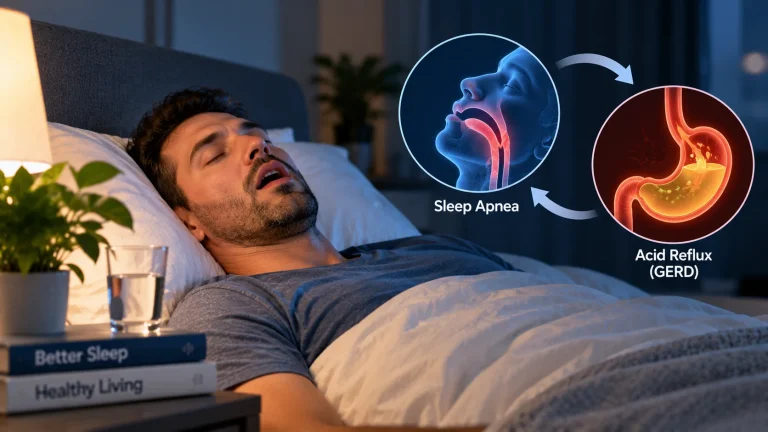
Sleeping with your mouth open can happen when breathing through your nose becomes difficult, such as during a cold or allergy flare. If it happens regularly, persistent nasal blockage, snoring, or sleep-disordered breathing may also be part of the picture. Morning dry mouth, sore throat, bad taste, drooling, or unrefreshing sleep can provide clues, but none of these symptoms identifies the cause by itself.
If you breathe through your mouth only while your nose is temporarily blocked, the pattern may stop when the congestion clears. If you sleep with your mouth open most nights, especially with chronic nasal blockage, loud snoring, witnessed breathing pauses, gasping, or strong daytime sleepiness, the more useful next step is finding out why nasal or upper-airway breathing is difficult rather than simply forcing the mouth closed.
Why Do People Breathe Through Their Mouth at Night?
Your mouth can act as another route for airflow when nasal breathing is difficult. A short-lived cold may cause this for a few nights. Persistent mouth breathing raises a different question: is something repeatedly making nasal breathing difficult, or is the mouth opening as part of snoring or sleep-disordered breathing?
A viral respiratory illness can swell nasal tissues and fill the nose with mucus. Mouth breathing may disappear once the congestion clears.
Inflamed nasal tissue can make nasal breathing harder. A recurring seasonal or year-round congestion pattern may point toward rhinitis rather than a sleep problem alone.
A deviated septum, enlarged nasal tissues, polyps, or other structural problems can reduce nasal airflow. Persistent blockage deserves medical or ENT assessment rather than an airway-closing home hack.
Mouth opening and oral breathing can occur in people who snore or have obstructive sleep apnea. The breathing route is only one part of the airway problem.
Some people snore or experience more airway narrowing when lying on their back. Position can influence mouth opening in some sleepers, but it does not explain every case.
Medicines, dehydration, health conditions, alcohol, and reduced saliva production can cause dry mouth even if you are not primarily mouth breathing.
Mouth Breathing at Night: Which Context Fits Best?
Temporary congestion is a reasonable explanation if mouth breathing resolves when the nose clears.
Long-standing obstruction, one-sided blockage, or difficulty nasal-breathing while awake points toward medical or ENT evaluation.
Medication effects, reduced saliva and other xerostomia causes may matter even if mouth breathing also occurs at night.
Sleep-disordered breathing becomes more important to evaluate than simply trying to keep the mouth closed.
Position may influence snoring or mouth opening, but positional improvement does not prove that airway disease is absent.
Use the separate Mouth Taping for Sleep evidence review. Do not treat oral occlusion as a universal fix.
Dry Mouth, Sore Throat, Bad Taste, Drooling, and Poor Sleep
Mouth breathing increases airflow across oral tissues and can worsen overnight dryness. Saliva production also naturally falls during sleep, which means a person with an existing dry-mouth tendency may notice symptoms most strongly in the morning.
A parched or sticky mouth on waking is compatible with mouth breathing, but medicines and health conditions can cause the same symptom.
Air moving through the mouth overnight may irritate the throat. Reflux, infection, postnasal drainage, and other causes can also produce morning throat symptoms.
Reduced saliva and oral dryness can contribute to bad breath. A bad taste may also come from dental, reflux, sinus, or other causes.
An open mouth can allow saliva to escape onto the pillow. Drooling alone does not prove nasal blockage or apnea.
Mouth breathing and mouth opening can occur with snoring, but snoring has several airway causes and should not be reduced to one breathing route.
If poor sleep is paired with gasping, breathing pauses, or marked daytime sleepiness, look beyond simple oral dryness and consider sleep-disordered breathing evaluation.
What May Be Behind Your Nighttime Mouth Breathing?
| Context | Clues that may fit | What it does not prove | Reasonable next step |
|---|---|---|---|
| Temporary congestion | Cold symptoms, short-term stuffy nose, symptoms improve as illness clears | Chronic nasal disease or OSA | Track whether mouth breathing resolves when nasal congestion resolves. |
| Allergy / rhinitis | Sneezing, itchy/runny nose, seasonal pattern, persistent stuffiness | That allergies are the only cause | Discuss persistent rhinitis or allergy symptoms with an appropriate clinician. |
| Structural nasal blockage | One side often blocked, long-standing difficulty breathing through nose, prior injury, known deviated septum or nasal polyps | That surgery is automatically needed | Persistent obstruction may justify primary-care or ENT evaluation. |
| Sleep position | More mouth opening or snoring on the back, less on the side | That position explains all airway symptoms | Record position and partner observations for several nights. |
| Snoring / OSA context | Loud frequent snoring, witnessed breathing pauses, gasping/choking, unrefreshing sleep, daytime sleepiness | OSA from mouth breathing alone | Discuss formal sleep-apnea evaluation rather than trying to suppress the symptom yourself. |
| Medication / dry-mouth context | Dryness began after medicine change; dry mouth also occurs while awake | That you definitely breathe through your mouth | Review medications and dry-mouth causes with a clinician, pharmacist, or dentist; do not stop prescriptions on your own. |
What to Do Before Trying to “Fix” Mouth Breathing
Notice whether nasal breathing feels easy on both sides during the day or whether you regularly feel blocked even when you are not sick.
A cold or short allergy flare is different from months of nightly mouth breathing. Duration helps decide whether further evaluation makes sense.
A bed partner may notice loud snoring, long pauses, choking, or gasping that you do not remember.
If dryness also happens all day, ask whether medicines, dental issues, dehydration, or another health problem could be contributing.
Record whether snoring or mouth opening is clearly worse on your back. Positional information may help a clinician understand the pattern.
Long-standing congestion or difficulty breathing through the nose deserves direct evaluation instead of simply bypassing the problem with an oral-breathing workaround.
What to Track Before an Appointment
You do not need to record yourself all night. A week of simple observations can show whether the pattern looks temporary, nasal, medication-related, or more consistent with a broader sleep-breathing problem.
Can you breathe comfortably through your nose during the day, or does one or both sides often feel blocked?
Record colds, allergy symptoms, runny nose, sneezing, seasonal flares, or long-standing stuffiness.
Ask a partner whether there is loud snoring, repeated gasping, choking, or observed pauses in breathing.
Note how often you wake with a sticky mouth, dry lips, thirst, or difficulty swallowing at first.
Track whether throat irritation or bad taste happens only in the morning or persists into the day.
Open-mouth sleep, drooling, snoring, restless breathing, or position-specific changes can be useful context.
Record new medicines, dose changes, evening alcohol, or anything else that coincides with increased dryness or altered breathing. Do not stop medication on your own.
Build a 7-Night Mouth-Breathing Log Entry
Create one entry per night. The tool runs only in your browser and generates plain text you can copy or download for an appointment. It does not diagnose the cause.
What Nighttime Mouth Breathing Does Not Automatically Mean
Mouth breathing can occur with OSA, but OSA is diagnosed from the broader clinical picture and appropriate sleep testing.
Temporary congestion, rhinitis, and other reversible causes can also make nasal breathing harder.
Many medicines and health conditions reduce saliva or create the sensation of dry mouth.
Whether taping changes snoring or dryness does not establish why the mouth was opening or whether airway obstruction is present.
Mouth Breathing at Night FAQs
Why do I sleep with my mouth open?
Common possibilities include temporary nasal congestion, allergies or rhinitis, structural nasal blockage, habitual mouth opening, snoring, and sleep-disordered breathing. The pattern becomes more useful when you combine it with daytime nasal breathing, snoring, gasping, and morning symptoms.
Why is my mouth so dry when I wake up?
Mouth breathing can worsen overnight dryness, especially because saliva production falls during sleep. But medications, dehydration, autoimmune disease, diabetes, cancer treatments, and other causes can also produce dry mouth. Persistent xerostomia should be evaluated rather than assumed to come only from sleep position or mouth opening.
Can mouth breathing cause a sore throat?
Airflow through the mouth can dry and irritate the throat, so a sore throat on waking can fit the pattern. Reflux, postnasal drainage, infection, and other conditions can cause similar symptoms.
Does mouth breathing mean I have sleep apnea?
No. Mouth breathing can occur with obstructive sleep apnea, but the symptom alone does not diagnose it. Loud habitual snoring, witnessed pauses in breathing, repeated choking or gasping, and strong daytime sleepiness are more important reasons to seek sleep-apnea evaluation.
Can a deviated septum cause mouth breathing at night?
A deviated septum can reduce nasal airflow in some people and may contribute to mouth breathing. Not every septal deviation causes symptoms, and persistent obstruction should be evaluated before assuming surgery or another treatment is needed.
Is mouth taping safe if I snore?
It should not be treated as a universal snoring solution. Current systematic reviews find limited evidence, and safety is a particular concern when nasal breathing is impaired. Snoring can also be a sign of sleep apnea, so the cause matters more than simply closing the mouth.
Who should I see for persistent mouth breathing at night?
A primary-care clinician can help start the evaluation. Persistent nasal blockage may lead to ENT assessment, ongoing dry mouth may also involve a dentist or other clinician, and habitual snoring with breathing pauses or excessive daytime sleepiness may require sleep-medicine evaluation.
Sources
- Cleveland Clinic. Mouth Breathing: Symptoms, Causes & Treatment . Clinical overview of nasal obstruction, mouth breathing, dry mouth, drooling, snoring, and when to seek evaluation.
- American Dental Association. Xerostomia (Dry Mouth) . Current review of dry-mouth causes, oral-health consequences, medication effects, and the role of mouth breathing during sleep.
- National Institute of Dental and Craniofacial Research. Current dry-mouth guidance reviewed September 2026. Dry Mouth . Symptoms, causes, diagnostic evaluation, and clinician-directed management of persistent dry mouth.
- Rhee J, Iansavitchene A, Mannala S, Graham ME, Rotenberg B. Published May 21, 2025; reviewed September 2026. Breaking Social Media Fads and Uncovering the Safety and Efficacy of Mouth Taping . 2025 systematic review finding limited, heterogeneous evidence and important safety concerns, particularly when nasal obstruction is present.
- American Academy of Otolaryngology–Head and Neck Surgery Foundation / OTO Open. 2026 systematic review/meta-analysis; reviewed September 2026. Impact of Nasal Obstruction and Mouth Taping on Sleep Apnea Indicators . 2026 systematic review and meta-analysis examining nasal obstruction, OSA indicators, and the limited mouth-taping evidence base.
- International Consensus Statement on Obstructive Sleep Apnea. International Consensus Statement on Obstructive Sleep Apnea . Sleep-medicine evidence on nasal resistance, mouth breathing, upper-airway mechanics, and sleep-disordered breathing.
- MedlinePlus — U.S. National Library of Medicine. Dry Mouth . Mouth breathing as one possible cause of dry mouth and guidance on persistent oral dryness.
Find Out Whether the Problem Starts in the Nose, the Airway, or the Mouth
For seven nights, track whether your nose feels clear before bed, whether you wake with dry mouth or sore throat, and whether a partner notices open-mouth breathing, loud snoring, gasping, or pauses. If your nose is persistently blocked, start with medical or ENT evaluation. If the pattern includes loud snoring, witnessed pauses, choking, or major daytime sleepiness, ask specifically about sleep-disordered breathing instead of trying to seal the mouth shut.