Why Can’t I Fall Asleep? Common Causes and What to Track
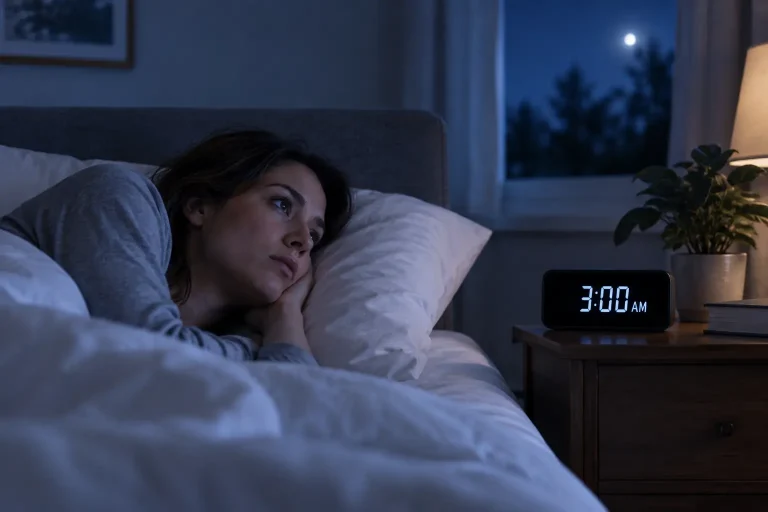
You can feel tired and still have trouble falling asleep. Sometimes there simply has not been enough time or sleep pressure for your body to be ready. In other cases, your body clock, caffeine, evening light, stress, pain, medications, restless legs, another sleep disorder, or an insomnia pattern may be keeping you awake. The pattern across several nights matters more than one difficult bedtime.
If you can’t fall asleep, first separate “I am not giving myself enough sleep opportunity” from “I have enough time to sleep but remain awake.” A late or shifting body clock, caffeine or nicotine, bright evening light, stress, pain, medication effects, restless legs, sleep apnea, and insomnia can all change sleep onset. Track when the problem happens, what comes before it, and how it affects the next day before assuming one cause.
Sleep Opportunity vs Inability to Sleep
Not being asleep at a particular clock time does not automatically mean you have insomnia. Sleep requires both an opportunity to sleep and enough biological readiness for sleep.
If you have been working, studying, watching TV, caring for someone, scrolling on your phone, or staying out late, you may simply be giving yourself too little time for sleep. That is different from getting into bed with enough time available and repeatedly being unable to fall asleep.
You regularly stay awake because work, parenting, social activities, devices, or another commitment leaves too little time in the schedule.
You have adequate time and circumstances for sleep but remain awake longer than you want on a repeated basis.
Schedule Mismatch and Circadian Delay
Your circadian system helps determine when you feel alert and when sleep becomes easier. Light, darkness, activity, meals, and your usual schedule all provide timing cues.
If your body clock is running later than the bedtime you are trying to keep, you may feel exhausted from the day yet remain surprisingly alert in bed. NHLBI describes delayed sleep-wake phase disorder as a pattern in which sleep occurs later than desired, making it difficult to fall asleep at the required time and difficult to wake when needed.
You rarely feel genuinely sleepy at the bedtime you want, even when you are mentally tired.
If allowed to sleep later, you may sleep more normally but struggle when work or school requires an early wake time.
A much later sleep and wake schedule on days off can make an earlier weekday bedtime feel harder.
Caffeine, Light, Stress, Pain and Medications
Several everyday factors can delay sleep onset. The useful question is not simply “Is this bad for sleep?” but whether the timing and pattern match your difficult nights.
| Possible factor | How the pattern may look | What to notice |
|---|---|---|
| Caffeine | You feel tired but mentally alert, especially after coffee, tea, energy drinks, pre-workout, soda, chocolate, or caffeine later in the day. | Track the amount and timing rather than assuming only your last cup matters. |
| Nicotine | Nicotine’s stimulant effects may make it harder to settle into sleep. | Note timing of cigarettes, vaping, nicotine pouches, or other nicotine use. |
| Alcohol | Alcohol may make you sleepy initially, but it can disrupt normal sleep later in the night. | Compare nights with and without evening alcohol rather than treating it as a sleep aid. |
| Evening light and screens | Bright artificial light can provide a wake-promoting signal to the circadian system. | Notice device use, room lighting, and whether late screen time accompanies a later schedule. |
| Stress and mental arousal | Your body is tired, but your mind is rehearsing conversations, planning tomorrow, worrying, or monitoring whether sleep is happening. | Notice whether difficult sleep appears around deadlines, conflict, money worries, travel, grief, or other stressors. |
| Pain or physical discomfort | You cannot find a comfortable position, or pain becomes more noticeable when the day becomes quiet. | Track the location, intensity, and whether treatment of the underlying symptom changes sleep. |
| Medications | Some prescription and over-the-counter products can increase alertness or otherwise interfere with sleep. | Review medication names and timing with a clinician or pharmacist rather than stopping a prescribed medicine on your own. |
For a practical review of bedroom conditions, caffeine, alcohol and routine, use the Sleep Hygiene Checklist. It is a habits checklist, not a diagnostic test or treatment score.
Stress and Arousal Can Keep the Brain Alert
You can feel physically exhausted while your nervous system remains alert. Worry about the next day, frustration about sleep, repeated clock-checking, or trying hard to make yourself sleep may increase attention and arousal at the exact time you want them to settle.
NHLBI lists stress, worrying about whether you will get enough sleep, and clock-watching among factors that can raise the risk of insomnia or make it worse.
Your body may feel drained after work, exercise, caregiving, illness, or a long day.
Your thoughts may still be active, emotionally charged, focused on problems, or monitoring whether you are falling asleep.
Restless Legs and Other Sleep Disorders
Difficulty falling asleep can occur with insomnia, but it can also be secondary to another sleep or health problem. Look for symptoms that occur specifically when you are trying to sleep.
An uncomfortable urge to move the legs that appears or worsens during rest and often improves temporarily with movement may interfere with falling asleep.
Loud snoring, gasping, choking, witnessed breathing pauses, morning headaches, dry mouth or major daytime sleepiness deserve assessment even if difficulty falling asleep is also present.
If you sleep well when allowed to use a later schedule but cannot fall asleep at the earlier time your obligations require, timing may be especially relevant.
Reflux, coughing, breathing difficulty, itching, urinary symptoms, hot flashes, pain or other physical symptoms may make lying down uncomfortable.
Anxiety and depression can occur alongside sleep problems. Difficulty falling asleep alone does not diagnose either condition.
A repeated inability to sleep despite adequate opportunity, together with daytime effects, may warrant evaluation for insomnia after other explanations are considered.
What Difficulty Falling Asleep Does Not Mean
A stressful week, travel, an unusual schedule, caffeine or a temporary illness can disturb sleep without establishing a chronic disorder.
You cannot determine a hormone level from how long it takes you to fall asleep.
Consumer devices can estimate timing and sleep patterns, but their data cannot diagnose insomnia, anxiety, circadian disorders or other conditions.
Different causes need different approaches. Supplements can have side effects and interactions and are not a universal solution for difficulty falling asleep.
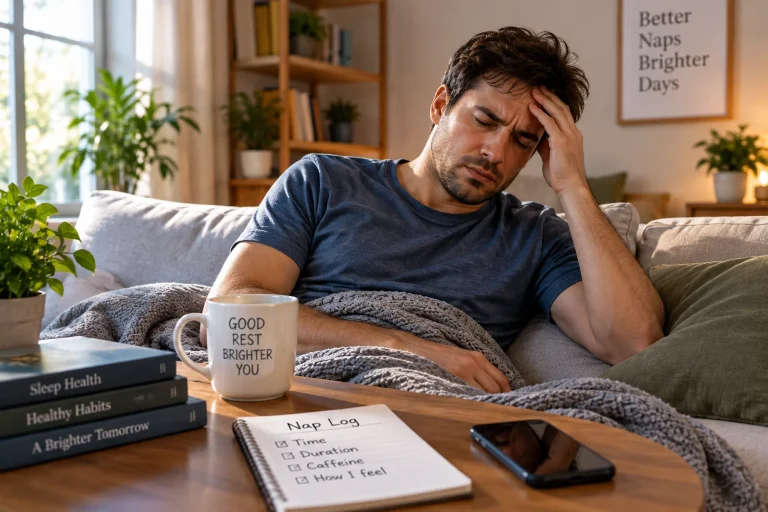
What to Track for 1–2 Weeks
A sleep diary is more useful than relying on memory from one frustrating night. NHLBI recommends recording sleep habits when insomnia is being evaluated.
Record the time you actually attempt sleep rather than the time you begin your evening routine.
You do not need minute-by-minute precision. Avoid watching the clock repeatedly just to measure it.
Include workdays and days off so you can see whether your schedule shifts substantially.
Record approximate amounts and timing so you can look for repeated associations.
Note unusually late device use, bright lighting, gaming, work, or other stimulating activity.
Track racing thoughts, pain, reflux, leg discomfort, hot flashes, coughing, breathing symptoms or other recurring sensations.
Record sleepiness, energy, concentration, mood and whether poor sleep interferes with work, school, driving or normal activities.
When Does Difficulty Falling Asleep Become Chronic Insomnia?
NHLBI defines chronic insomnia as difficulty sleeping at least three nights per week for three months or longer when the problem is not fully explained by another health condition. Diagnosis also considers whether you have adequate opportunity to sleep and whether the problem interferes with daytime life.
A clinician may ask how long it takes you to fall asleep, how often the problem happens, your workday and weekend schedule, how refreshed you feel, whether you snore or gasp, what medicines or substances you use, and whether another medical or sleep condition could explain the problem.
Track the pattern and review obvious contributors such as schedule, caffeine, evening light, stress, environment and physical symptoms.
Consider professional evaluation when difficulty falling asleep keeps recurring, reduces needed sleep, or affects mood, concentration, energy or daily function.
If sleep loss causes dangerous sleepiness while driving, operating machinery or doing another safety-sensitive task, do not push through it.
The Insomnia Severity Index asks about difficulty falling asleep, staying asleep, early waking, distress and daytime interference over the previous two weeks. It is a screening instrument, not a diagnosis.
Open the Insomnia Severity Calculator →What If This Keeps Happening?
Persistent insomnia is not simply a sleep-hygiene problem. The American Academy of Sleep Medicine recommends behavioral and psychological treatments for chronic insomnia in adults, with cognitive behavioral therapy for insomnia (CBT-I) among the recommended approaches.
CBT-I is a structured treatment rather than a collection of internet sleep tips. It can include behavioral and cognitive components selected for the individual. SmartSleepCalc does not provide CBT-I therapy, and this page should not be used as a substitute for treatment.
Track your pattern, protect adequate sleep opportunity, review caffeine and alcohol timing, reduce disruptive light and noise, and note recurring physical symptoms.
Use when the pattern is persistent, substantially affects your days, or may involve restless legs, apnea, pain, medication effects, mood symptoms or another health problem.
Why Can’t I Fall Asleep FAQs
Why can’t I fall asleep even though I’m tired?
Feeling exhausted does not guarantee that your sleep system is ready for sleep. Circadian timing, stress, caffeine, nicotine, bright light, pain, medications, restless legs and other factors can keep alertness high even when you feel physically tired.
Why does my brain become more active when I get into bed?
Bedtime may be the first quiet part of your day, so unfinished planning, worry and emotional processing can become more noticeable. Worrying about sleep itself can also increase alertness and make the pattern self-reinforcing.
Does taking a long time to fall asleep mean I have insomnia?
Not automatically. Insomnia is evaluated from frequency, duration, adequate sleep opportunity, daytime impact and whether another condition or schedule problem better explains the difficulty.
Can caffeine still affect me if I drank it hours earlier?
Yes. Caffeine can continue to have alerting effects for hours, and people metabolize it at different rates. Track the amount and timing on easy-sleep and difficult-sleep days rather than assuming one cutoff works for everyone.
Can restless legs make it hard to fall asleep?
Yes. An urge to move the legs with uncomfortable sensations that worsen during rest and improve with movement may interfere with sleep onset. Recurrent symptoms deserve medical evaluation because several factors and medical conditions can contribute.
Can a late body clock make me unable to sleep early?
Yes. People with delayed circadian timing may not become sleepy until later than the schedule they need to keep. A persistent pattern that interferes with school, work or daily life is more meaningful than one late night.
Should I take melatonin if I can’t fall asleep?
Melatonin is not a universal answer because the cause and timing of sleep difficulty matter, and supplement dose and purity can vary. Ask a healthcare professional or pharmacist if you are considering it, especially if you use other medicines or have health conditions.
Sources
- National Heart, Lung, and Blood Institute. Insomnia: What Is Insomnia? . Definition of insomnia, short-term and chronic patterns, adequate sleep opportunity and daytime effects.
- National Heart, Lung, and Blood Institute. Insomnia Causes and Risk Factors . Schedule, environment, caffeine, nicotine, alcohol, electronic devices, stress, menopause and clock-watching.
- National Heart, Lung, and Blood Institute. Insomnia Diagnosis . Sleep-diary use, chronic-insomnia timing criteria, sleep-onset questions, medications, substances and evaluation for other sleep disorders.
- National Heart, Lung, and Blood Institute. Your Sleep/Wake Cycle . Circadian timing and the effects of environmental light and caffeine on sleep-wake regulation.
- National Heart, Lung, and Blood Institute. Circadian Rhythm Disorders: Types . Delayed sleep-wake phase patterns and difficulty falling asleep at the desired time.
- American Academy of Sleep Medicine. Behavioral and Psychological Treatments for Chronic Insomnia . Guideline overview covering CBT-I and other behavioral and psychological treatment categories.
Track What Happens Before the Difficult Nights
For one to two weeks, record your attempted bedtime, estimated sleep onset, wake time, caffeine and alcohol timing, evening light or screen use, stress, medicines, physical symptoms and how you feel the next day. You are looking for repeated differences between nights when sleep comes easily and nights when it does not.
Use the Insomnia Severity Index to organize your recent symptoms. Treat the result as screening context rather than a diagnosis, and discuss ongoing sleep problems with an appropriate healthcare professional.
Open the Insomnia Severity Calculator →