Can’t Fall Back Asleep? Why It Happens and What to Do
Waking briefly during the night does not automatically mean something is wrong. The harder part is when you become fully alert and cannot return to sleep. Stress and mental arousal, clock-watching, insomnia, hot flashes, reflux, pain, breathing problems, environment, substances, or medications can all play a role. Look at the repeated pattern and daytime impact rather than trying to force sleep on one difficult night.
If you wake and can’t fall back asleep, try not to treat the night like a test you must pass. Keep the room quiet and dim, avoid repeated clock-checking, and use a calm activity if lying awake is making you increasingly alert or frustrated. If this happens often, costs you needed sleep, or comes with symptoms such as gasping, choking, reflux, pain, hot flashes, or major daytime sleepiness, the underlying pattern is worth evaluating.
Normal Brief Awakenings vs Prolonged Wakefulness
Sleep is not always one uninterrupted block. You may briefly become more awake during the night and never remember it. The situation feels different when you become fully alert, stay awake, start thinking about the next day, or repeatedly struggle to return to sleep.
NHLBI lists waking often during the night, being awake for long periods, and waking too early without returning to sleep among insomnia symptoms. That does not mean every remembered awakening is insomnia.
You notice being awake but drift back to sleep without much effort and feel reasonably rested the next day.
You remain awake, repeatedly check the time, become frustrated or alert, lose meaningful sleep, or notice daytime fatigue and concentration problems.
Arousal, Clock-Watching and Conditioned Insomnia
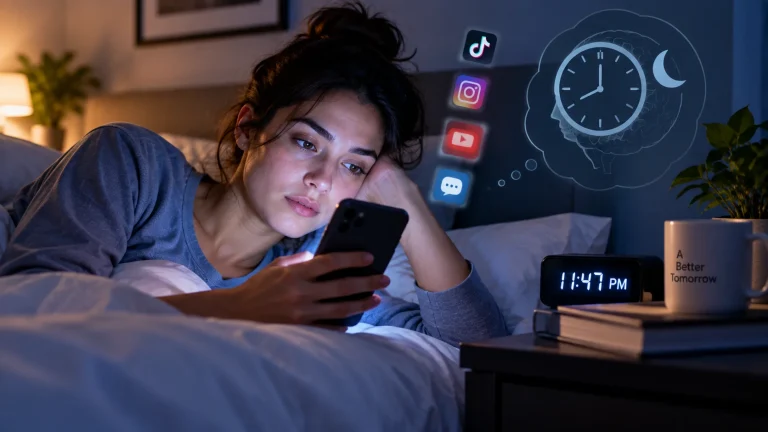
After waking, your brain may shift from sleepy to alert very quickly. Stress about tomorrow, frustration about sleep, planning, physical tension, or repeatedly checking how many hours are left can make that alert state stronger.
This is not a matter of doing sleep “wrong.” The problem can become self-reinforcing: the bed becomes a place where you expect wakefulness, effort, frustration, or worry instead of a place strongly associated with sleep.
Seeing 1:47, then 2:03, then 2:22 can turn an ordinary awakening into a calculation about lost sleep and increase stress.
Monitoring whether sleep is “working” can keep attention focused on being awake rather than allowing sleepiness to return naturally.
When long periods awake in bed repeat, wakefulness can become more strongly associated with the sleep environment.
Hot Flashes, Reflux, Pain and Sleep Apnea
If you repeatedly wake for an identifiable physical reason, the difficulty falling back asleep may be secondary to that trigger. The symptom pattern around the awakening matters more than simply labeling the whole problem “insomnia.”
| Possible contributor | What may occur around the awakening | What the symptom does not prove |
|---|---|---|
| Stress or insomnia | Racing thoughts, frustration, repeated checking of the time, or long stretches awake without a clear physical trigger. | A difficult night alone does not diagnose chronic insomnia disorder. |
| Hot flashes / menopause | Sudden warmth, sweating, temperature discomfort, or repeated nighttime awakenings. | Night waking alone does not establish that menopause is the only cause. |
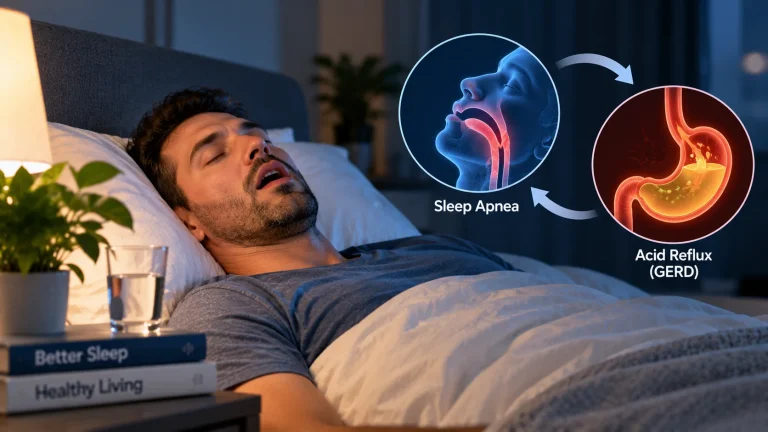
| Reflux | Heartburn, sour taste, throat irritation, coughing, or burning discomfort while lying down. | Waking without these symptoms does not prove nighttime reflux. |
| Pain | Joint, back, muscle, headache, or other pain that wakes you or becomes more noticeable after waking. | Sleep difficulty alone cannot identify the source of pain. |
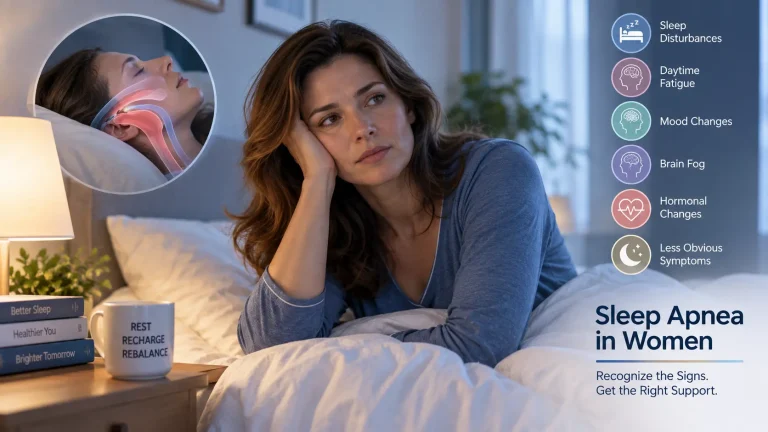
| Sleep apnea | Loud snoring, choking, gasping, witnessed breathing pauses, morning headache, dry mouth, or excessive daytime sleepiness. | Being awake in the middle of the night does not by itself diagnose sleep apnea. |
| Environment | Noise, light, pets, a partner, room temperature, or recurring outside activity around the same time. | You do not need a sleep disorder for the environment to fragment sleep. |
What to Do During a Wake Period
The goal is not to execute a perfect sleep routine. It is to reduce stimulation and give sleepiness a chance to return without turning the night into a struggle.
Turn the clock face away or avoid checking your phone repeatedly. Mayo Clinic advises keeping bedroom clocks out of sight because clock-watching can increase stress.
Avoid bright lights, work, news, social media, or anything likely to make you more alert. Keep the environment quiet and comfortable.
You cannot command sleep directly. Shift attention toward resting quietly rather than repeatedly checking whether you are falling asleep.
If you have been awake long enough that you feel increasingly alert or frustrated, a quiet low-light activity elsewhere can be reasonable until sleepiness returns.
The aim is to reconnect the bed with sleep rather than prolonged effortful wakefulness.
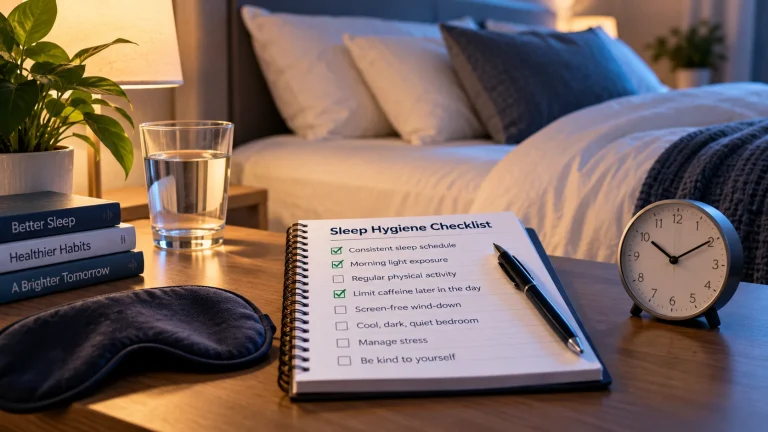
For a broader review of bedroom conditions, caffeine, alcohol, routines, and other habits, use the Sleep Hygiene Checklist. Treat it as an educational checklist, not a treatment score.
What Not to Do When You Can’t Fall Back Asleep
Repeatedly checking the time can turn a temporary awakening into worry about tomorrow and increase arousal.
One episode cannot tell you that you have insomnia, sleep apnea, abnormal cortisol, menopause-related insomnia, reflux disease, or another condition.
A device may estimate that you woke from REM or deep sleep, but that does not identify why you stayed awake afterward.
Over-the-counter and prescription sleep products have different risks and limitations. Persistent problems deserve clinician or pharmacist guidance.
Sleeping very late or making a major bedtime shift may affect the next night’s sleep timing. Look for the repeated pattern first.
Good habits can support sleep, but AASM recommends structured behavioral and psychological treatments such as CBT-I for chronic insomnia disorder.
What This Symptom Does Not Mean
Brief or occasional nighttime waking can happen without chronic insomnia or another diagnosed disorder.
A nighttime awakening is not a cortisol, melatonin, blood-sugar, or menopause hormone test.
The clock and consumer wearable estimates cannot reliably tell you why you became awake or why sleep did not return.
Stress about sleep can maintain wakefulness, but physical symptoms, environment, health conditions, medications, and other factors may be responsible for the original awakening.
What to Track for 1–2 Weeks
NHLBI recommends keeping a record of insomnia symptoms. A simple diary can help show whether the same trigger or pattern keeps appearing.
Record when you went to bed and roughly when you think you fell asleep.
Note roughly when they occurred and whether you returned to sleep easily or stayed awake.
Examples include racing thoughts, pain, heartburn, heat, sweating, choking, gasping, coughing, bathroom urgency, noise, or no clear trigger.
Record when your sleep period actually ended and compare it with your intended schedule.
Record timing rather than assuming one item caused the awakening.
Track sleepiness, concentration, mood, headaches, energy, and whether poor sleep affects work, driving, school, or normal activities.
When Recurring Episodes Need Evaluation
Consider professional evaluation when difficulty returning to sleep is persistent, repeatedly reduces the sleep you need, or begins to interfere with your daytime life.
An occasional episode without significant daytime effects can often be observed. Keep a short diary and look for stress, environment, alcohol, caffeine, pain, reflux, heat, medication, or schedule patterns.
Seek medical input if the problem keeps returning, causes meaningful daytime impairment, or occurs with loud snoring, gasping, choking, witnessed breathing pauses, frequent reflux, pain, hot flashes, restless legs symptoms, or concerning mood changes.
If sleep loss makes driving or another safety-sensitive activity unsafe, do not push through severe sleepiness. Arrange a safer option and seek professional advice.
The Insomnia Severity Index can help organize sleep-maintenance symptoms over the previous two weeks. It is a published screening instrument, not a diagnosis.
Check your insomnia symptom score →Can’t Fall Back Asleep FAQs
Why do I wake up and then feel completely awake?
A physical trigger, stress, environmental disturbance, or normal sleep transition may wake you. Once awake, worry, planning, clock-checking, frustration, pain, light, or other stimulation can raise alertness and make sleep harder to resume.
Is it normal to wake during the night?
Brief awakenings can occur during normal sleep. The pattern becomes more concerning when wakefulness is prolonged or frequent, reduces total sleep, or leads to daytime sleepiness, poor concentration, irritability, or distress.
Should I stay in bed if I can’t fall back asleep?
If you are resting quietly and still feel sleepy, staying in bed may be comfortable. If you become clearly awake, frustrated, or increasingly alert, insomnia treatment principles often use a quiet low-light activity outside bed until sleepiness returns. You do not need to time this with a stopwatch.
Why does checking the time make it harder to sleep?
Clock-checking can turn wakefulness into mental arithmetic about lost sleep and tomorrow’s responsibilities. That extra stress and attention can increase arousal, which is why Mayo Clinic advises keeping clocks out of sight when nighttime insomnia is a problem.
Can sleep apnea cause me to wake and not fall back asleep?
Sleep apnea can repeatedly interrupt sleep. Loud snoring, gasping, choking, witnessed breathing pauses, morning headaches, dry mouth, or excessive daytime sleepiness are more useful clues than the awakening alone. A clinician can determine whether apnea testing is appropriate.
Can reflux make it hard to return to sleep?
Reflux symptoms such as heartburn, a sour taste, coughing, throat irritation, or burning discomfort may wake some people and make returning to sleep difficult. Repeated nighttime reflux symptoms deserve medical evaluation rather than being treated as insomnia alone.
Does this mean I have chronic insomnia?
Not necessarily. Chronic insomnia requires a persistent pattern considered together with sleep opportunity, frequency, duration, daytime impairment, and alternative explanations. An occasional difficult night does not establish the diagnosis.
Sources
- National Heart, Lung, and Blood Institute. Insomnia Symptoms . Nighttime waking, prolonged wakefulness, early waking, daytime effects, and sleep-diary guidance.
- National Heart, Lung, and Blood Institute. Insomnia Treatment . Sleep-supportive habits, bedroom environment, schedule consistency, caffeine, nicotine, and alcohol.
- American Academy of Sleep Medicine. Behavioral and Psychological Treatments for Chronic Insomnia . CBT-I, stimulus control, relaxation therapy, and other structured treatment categories.
- Mayo Clinic. Insomnia: How Do I Stay Asleep? . Middle-of-the-night waking, clock-watching, bedroom conditions, and calm activities when awake.
- Mayo Clinic. Insomnia: Diagnosis and Treatment . Clock visibility, relaxation, staying out of bed during prolonged wakefulness, pain, caffeine, alcohol, and clinical evaluation.
- Mayo Clinic. Obstructive Sleep Apnea: Symptoms and Causes . Snoring, gasping, choking, breathing pauses, nighttime awakenings, and daytime sleepiness.
Track the Pattern Before Trying to Fix Everything
For the next one to two weeks, record when you go to bed, nighttime awakenings, what you noticed when you woke, whether you returned to sleep, your final wake time, and how you function the next day. That record can help separate an occasional wake period from a repeated sleep-maintenance problem or another symptom that deserves attention.
Use the Insomnia Severity Index to organize your recent symptoms, then treat the result as screening context rather than a diagnosis.
Open the Insomnia Severity Calculator →