Evidence review · Safety-first
Essential Oils for Sleep: What the Research Actually Shows
Wondering whether lavender oil for sleep — or any calming essential oil — can really help you drift off? This honest, evidence-labeled review looks at what studies support, what they don’t, and the safety rules that matter most. No brands, no hype, no affiliate links.
- Lavender most studied
- Limited evidence
- Safety-first
- No brands
Essential oils are not a treatment for insomnia or sleep apnea. Small studies — mostly on lavender, mostly measuring self-rated sleep quality — suggest inhaling them may modestly improve how people rate their sleep (limited evidence). If you try them, diffuse briefly or use diluted oil, and follow the pet, skin, and pregnancy safety rules below.
Do Essential Oils Help You Sleep? What Studies Show
If you’re asking “do essential oils help you sleep,” here is the short, honest version: the research is promising but thin. Most studies are small, short, and measure how people rate their sleep — not lab-measured sleep. Here is what the evidence supports about essential oils for sleep benefits, with each claim labeled by strength.
Lavender oil for sleep: the most studied option
A 2021 meta-analysis of 34 studies found inhaled aromatherapy improved sleep problems, with lavender showing the largest effect among single oils. A 2025 review of 11 lavender trials (628 adults) also found a significant benefit — while warning the studies were small and calling for higher-quality research.
Nearly all trials measured self-rated sleep quality (questionnaires like the PSQI), not lab-measured sleep — encouraging, not conclusive.
Aromatherapy overall
The NCCIH summarizes a 2021 review of 16 studies (1,346 participants) suggesting aromatherapy improved sleep quality and eased insomnia symptoms — while noting that larger, more rigorous studies are needed before firm conclusions.
Other calming essential oils for sleep: far less evidence
Chamomile, bergamot, cedarwood, and ylang-ylang appear in small or preliminary studies, often in blends. Don’t assume lavender’s results transfer to every relaxing oil — the evidence for non-lavender essential oils for sleep and relaxation is much thinner.
What Is the Best Essential Oil for Sleep?
If “best” means “most researched,” the answer is lavender — it dominates the sleep literature (study-backed, with limits). That does not make it proven or risk-free. For any other oil marketed as one of the good essential oils for sleep, treat claims as preliminary until larger trials exist. And remember: no essential oil is an insomnia treatment. If poor sleep is frequent and persistent, guideline-supported options like CBT-I — and the ways to fall asleep faster that target behavior — have stronger evidence.
What About Essential Oils for Sleep and Anxiety or Relaxation?
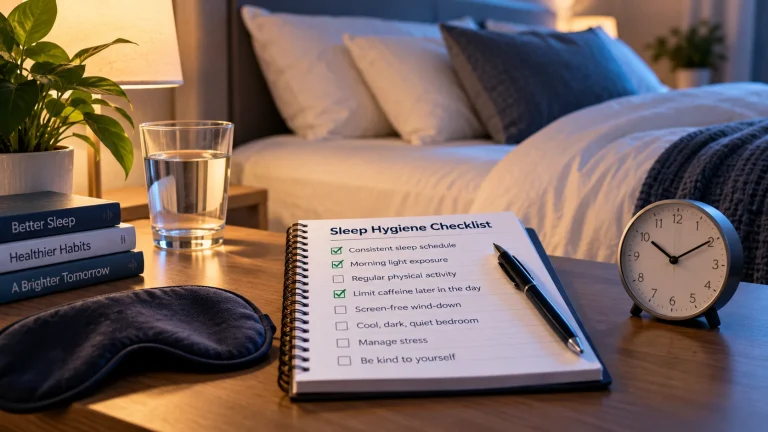
The most plausible mechanism is relaxation: a calming scent may help you unwind as part of a bedtime routine — much like other items on a sleep hygiene checklist. A 2021 meta-analysis also found aromatherapy eased self-rated stress, anxiety, depression, and fatigue (study-backed, with limits — secondary outcomes, mostly subjective). So the honest framing for essential oils for sleep and relaxation is this: they may support a calmer wind-down. They are not a sedative.
Can Essential Oils Help Sleep Apnea?
No — and this matters. There is no good evidence that essential oils for sleep apnea work as a treatment (limited evidence for any effect at all). Sleep apnea involves repeated breathing pauses that need proper diagnosis — usually a sleep study — and proven treatment. Using oils instead of evaluation can delay care for a serious condition. A pleasant scent in the bedroom is fine; skipping the doctor is not.
How to Use Essential Oils for Sleep
If you want to try aromatherapy at bedtime, these are the lowest-risk answers to how to use essential oils for sleep — including the common diffuser and where-to-apply questions. None of these methods are proven treatments; they are simply the cautious ways people use them.
- Diffuser, briefly: add water and a few drops of oil per your diffuser’s instructions, and run it for 30–60 minutes before bed — not all night in a closed room. If you searched “essential oils for sleep diffuser,” short pre-bed sessions are the cautious choice (supportive practice, not a proven method).
- Pillow or tissue: one drop on a tissue tucked near — not under — your pillow, so the scent stays faint and you can remove it.
- Diluted on skin: wondering where to put essential oils for sleep, or how to apply essential oils for sleep? Mix one or two drops into a teaspoon of carrier oil (such as jojoba or almond oil) and apply to wrists or temples. Never use undiluted oil on skin, and skip broken or irritated skin (safety guidance — Poison Control).
- Warm bath: a few drops mixed into bathwater can pair scent with an already relaxing routine (supportive).
Where not to put them: near eyes, inside nostrils or ears, on a baby’s skin, or anywhere a pet might lick. And never swallow them — see the safety rules below.
What Safety Rules Matter Most?
Read before you diffuse or apply
- Never ingest essential oils. Some are poisonous if swallowed or absorbed through the skin (Poison Control). “Food-grade” talk online is not medical guidance. If someone swallows an oil, contact poison control right away.
- Dilute for skin, always. Pure oils are potent — diluting in a carrier oil is the best way to avoid a bad reaction from direct skin contact (Poison Control). Do a patch test first, and never use oils on damaged skin.
- Citrus oils + sun = risk. The NCCIH notes sun sensitivity can occur when citrus or certain other oils (such as bergamot) are applied to skin before sun exposure.
- Pets need special caution. The ASPCA warns that concentrated oils can be dangerous for dogs and cats; concentrated tea tree oil is especially risky, and oils should never be applied directly to pets. Diffuse only briefly in a ventilated area your pet can leave freely — and avoid diffusers entirely around birds.
- Asthma, allergies, scent sensitivity: strong fragrances can trigger coughing, wheezing, or headaches. Start with short, ventilated sessions and stop if symptoms appear. Allergic skin rash is the most common reaction; trouble breathing is a medical emergency (Poison Control).
- Pregnancy and breastfeeding: safety data are limited. Talk to your clinician or midwife first.
- Children: keep bottles locked away — children may be more susceptible to toxic effects because of thin skin and immature livers (Poison Control). Do not diffuse all night in a baby’s closed room.
Talk to your doctor first if you are pregnant or breastfeeding, have asthma or another lung condition, take sedatives or sleep medicines, or if sleep problems are frequent, severe, or include loud snoring, gasping, or severe daytime sleepiness — those need medical evaluation, not aromatherapy.
Essential Oils for Sleep: Common Questions
Do essential oils help you sleep?
They might help a little. Small, short studies — mostly on inhaled lavender — link aromatherapy to better self-rated sleep quality, but the evidence is limited and mostly subjective. Treat essential oils as a possible relaxation cue, not a proven sleep treatment.
What is the best essential oil for sleep?
Lavender has the most research behind it, including meta-analyses finding improved sleep-quality scores. That makes it the most studied choice, not a guaranteed one — and no oil is a proven insomnia treatment. Evidence for other popular sleep oils is much thinner.
Where do you put essential oils for sleep?
Common low-risk options: a diffuser run briefly before bed, a drop on a tissue near your pillow, or diluted oil on wrists or temples. Keep oils away from eyes, nostrils, broken skin, babies’ skin, and anywhere pets might lick.
Can I run a diffuser all night in my bedroom?
It is safer not to. Run the diffuser 30–60 minutes before bed instead of all night in a closed room, and never diffuse all night where pets or small children sleep. Brief pre-bed sessions give you the scent cue with far less exposure — use a timer and ventilate the room.
Are essential oils safe around cats and dogs?
Use extra caution. The ASPCA warns that concentrated oils can harm dogs and cats, tea tree oil is especially risky, and oils should never be applied to pets. Diffuse only briefly where pets can leave the room, and skip diffusers around birds.
Can essential oils treat sleep apnea or chronic insomnia?
No. There is no good evidence they treat sleep apnea, and they are not a substitute for insomnia care. Loud snoring, gasping, or persistent insomnia deserve medical evaluation — talk to a clinician promptly. Aromatherapy should never delay diagnosis or proven treatment like CBT-I.
Is it safe to swallow essential oils for sleep?
No — never ingest essential oils; swallowing them is not a sleep remedy. Poison Control notes some are poisonous if swallowed or absorbed through skin, and online “food-grade” claims are not medical guidance. If ingestion happens, contact poison control promptly and keep bottles locked away from children.
Sources
- National Center for Complementary and Integrative Health (NCCIH). Sleep Disorders and Complementary Health Approaches.Supports the aromatherapy evidence summary (2021 review of 16 studies, 1,346 participants) and the skin-irritation / citrus sun-sensitivity safety points. Link verified live October 2026.
- Cheong MJ, et al. A systematic literature review and meta-analysis of the clinical effects of aroma inhalation therapy on sleep problems. Medicine (Baltimore). 2021. PMID: 33655928.Supports the 34-study meta-analysis: lavender showed the largest single-oil effect; secondary improvements in self-rated stress, anxiety, depression, fatigue. Limitations: varied study quality, mostly subjective outcomes. Link verified live October 2026.
- Shen H, et al. The sleep-enhancing effect of lavender essential oil in adults. Holistic Nurs Pract. 2025. PMID: 40600743.Supports the 11-RCT lavender meta-analysis (628 adults). The authors explicitly call for more high-quality studies — cited as a limitation, not a final verdict. Link verified live October 2026.
- Lillehei AS, et al. Effect of inhaled lavender and sleep hygiene on self-reported sleep issues: a randomized controlled trial. J Altern Complement Med. 2015. PMID: 26133206.Supports the single-RCT example: 79 college students; lavender + sleep hygiene improved self-rated sleep quality more than hygiene alone; sleep quantity did not differ. Link verified live October 2026.
- ASPCA Animal Poison Control Center. The Essentials of Essential Oils Around Pets.Supports the pet-safety warnings: concentrated oils can be dangerous for dogs and cats, tea tree oil is especially risky, never apply oils directly to pets, and diffuser precautions including avoiding use around birds. Link verified live October 2026.
- National Capital Poison Center. Essential oils: Poisonous when misused.Supports the ingestion, dilution, damaged-skin, child-susceptibility, and allergy warnings, and the “contact poison control” guidance. Link verified live October 2026.