Wake After Sleep Onset: What WASO Means and What It Can Tell You
Wake after sleep onset, or WASO, is the total time you spend awake after initially falling asleep and before your final awakening. Brief awakenings can happen during normal sleep. A larger WASO can describe more broken-up sleep, but the number alone cannot tell you why you woke or diagnose a sleep disorder.
Wake after sleep onset (WASO) is the total amount of time you are awake between first falling asleep and your final awakening. It is different from the number of awakenings. Waking six times for one minute each produces much less WASO than waking once for 40 minutes. The duration, pattern, symptoms, and measurement method all matter.
What Wake After Sleep Onset Means
Wake after sleep onset measures the minutes you spend awake after sleep has already begun. In sleep studies, research papers, and clinical reports, it is usually shortened to WASO.
The American Academy of Sleep Medicine defines WASO as the sum of wake time from sleep onset to the final awakening. That makes WASO a duration measurement. It does not count how many times you woke.
Suppose you fall asleep at 11:00 p.m. You later wake for 12 minutes, then 8 minutes, and finally 15 minutes before going back to sleep. Those three wake periods add up to 35 minutes of WASO.
WASO is different from sleep latency and awakening count
Sleep latency measures how long it took you to fall asleep initially. WASO measures wakefulness after that point. Awakening count records how many separate wake episodes occurred.
You can therefore have a low awakening count and high WASO, or many brief awakenings and relatively little WASO.
How PSG, Sleep Diaries, and Wearables Estimate WASO
WASO is calculated differently depending on how sleep and wake are identified. Polysomnography uses physiologic signals. A sleep diary relies on your memory. Actigraphy and consumer trackers use movement and other sensors with an algorithm.
Polysomnography
PSG records brain activity, eye movement, muscle activity, breathing, heart rhythm, oxygen, and other signals. Sleep and wake are scored from the recording.
Sleep diary
You estimate how long you were awake during the night. A diary is useful across several nights, although brief awakenings may be forgotten.
Wearable or actigraphy
Movement and other sensor signals are used to estimate sleep and wake. Quiet wakefulness may sometimes be classified as sleep.
| Method | How wake is detected | Useful for | Main limitation |
|---|---|---|---|
| Polysomnography | Physiologic sleep/wake scoring | Detailed clinical sleep assessment when indicated | A laboratory night may differ from normal sleep at home |
| Sleep diary | Your estimate and memory | Patterns across several nights | Short awakenings may not be remembered |
| Actigraphy | Movement-based algorithm | Longer-term rest/activity patterns | Quiet wake can look like sleep |
| Consumer wearable | Device-specific sensors and software | Personal trend tracking | Performance differs across devices and users |
Consumer trackers are usually better at detecting sleep than wake
This matters for WASO because you may be lying still while fully awake. A wrist device can interpret some of that quiet wakefulness as sleep.
A 2025 meta-analysis pooled 24 studies involving 798 participants and compared consumer wrist trackers with polysomnography. The pooled WASO estimates differed significantly between the devices and PSG. The size and direction of the error also varied by device.
Another laboratory validation of six commercial wearables found that the devices identified more than 90% of sleep epochs, while wake-detection specificity was much lower, ranging from about 29% to 52%. That is an important limitation when you are interpreting a nighttime wake score.
Brief Awakenings Can Be Part of Normal Sleep
Sleep is not one unbroken period from bedtime to morning. Your brain moves through changing sleep stages across the night, and short periods of wakefulness can occur around those transitions.
You may never remember some of them. A sleep study can identify brief wake periods that never become a clear memory the next morning.
This is why waking during the night does not automatically mean your sleep is unhealthy. What matters more is the pattern: how long you remain awake, how often it happens, whether total sleep is being reduced, and whether you are affected during the day.
Awakening count and wake duration tell different stories
Someone who wakes six times for about one minute each may have roughly six minutes of remembered wakefulness. Another person could wake only once and remain awake for 45 minutes.
The first person has more awakenings. The second has much more WASO. That is why sleep-maintenance research often reports both measurements rather than treating them as interchangeable.
Several brief awakenings
More awakening events do not necessarily mean more total awake time if each episode is very short.
One long wake period
A single prolonged period awake can produce a larger WASO than several short awakenings.
Not every wake period is remembered
Objective sleep recording can detect brief awakenings that do not become part of your morning memory.
Sleep Fragmentation Is Not the Same as Insomnia Disorder
Sleep fragmentation describes interrupted sleep. WASO is one way to quantify part of that disruption, but a higher number does not identify what caused it.
Insomnia disorder requires a broader pattern. Clinicians consider persistent trouble falling asleep, staying asleep, or getting satisfactory sleep despite having enough opportunity to sleep, along with meaningful daytime effects.
A single night with 50 minutes of WASO does not establish insomnia. The same number could follow a crying child, pain, reflux, hot flashes, noise, medication effects, nocturia, a breathing disorder, or simply an unusual night.
Long wake periods after nighttime awakenings can occur with insomnia symptoms, especially when the pattern is persistent.
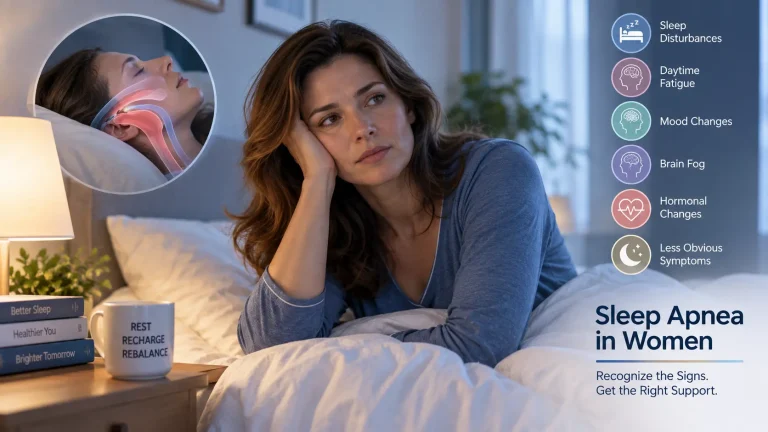
Sleep-disordered breathing may cause arousals and awakenings, but WASO cannot diagnose sleep apnea.
Vasomotor symptoms may interrupt sleep in some people during the menopausal transition.
Pain, reflux, coughing, itching, urinary symptoms, or discomfort may contribute to repeated wakefulness.
Limb movements or restless sensations can disturb sleep, but the underlying cause requires more information than WASO.
Noise, pets, a partner, children, shift schedules, or an unfamiliar room can add awake time without implying disease.
WASO makes more sense beside sleep latency, total sleep time, sleep efficiency, daytime symptoms, and how you actually experienced the night.
Age and Health Can Change Nighttime Wakefulness
WASO often makes more sense when you know what else is happening in your life and health. Comparing your tracker number directly with someone else’s can miss those differences.
Sleep architecture changes with age, and older adults commonly have lighter and more fragmented sleep. At the same time, pain, urinary symptoms, medicines, breathing disorders, and other health issues become more common with age. Those factors can add wakefulness independently.
Device accuracy can also change. A recent validation study comparing several consumer sleep trackers with polysomnography found that performance differed between younger and older adults. Some devices substantially underestimated WASO in the older group.
Menopause is another example where the cause can be mixed
Hot flashes can interrupt sleep in some women. Controlled research has shown that experimentally induced vasomotor symptoms can increase awakenings and WASO. Other longitudinal menopause research has found that not every sleep measure changes in the same direction during the menopausal transition.
That mixed evidence matters. A higher WASO during midlife should not automatically be attributed to hormones. Breathing problems, mood symptoms, pain, medicines, environment, and other sleep disorders can overlap.
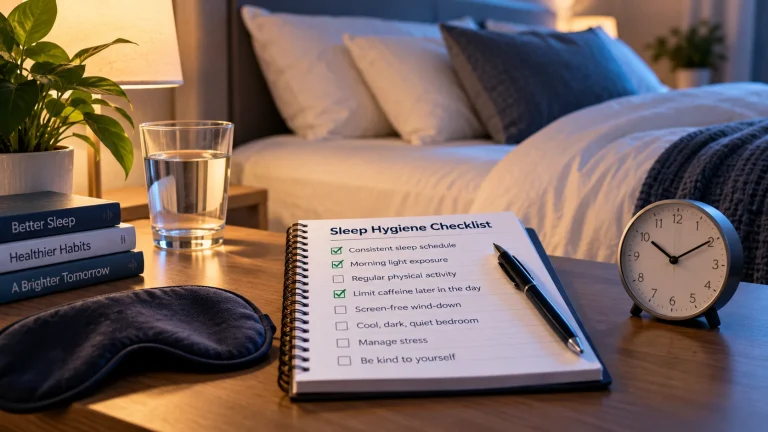
Track whether awakenings coincide with warmth, sweating, pain, breathing symptoms, bathroom trips, or another trigger rather than assuming WASO identifies the cause.
When Repeated Awakenings Deserve Evaluation
Repeated nighttime wakefulness is worth discussing with a healthcare professional when it persists, regularly reduces your sleep, causes distress, or affects how you function during the day.
The useful information is broader than one WASO score. A clinician may ask how long awakenings last, whether you can return to sleep, how often the problem occurs, how much total sleep you get, and whether you feel sleepy or impaired the next day.
They may also ask about snoring, gasping, restless legs, pain, reflux, urinary symptoms, medicines, alcohol, caffeine, hot flashes, mood symptoms, work schedule, and your usual sleep timing.
Track the pattern for one or two weeks
NHLBI recommends sleep diaries as part of insomnia evaluation. Record when you tried to sleep, estimated sleep onset, remembered awakenings, how long you think you remained awake, final wake time, naps, daytime sleepiness, and anything unusual that happened.
The diary does not need to be perfect. In fact, ordinary variation is useful information. A clinician learns more from a realistic pattern than from a week spent trying to force every night’s numbers into the same range.
Record your awakenings without trying to change them. Note total sleep and how you feel the next day. After several nights, the pattern is usually more informative than a single device score.
Wake After Sleep Onset FAQ
What does wake after sleep onset mean?
Wake after sleep onset is the total time you spend awake after initially falling asleep and before your final awakening. It is usually reported in minutes and does not include the time you needed to fall asleep at the beginning of the night.
Is WASO the same as the number of awakenings?
WASO measures total awake time. Awakening count measures how often you woke. Six short awakenings can produce less WASO than one long period awake, so the two measurements describe different features of sleep continuity.
Is 30 minutes of WASO always abnormal?
No single WASO value diagnoses a sleep disorder. Values around 30 minutes are used in some insomnia research and clinical contexts, but interpretation also depends on age, symptoms, frequency, sleep duration, daytime effects, and how WASO was measured.
Can I have normal sleep if I wake during the night?
Yes. Brief awakenings can occur during otherwise normal sleep, and many are not remembered. A repeated pattern of long wake periods matters more when it reduces total sleep, causes distress, or affects daytime function.
Can my smartwatch accurately measure WASO?
A smartwatch can estimate WASO and may be useful for trends, but it does not measure sleep and wake exactly like polysomnography. Quiet wakefulness is difficult for many consumer devices to identify, so the reported minutes should be treated as estimates.
Does high WASO mean I have insomnia?
High WASO can occur with insomnia, but it can also follow pain, hot flashes, breathing problems, urinary symptoms, movement disorders, noise, caregiving, substances, or other causes. Insomnia diagnosis requires a broader clinical assessment.
Should I track WASO every night?
Short-term tracking can help when nighttime waking is a concern. Looking across one or two weeks is usually more informative than reacting to every nightly fluctuation. Stop tracking if watching the score is making you more anxious about sleep.
Sources
These sources support the definition, clinical context, measurement limitations, wearable discussion, and age/menopause sections above.
Last researched: September 15, 2026 · SmartSleepCalc.com · Muzammal Shahzad Butt, Founder & Editor